Rifle Garfield County Airport Approves $10M for Taxiway and Apron Upgrades
Rifle Garfield County commissioners approve nearly $10 million in contracts for new taxiways and apron reconstruction to reduce winter congestion and improve safety.
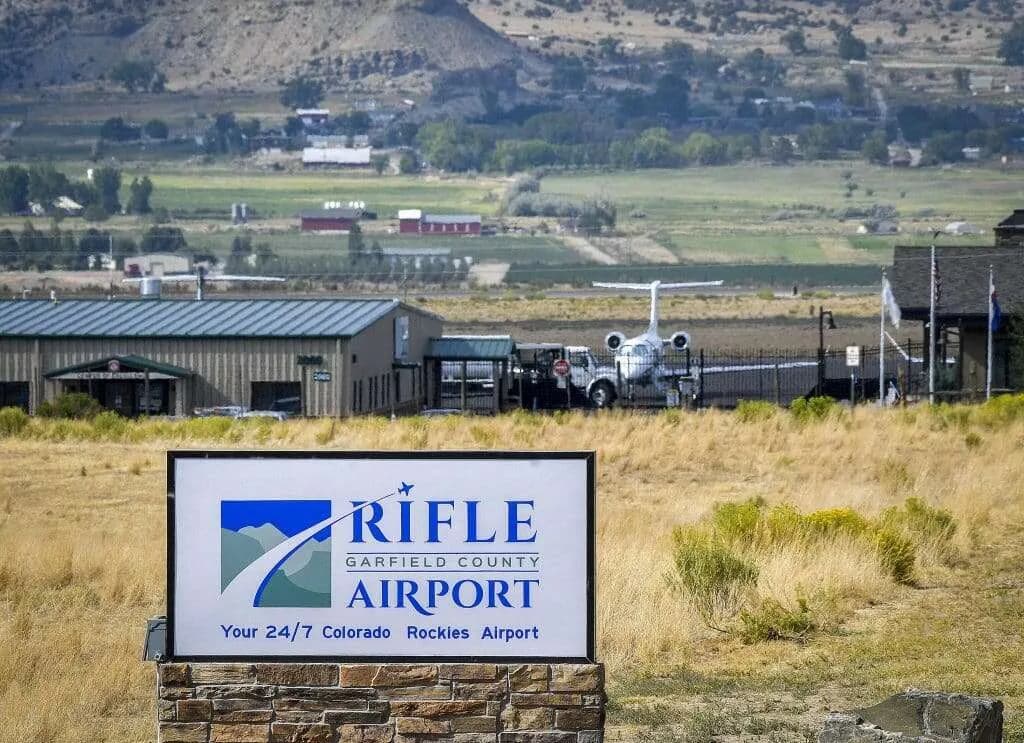
Rifle —Will your commute to the airport get faster, or just more expensive?
That’s the question hanging over Rifle Garfield County Airport after commissioners unanimously approved nearly $10 million in construction and engineering contracts. The money isn’t vanishing into a black hole. It’s going into new taxiways and a reconstructed apron. But let’s be clear: this is about fixing aging infrastructure that’s currently clogging the tarmac and posing safety risks.
The biggest slice of the pie goes to Phoenix Industries Ltd., awarded a contract not to exceed $5.08 million. They’re building Taxiway B, Connector Taxiway B3, and an aircraft run-up pad. On paper, it sounds like bureaucratic noise. In practice, it means planes won’t have to wait in line as long near Taxiway A5 and Runway 26.
Fil Meraz, airport operations coordinator, put it simply. “It’s for current congestion and future growth,” he told commissioners. The winter rush is the real pain point. Planes stack up on the taxiway, waiting for clearance to line up for takeoff. An extra taxiway cuts that wait time. It’s a safety play, not a luxury upgrade.
The work is expected to wrap up by November. That’s a tight turnaround for this scale of project.
Then there’s the apron — the paved area where aircraft park, refuel, and access hangars. It’s aging badly. Meraz noted the existing ramp is “probably about 40 years old, if not older.” Old concrete cracks. Old concrete fails. It’s a safety priority because when the pavement gives out, operations slow down or stop.
Gould Construction, based in Glenwood Springs, took the contract for the first phase of the main apron reconstruction. The price tag? Not to exceed $4.04 million.
Professional services didn’t escape the chopping block either. Woolpert Inc. got a contract for just over $503,000 to manage the taxiway project. Airport Director Sam Carver noted they trimmed the fat from an original $640,000 estimate. “This one came in under the estimate, which is nice,” Carver said. They cut the costs down to $503,000. That’s real money saved, though it’s a drop in the bucket compared to the multi-million dollar construction contracts.
Lochner picked up a $292,892 agreement for construction administration and management on the apron work.
So, here is the impact for locals.
First, expect some noise and traffic near the airport during the construction window. Phoenix and Gould are local companies, so the labor force is already in Garfield County. That’s money staying in the valley.
Second, the airport is preparing for more traffic. Meraz said they’ve been getting busier over the years. This isn’t just about fixing potholes; it’s about capacity. If you fly out of Rifle, you’re likely to see fewer delays in the winter. The congestion near Runway 26 should ease.
The total cost for these specific contracts is roughly $9.9 million. That’s a significant chunk of change for a county airport. But when your infrastructure is 40 years old, you don’t have the luxury of waiting for it to collapse. You fix it. You upgrade it. You pay for it.
The contracts were approved unanimously. No dissenting votes. No major debates. Just a recognition that the current setup is inefficient and potentially unsafe. The taxiway work and apron reconstruction are the first steps in a larger plan to keep Rifle Airport viable as a regional hub.
It’s not a perfect solution. The apron work was initially planned as one larger project, but breaking it into phases allows them to start fixing the worst of the decay sooner. It’s a pragmatic approach.
The bottom line? You’re paying for safety and efficiency. The $10 million investment is an attempt to stop the airport from becoming a bottleneck. If the projections hold, the result is fewer stacked planes in winter and a safer environment for passengers. If they don’t, we’re left with expensive concrete and the same old traffic jams. But given the state of the current ramp, doing nothing was never an option.
Keep up with Rifle
The day's Western Slope news, one email each morning. Free.
Aspen Housing Authority Seeks $590K Office Upgrade Amid Cramped Conditions
Vail Secures Water Rights for 37-Unit Montelisse Condo Project