Routt County Writer Challenges Civilians To Pay Freedom Debt
Harriet Freiberger argues in a new Steamboat Pilot commentary that civilians must move beyond passive gratitude to active community engagement, treating military service as a debt requiring civic participation.
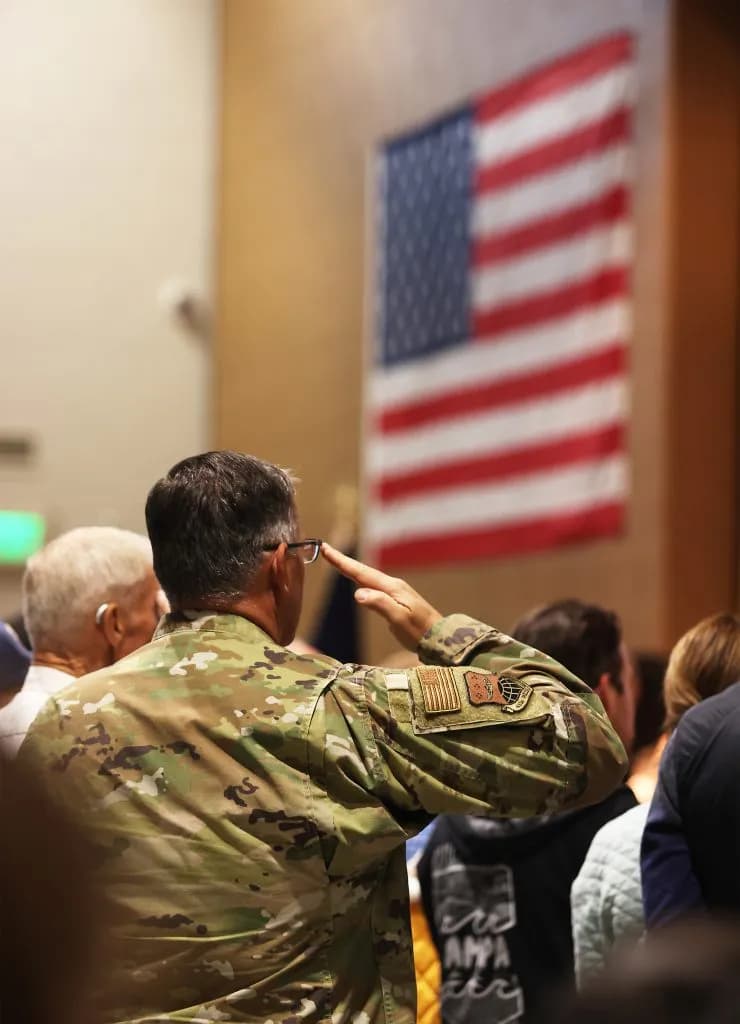
Steamboat Springs —Harriet Freiberger asks a question that most of us ignore until the calendar flips to November 11th: "Are we only 'takers' of this freedom that we enjoy?"
It’s a blunt prompt for a guest commentary piece in the Steamboat Pilot, but it lands with more weight than typical holiday fluff. Freiberger has been a Routt County resident for decades, and her piece doesn’t just offer a polite nod to the troops. It challenges the civilian population — us — to stop treating military service as a background hum and start viewing it as a debt we haven’t paid off.
The commentary argues that veterans are different, not just in age or experience, but in the sheer physical and emotional toll of their service. Freiberger notes that a soldier might look like anyone else on a street corner or in an office, but they carry knowledge that the rest of us cannot grasp. That knowledge becomes a significant part of who they are. It’s not a badge you wear; it’s a change in your nervous system, your perspective, and your capacity for endurance.
For context, the piece reminds readers of the holiday’s origin. Armistice Day was first celebrated on Nov. 11, 1919, declared by President Woodrow Wilson to mark the end of World War I. It wasn’t until 1954 that President Dwight D. Eisenhower renamed it Veterans Day, broadening the scope from a specific war to all who served.
Freiberger’s argument shifts quickly from history to the present political landscape. She suggests that our "upcoming war" is no longer about physical invasion but competition for our minds. She writes that governance will require a new understanding of our differences, much like we are learning to feed our bodies with better nutrients. It’s a metaphor that might sound soft, but the underlying point is sharp: disagreement among ourselves now divides us here at home. Problems never disappear; they must be dealt with.
The commentary posits that retired soldiers represent a strength we will need to find protection against this "different kind of invading force." It’s a bit abstract, but the practical implication is clear. We can’t just say "thank you" and go back to our silos. Freiberger urges us to take part in community activities and decision-making for the future. She calls it "life-supporting greenness" that can support us during the winter months of disconnect and disagreement.
Let’s do the math on this. We live in a region where property values are climbing and infrastructure costs are rising. The "freedom" Freiberger talks about isn’t free; it’s maintained by people who stood on our behalf. The commentary doesn’t ask for money, though that would be nice. It asks for engagement. It asks us to look past the "darkening clouds of division" and reach for the connections that our soldiers have secured.
In practice, this means showing up to town hall meetings in Routt County. It means listening to the veteran sitting next to you at a local restaurant without assuming they’re just another customer. It means recognizing that the stability we take for granted, the ability to argue about zoning or school boards without it turning into a physical confrontation - is the direct result of their service.
Freiberger closes with a simple, heavy statement: "They stand today, honored by law, appreciated, and respected in their communities. They have earned their place in the history of this idea that is America."
The bottom line for locals isn’t a new tax or a new road. It’s a shift in posture. We are asked to move from passive consumption of freedom to active participation in the community that sustains it. The soldiers have done their part. Now we have to do ours, or the "springtime that lies ahead" stays a distant promise.
Keep up with Steamboat Springs
The day's Western Slope news, one email each morning. Free.
Craig VFW Commander Tara Garber Redefines Veteran Service

Colorado's Graduated Tax Vote Defies National Spending Restraint Trend