S&P 500 Slips Modestly as Weak Retail Sales and Oil Prices Drive Market Correction
The S&P 500 slipped 0.2% from its record high as weaker-than-expected retail sales and volatile oil prices triggered a modest market correction, raising concerns about stagflation and consumer sentiment.
Aspen —The S&P 500 didn’t crash. It just blinked.
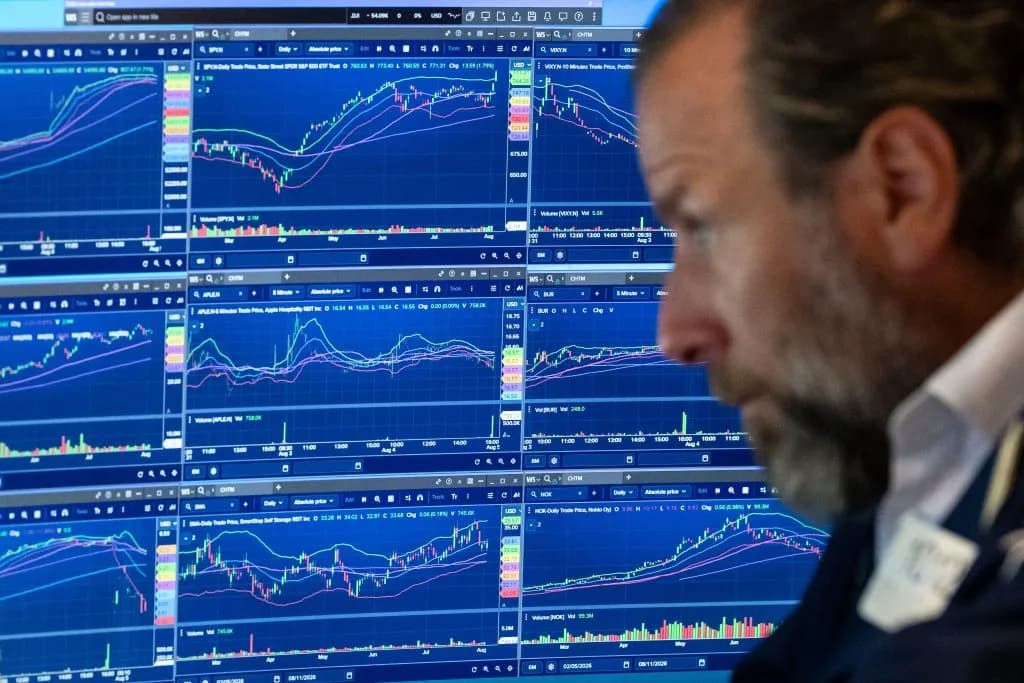
Friday’s market close saw the index slip a modest 0.2% from its record high, setting off a low-grade panic among neighbors who glance at their 401(k)s before checking the weather. The Dow Jones Industrial Average lost 45 points, and the Nasdaq composite dropped 0.4%. It wasn’t a bloodbath. It was a correction, driven by data that surprised economists and oil prices that refused to stay put.
The immediate trigger was retail sales. Shoppers spent less at U.S. retailers last month, a figure that came in weaker than expected and contradicted the forecast of continued growth. For folks on the Western Slope, this isn’t just abstract finance; it’s about whether the price of gas at the station in Glenwood Springs stays near $3.50 or creeps back toward four dollars.
Oil prices swung higher during the trading day, with Brent crude rising roughly $1.50 to hit $88.80 at one point. Uncertainty lingers over when the war with Iran will allow oil tankers to freely exit the Persian Gulf again. That geopolitical friction keeps a floor under energy costs, which matters for anyone who drives a truck or heats a home with propane.
But the retail data offers a silver lining, however thin. A pullback in spending takes pressure off inflation. Inflation remains higher than anyone would like, but reports earlier this week suggested the pace of price increases is decelerating. If that trend holds, it encourages the Federal Reserve to hold off on raising interest rates. Higher rates help tame inflation by making borrowing more expensive, but they also intentionally slow the economy. The risk? A slowing economy combined with high inflation creates "stagflation," a worst-case scenario the Fed has no good tool to fix.
Jennifer Timmerman, senior investment strategy analyst at Wells Fargo Investment Institute, cautioned against overreacting to the weak retail sales data. She noted that recent months were boosted by unusual factors: big tax refunds, the World Cup, and an earlier Amazon Prime Day. This month’s dip might just be a snap back to normalcy, not the start of a recession.
Yet, consumers are getting discouraged. A preliminary survey by the University of Michigan showed sentiment weakening more than economists expected. The drops occurred across the political spectrum, hitting older, lower-income groups hardest. These are our neighbors. They feel the squeeze at the grocery store and the gas pump every day.
On Wall Street, there was one bright spot: Reddit jumped 11.6% after learning its stock would join the S&P 500 index on Tuesday. Many professional investors track the benchmark closely, and inclusion often forces automatic buying. It’s a small victory in a week defined by caution.
Stand there long enough and you realize the market isn’t broken; it’s just nervous. The Vail Daily reported that stocks gave up modest gains from early morning as oil prices swung, reflecting a broader uncertainty about whether the economy can keep growing without sparking another inflationary fire.
The major index sits at a record, but the foundation feels slightly less solid. Investors are waiting to see if the Fed will keep rates low or if the weak retail data signals a deeper slowdown. For now, the numbers are steady. The oil is expensive. And life on the Slope continues, one transaction at a time.
Keep up with Aspen
The day's Western Slope news, one email each morning. Free.




Aspen Essay Connects Generations Through Highway 82 Landmarks

Pitkin County Targets Penny Hot Springs Parking Violations With Daily Patrols