St. Mary's Glacier Shrinks, Threatening Summer Snowboarding Tradition
St. Mary’s Glacier shrinks to record lows in mid-summer, threatening the year-round snowboarding tradition cherished by locals and drawing concern from scientists tracking climate impacts.
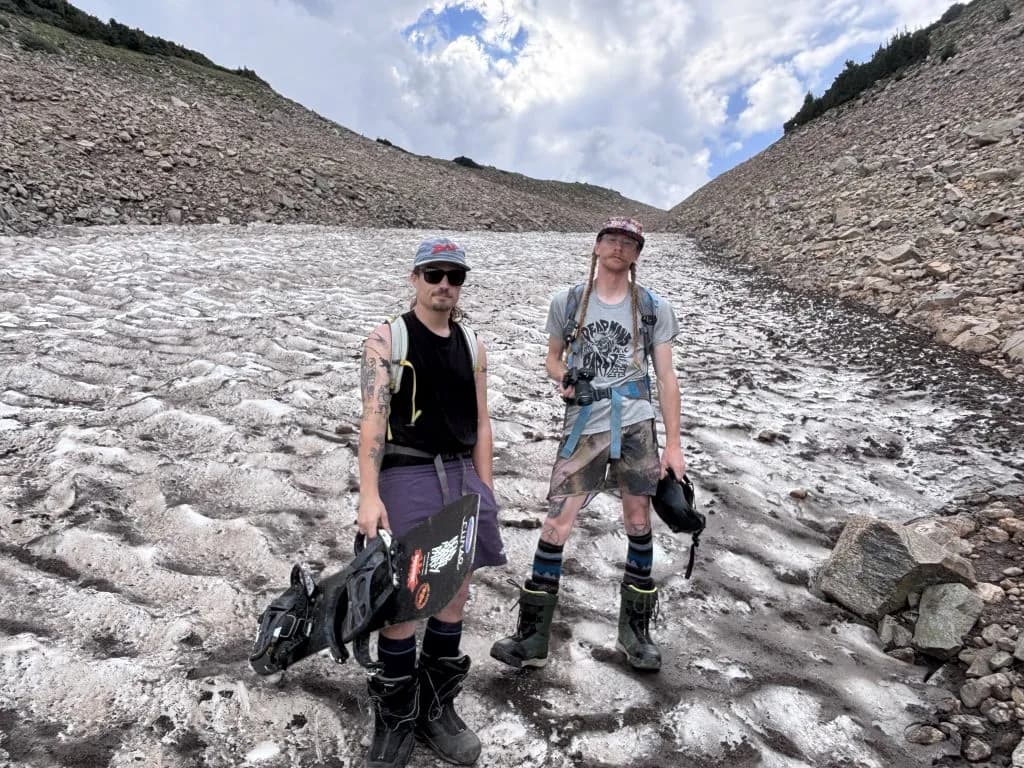
Aspen —The air at St. Mary’s Glacier smells like wet rock and thinning ice. Kevin Hawley’s snowboard crunched over muddy suncups on July 31. He carved short turns down a strip of snow that looked more like a patch than a field, stopping where the white ended and a pile of gray rocks began.
Hawley, a Steamboat Springs resident, had driven more than two hours to keep a streak alive. He is in his 70th consecutive month of snowboarding. He has visited St. Mary’s at least 10 times in nearly six years. Most of those visits happen later, in August or September, when finding snow is harder.
This year, the snowfield sat lower than he has ever seen it in mid-summer.
“I’m worried this might be one of the first years it becomes un-skiable, at least before we get any more snow,” Hawley said. “I’ve seen it better than this in September some years. This is bad.”
The Aspen Times reported on Hawley’s concern, but the worry extends beyond one man’s board. St. Mary’s is widely considered a perennial snowfield, not a true glacier. It sits just 30 minutes off Interstate 70. A 1.5-mile hike leads to it. It is one of the easiest year-round snow patches to access in Colorado.
Scientists call these fields remnants of ancient glaciers that carved the Rocky Mountains thousands of years ago. They have persisted for hundreds of years, surviving summer heat until winter storms replenished them. But the data shows a clear decline.
By late July, the main stretch of St. Mary’s measured only a couple hundred feet long. It was likely no more than a few feet deep. Water carved cavernous tunnels beneath the ice, accelerating the melt. Patches of snow clung to the steep hillside above the Alpine lake, but the main body was receding fast.
Historical records confirm this is not a new phenomenon, but the rate of change is. Miners formed the nearby town of Alice in the late 1800s with the snowfield already there. Newspaper articles from the 1920s described summer ski competitions drawing crowds of thousands. By the 1950s, headlines touted it as an easy day’s drive from Denver.
A 1969 Arvada Citizen article described the snowfield as a “three-fourths mile long and 110 foot deep natural wonder.” An outdoors columnist in 1985 wrote that St. Mary’s “has been around much longer than Colorado and isn’t likely to melt away soon.”
That confidence is fading. Those who have frequented the snowfield through the 21st century watch it shrink annually. Scientists attribute this to warming temperatures driven by human-caused climate change. The trend is global, but the local impact is immediate for locals who rely on this specific patch of white.
The short version: The snow is gone, or nearly so. If no significant storms arrive soon, the tradition of summer skiing at St. Mary’s ends. Hawley has seen it better in September. He is not exaggerating. The rocks are waiting.
Keep up with Aspen
The day's Western Slope news, one email each morning. Free.