Trump Transforms White House South Lawn into UFC Cage for Birthday
President Donald Trump is installing a massive UFC cage on the White House South Lawn to celebrate his 80th birthday, marking a shift from traditional presidential sports to a commercial spectacle.
Aspen —The grass on the White House South Lawn is usually manicured for something gentler. You expect the chaotic energy of an Easter Egg Roll or the organized chaos of a congressional picnic. You don’t expect the hum of industrial lighting rigs and the thud of heavyweights hitting a wire-mesh cage.
But that’s exactly what President Donald Trump is setting up this Sunday.
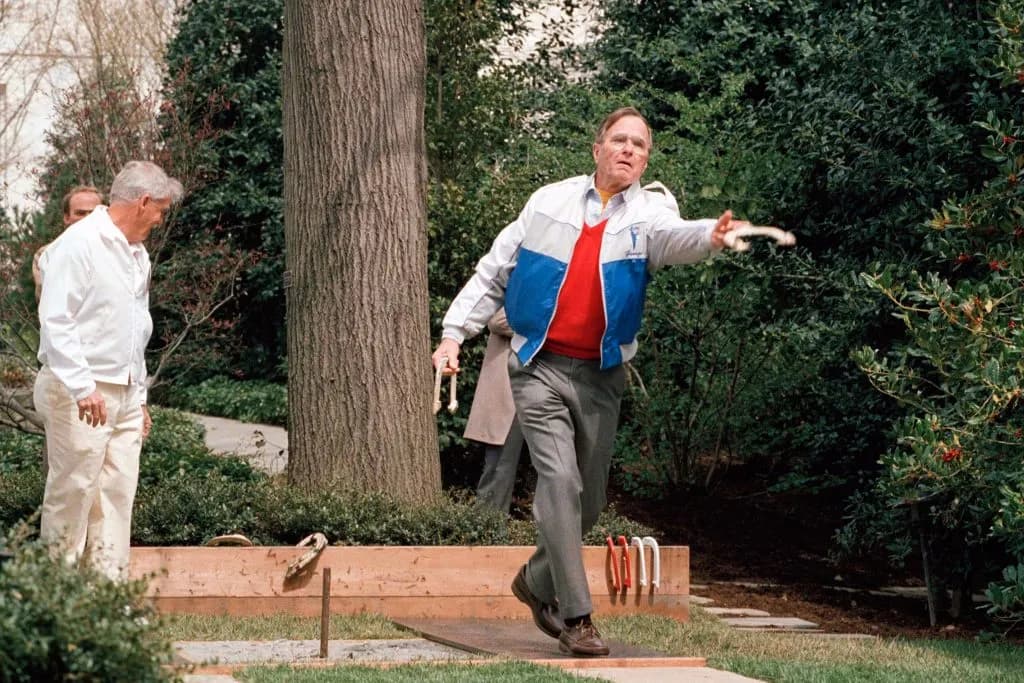
He’s hosting a UFC show to celebrate his 80th birthday. The transformation of the space is stark. The same ground where George W. Bush once cheered on youth T-ball teams is now being fitted with an eight-sided, open-dome structure known as "The Claw," complete with large screens and thousands of arena seats. It’s a spectacle that turns the nation’s backyard into a blood sport arena.
The question is whether this is just a one-off birthday party or the start of a permanent shift in how the White House operates. Trump has already suggested he might make the cage-fighting venue a regular fixture. If he does, the low-contact, bipartisan tradition of presidential sports is effectively dead.
“Sports has been central to presidents,” said Michael Patrick Cullinane, senior historian at the Theodore Roosevelt Presidential Library. “I don’t know that it’s been quite the spectacle that it is with the Trump administration.”
Cullinane, who wrote “Theodore Roosevelt and the Tennis Cabinet,” sees the UFC event as the latest break from tradition. It’s not just about the sport; it’s about the president’s personal brand. Trump relishes the chaos. He relishes the spectacle. And he’s using the White House lawn to amplify it.
Historically, sports at the White House were about health, relaxation, or showing off athletic prowess. Teddy Roosevelt, the pioneer of presidential sports, installed a tennis court on the lawn to force himself to relax. He played daily at 3 p.m., rain or shine, against his aides. He wasn’t playing for a global audience or a pay-per-view deal. He was playing to stay sane.
Roosevelt even boxed in the White House, though those bouts were intimate affairs. While sparring with Col. Daniel T. Moore in 1905, Roosevelt detached the retina of his left eye. It was personal. It was physical. It wasn’t a staged production with overhead lighting schemes designed for television.
Trump, when asked about Roosevelt in a recent New York Post interview, didn’t mention the detached retina. He focused on the energy. He said Roosevelt “had a lot of energy, loved the outdoors.” It’s a nod to the kind of vigorous, unapologetic activity that defines both men. But the scale is different. Roosevelt’s tennis court was a tool for discipline. Trump’s UFC cage is a tool for celebration — and possibly, as he hints, for permanent installation.
The shift from T-ball to the octagon is more than just a change in entertainment. It’s a change in tone. The South Lawn was once a place for bipartisanship and children. Now, it’s becoming a place for the president’s personal preferences, amplified by modern technology and commercial spectacle.
As Cullinane notes, the tradition of sports at the White House has always been about the president’s character. Roosevelt’s tennis showed his vigor. Eisenhower’s golf showed his patience. Trump’s UFC show, with its complex lighting and wire-mesh cage, shows his desire for control and spectacle.
The cage’s permanence remains uncertain. But for now, the executive mansion is no longer just a home for the president. It’s a stage. And this Sunday, the whole world is watching the fighters.
Keep up with Aspen
The day's Western Slope news, one email each morning. Free.