Utah and Nevada Fires Bring Haze to Glenwood Springs
Haze from the Iron, Kane Springs, and Grapevine fires in Utah and Nevada drifts over Glenwood Springs, creating a persistent, light-to-moderate smoke layer across the Western Slope despite no local infernos.
Steamboat Springs —The air in Glenwood Springs tastes like old paper and burnt wood, a dry, papery grit that settles on your tongue before you even realize the sky has turned a bruised, milky gray. It’s a specific kind of haze, one that doesn’t quite block the sun but softens its edges, turning the afternoon light into something diffuse and distant. If you stand on the porch of a home in Carbondale and look west toward the Elk Mountains, the peaks don’t vanish, but they lose their sharp, crystalline definition, becoming watercolor smudges against a pale backdrop. This is the smell of the West in June, a scent that feels less like weather and more like a memory of something burning far away.
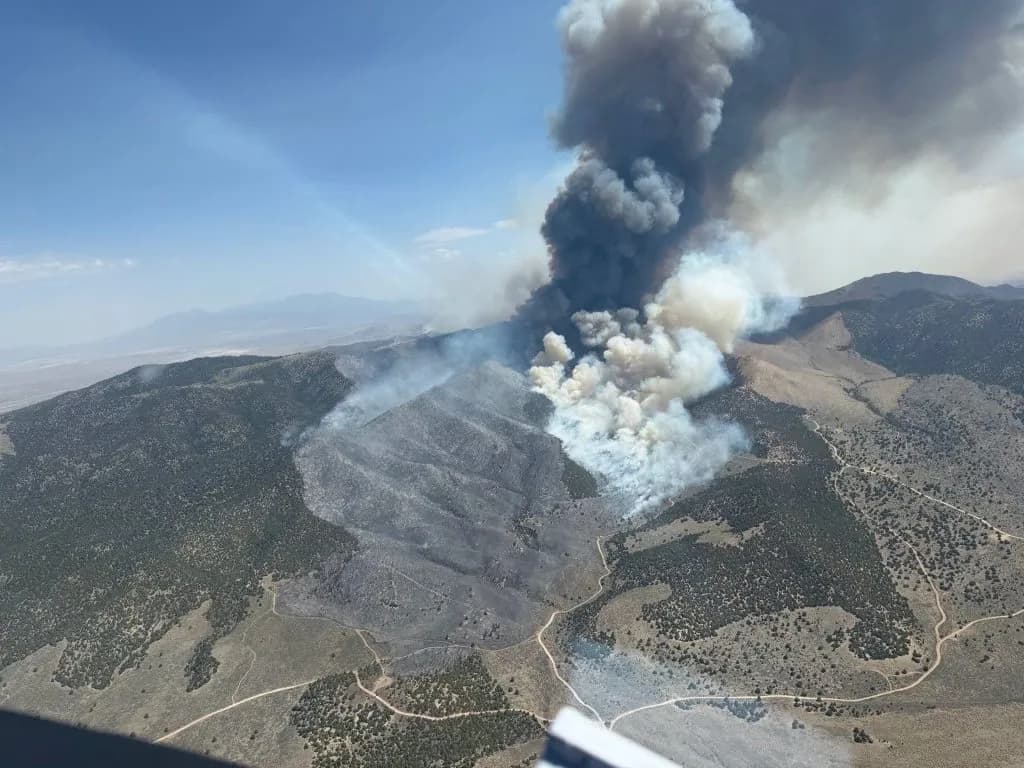
Colorado isn’t seeing the smoke from its own fires this week. There are no massive infernos raging in the White River National Forest or consuming the timber along the Roaring Fork Valley. Instead, the haze drifting over the Western Slope is a ghost from elsewhere, carried by high-altitude winds from three distinct fires in Utah and Nevada. The Iron Fire, burning about 24,000 acres in central Utah, and the Kane Springs and Grapevine fires in the south are the culprits, their plumes rising high enough to be caught by the jet stream and pushed eastward into our valleys.
The Colorado Department of Public Health and the Environment has been tracking this migration, noting that while the smoke is light to moderate, it’s persistent. “Modelling of weather conditions, fire behavior and smoke impacts generally agree on broad features,” the department wrote in its Smoke Blog on Sunday, “and combined with observed trends and impacts, leads to an unsurprising conclusion: That smoke will continue to affect Colorado at times over the coming days.”
It’s a strange disconnect for locals who are used to watching the news for fires here. We brace ourselves for the smoke from the Cameron Peak or the Highline, but this is different. This is an import. The smoke is thin enough that the department isn’t issuing public health advisories, meaning you can still breathe without worrying about your lungs filing a formal complaint. But the visual impact is undeniable, and it’s a reminder that our weather systems are not isolated islands.
Zachary Aedo, a communications specialist for the state health department, noted in an email that because wind and fire conditions shift so rapidly, pinpointing exactly where the thickest smoke will settle is nearly impossible. But the general trend is clear: the air will stay hazy.
This atmospheric transport is happening against a backdrop of a national fire season that is already running hot. As of Monday, wildfires across the country had burned roughly 2.7 million acres, an area roughly two-thirds the size of Rhode Island. That’s a 160% increase in total acres burned compared to the ten-year average for this point in the season. The National Interagency Fire Center has upped its preparedness status to Level 3 of 5, indicating that resources are being mobilized nationwide, and pulling them from non-active areas could pose a risk if conditions change.
Here on the ground, the response is more mundane but no less urgent. Fire restrictions are in place across nearly every mountain county, banning most campfires. The National Weather Service has issued a “red flag warning” through Tuesday evening, citing hot, dry, and windy conditions that are “favorable for rapid fire spread.” Law enforcement is already cracking down on violators, and small fires have already popped up. A wildfire north of Hayden burned nearly 100 acres this month before being contained. The Spring Creek Fire burned about 20 acres in the White River National Forest near the border of Pitkin and Eagle counties. Firefighters even managed to quickly contain small blazes in Glenwood Canyon, closing Interstate 70 for several hours at a time.
So, while we don’t have a fire consuming our own forests right now, we are living in the shadow of fires elsewhere, breathing air that has traveled hundreds of miles. It’s a subtle reminder that the climate we’re adapting to is interconnected, that a fire in Utah can turn our sky the color of weak tea. The haze will likely persist, a quiet, smoky curtain drawn across the valley, waiting for the wind to shift or the rain to wash it away.
Keep up with Steamboat Springs
The day's Western Slope news, one email each morning. Free.

Moffat County Fair Awards Crown Winners in Horse Show and Crafts
Leela Bridgewater and Corgi Freya Win Routt County Fair 4-H Dog Show