Utah and Nevada Wildfires Send Unhealthy Smoke to Western Colorado
Unhealthy air quality grips the Western Slope as massive wildfires in Utah and Nevada send thick smoke into Colorado, prompting health advisories and fire restrictions across multiple counties.
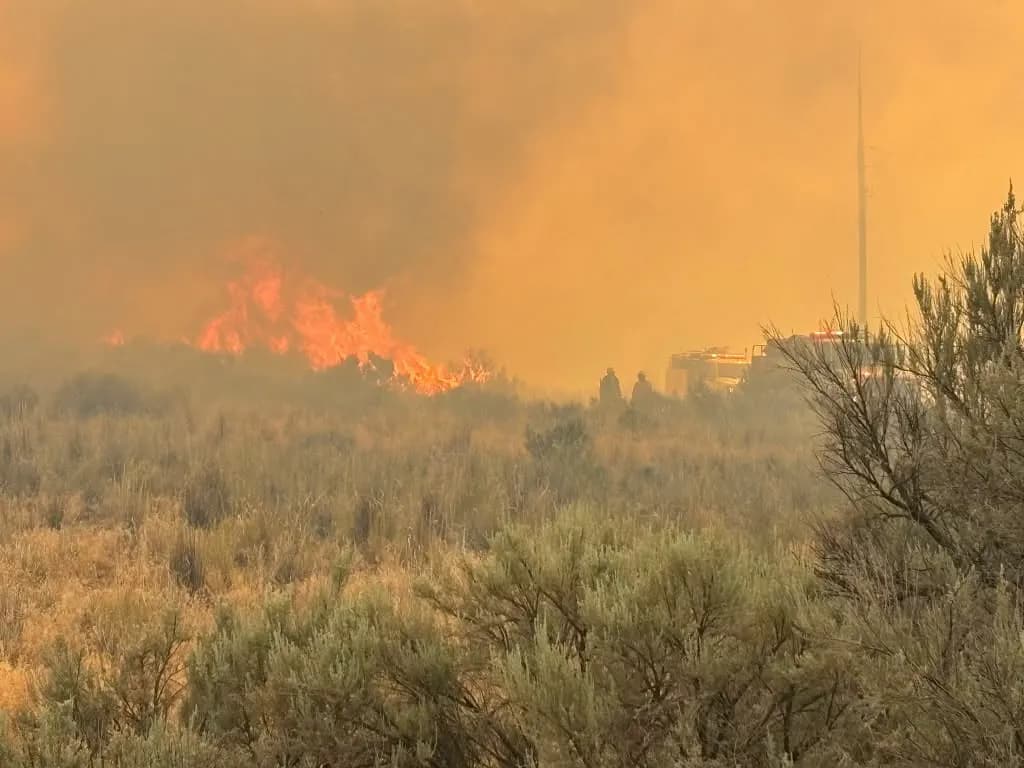
Aspen —The air quality index in Grand Junction hit above 150 on Wednesday afternoon. That is “unhealthy.” It is not a suggestion. It is a warning.
Locals near the Colorado River valley are breathing it in. The sky is a bruised purple-gray. Visibility drops below five miles. You can taste the ash.
This is not just a bad day for hiking. This is a regional health crisis driven by fires you cannot see. The smoke choking Western Colorado comes primarily from three massive wildfires burning out of control in Utah and Nevada. The Cottonwood Fire in Utah exploded to 60,000 acres in days. The Iron Fire sits at 37,000 acres. The Hastings Fire at 26,000. They are burning with “extreme fire behavior,” according to local reports.
The state health department issued an air quality health advisory through at least Thursday morning. It covers Rio Blanco, Garfield, Eagle, Pitkin, Mesa and Delta counties. The message is simple: limit outdoor activity. Especially if you have medical conditions. The smoke is thick enough to make breathing a chore for anyone.
Make no mistake — the source of this haze is largely out of state. But the conditions here are ready to catch fire. Severe drought resulting from historically low snowpack is the fuel. Hot, dry weather is the spark.
The Dry Creek Fire off Interstate 70 near Rifle grew to nearly 300 acres within hours of being discovered Tuesday afternoon. Evacuation orders remain in place. Colorado River Fire Rescue reported continued “extreme fire behavior conditions” on social media. Local fires are contributing to the plume, but the heavy lifting is being done by the giants in Utah and Nevada.
The variability is the real problem. “Smoke levels are going to vary widely across western Colorado today and they could rapidly change with very little warning,” the Colorado Department of Public Health and Environment’s Smoke Blog said Wednesday. Chaotic weather, including strong thunderstorms, could hit the source fires. That means the smoke could vanish or intensify by noon tomorrow.
Read that again. The air quality index was above 150 in Grand Junction and Glenwood Springs. Further east near Vail, it hovered above 100. In Summit County and along the Front Range, it was closer to 80. The gradient is steep. You drive an hour east, and the air clears. You drive west toward the Utah border, and it gets worse.
Several mountain communities — including Summit, Grand, Pitkin, Routt and Garfield counties, are planning to move into Stage 2 fire restrictions beginning this Friday. That means more limits on camping fires, more restrictions on equipment use. It is a preemptive strike against the dry tinderbox.
The short version: The Western Slope is breathing in smoke from a dozen different fires, many of them far away. The air is unhealthy. The drought is severe. The fire danger is extreme.
Officials are telling people to stay inside. They are telling sensitive groups to take it easy. They are not telling us when the Utah fires will stop. They are not telling us if the smoke will clear before the weekend. They are just counting acres and tracking AQI numbers.
The air quality data confirms it. The air is bad. The fires are growing. And the sky is getting darker.
Keep up with Aspen
The day's Western Slope news, one email each morning. Free.