Utah Iron Fire Smoke Chokes Western Colorado Valleys
The 24,000-acre Iron Fire in Utah sends heavy smoke across the Western Slope, blanketing Delta and Montrose in milky gray haze and triggering Red Flag Warnings for hot, dry conditions.
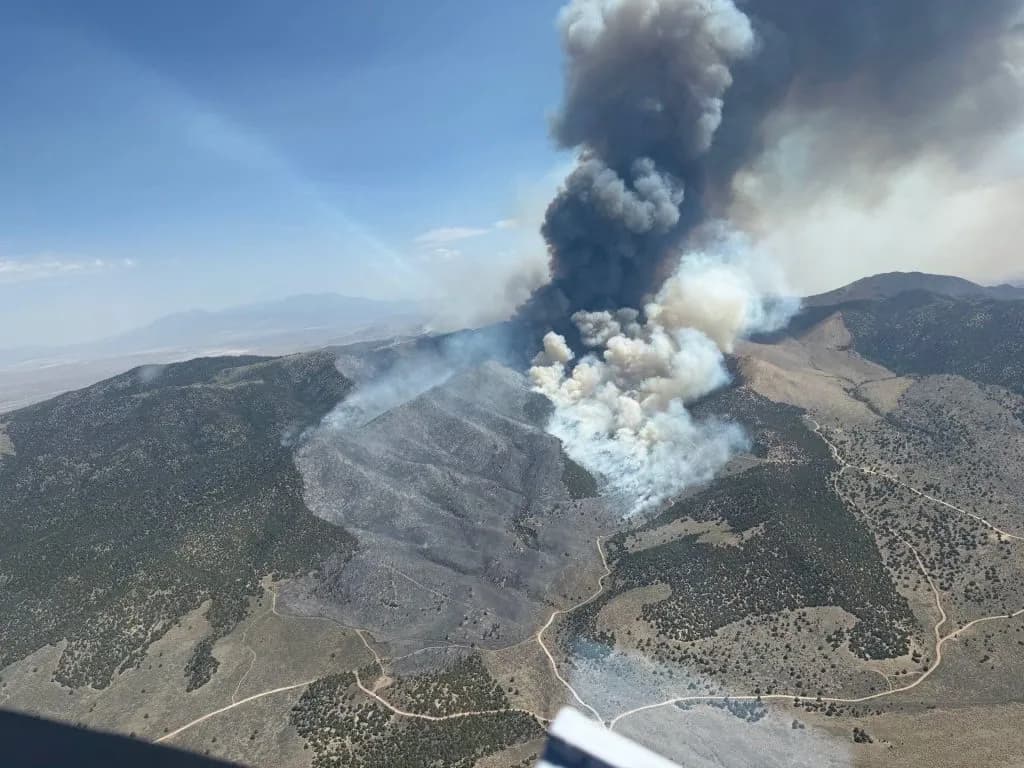
Aspen —The air in Delta and Montrose didn’t just feel heavy on Monday; it looked like a permanent filter had been placed over the valley. Commuters heading to work on Highway 64 noticed the sky turn a bruised, milky gray, and the visibility dropped enough to make the drive to Grand Junction feel like navigating through fog.
It wasn’t a local fire. It was the Iron Fire in central Utah, a 24,000-acre blaze that has already forced evacuations in Eureka, Utah, sending its smoke plume hundreds of miles east across the Western Slope.
“The smoke has made for a level of discomfort outdoors across Western Colorado,” the weather service noted in a late June report. “Gusts from Utah have brought us smoke from the Iron Fire... For us, it has left us with the eastern portion of Mesa County, as well as Delta, Montrose, and Ouray counties under Red Flag Warnings.”
The question for locals isn’t whether the haze will clear, but how long it will stick around.
The Colorado Department of Public Health and the Environment says the answer is: a few more days.
“Modelling of weather conditions, fire behavior and smoke impacts generally agree on broad features, and combined with observed trends and impacts, leads to an unsurprising conclusion: That smoke will continue to affect Colorado at times over the coming days,” the department wrote in its Smoke Blog on Sunday.
Zachary Aedo, a communications specialist for the state health department, said the uncertainty lies in the wind. “Because wind and fire conditions can change quickly, the state health department cannot pinpoint where or when the heaviest smoke will be,” Aedo said in an email.
The department does not expect to issue public health advisories this week. The smoke is light-to-moderate. It’s annoying, it’s ugly, and it might make your lungs itch if you’re outside all day. But it’s not yet dangerous enough to shut down schools or send people to the ER.
The source of the problem is clear. While Colorado has had its share of smaller fires this season — like the 100-acre fire north of Hayden or the Spring Creek Fire in the White River National Forest — the big, thick smoke blanketing our mountains is coming from Utah. Specifically, the Iron Fire, the nearly 15,000-acre Kane Springs Fire, and the roughly 13,000-acre Grapevine Fire in southern Utah.
The data supports that reality. As of Monday, wildfires nationwide had burned roughly 2.7 million acres. That’s an area about two-thirds the size of Rhode Island. It’s a 160% increase in total acres burned compared to the 10-year average for this point in the fire season.
With more large fires burning across the country, the National Interagency Fire Center last week upped its wildfire preparedness status to Level 3 of 5. That means resources are being mobilized nationwide, and moving resources from non-active areas could pose an added risk if conditions change.
Locals know this feeling. It’s the same anxiety that comes with the red flag warnings. The National Weather Service has issued warnings for hot, dry, and windy conditions that are “favorable for rapid fire spread” through Tuesday evening.
And it’s not just the smoke. The weather is turning.
“Wednesday will have some moisture moved into the region, but it will contend with these summertime temperatures and dry air,” the weather service reported. Highs are expected to hit 100° in Grand Junction tomorrow. The low tonight will be 62°.
The danger isn’t just the smoke you breathe; it’s the fire you might start. Dry lightning is one of the leading concerns with this change in the atmosphere throughout the back half of the week. Thunderstorms will remain a threat from Wednesday through Friday.
Law enforcement officers in the mountains are already cracking down on campers who ignore fire restrictions. Nearly every county has banned most campfires. If you’re driving Interstate 70 through Glenwood Canyon, you’ve likely seen the closures caused by small wildfires that broke out and had to be contained quickly.
The smoke might be from Utah, but the risk is ours.
Aedo says the department is watching closely. “The department does not expect to issue any health advisories this week,” he said. But he also warned that the situation is fluid.
For now, neighbors are just trying to get through the week with the windows closed and the air purifiers running. The haze is a reminder that in the West, we don’t just manage our own fires. We manage the wind.
“The numbers tell the story,” Aedo said. “That smoke will continue to affect Colorado at times over the coming days.”
Keep up with Aspen
The day's Western Slope news, one email each morning. Free.
Aspen Housing Authority Seeks $590K Office Upgrade Amid Cramped Conditions

Vail Secures Water Rights for 37-Unit Montelisse Condo Project
Moffat County Commissioners Weigh Data Center Moratorium Amid Transparency Claims
Aspen Skiing Company hosts 10th annual Stars Above astronomy night

Aspen Animal Hospital Clinical Leader Dr. Anne Cooley Navigates WellHaven Ownership Shift