Vail Valley Charitable Fund Pays for Cochlear Implant for Local Mother
Vail Valley resident Ashley Russell receives a cochlear implant funded by the Vail Valley Charitable Fund, helping her overcome years of invisible hearing loss and reconnect with her community.
Aspen —The silence wasn’t empty. It was heavy. It was a physical weight pressing against Ashley Russell’s eardrums, turning the crisp mountain air of the Vail Valley into a muffled, distorted static. For years, she lived in that suspended state, where conversations required exhausting effort and the simple joy of hearing snow fall on powder days vanished into the background noise of her own isolation.
Here’s the thing though: we often think of charitable funds as safety nets for the catastrophic — the house fire, the sudden cancer diagnosis, the unexpected surgery. We assume they kick in when the insurance runs out. But for Russell, a lifelong Vail Valley resident, small-business owner, and mother of twins, the crisis was quieter. It was a rapid, invisible decline in her hearing that slowly eroded her ability to work, to connect, and eventually, to provide for her family.
It wasn’t just about missing a word here or there. It was about the exhaustion of constantly guessing. It was the confidence drain of an "invisible disability" that no one could see but everyone could feel the impact of.
That’s when the Vail Valley Charitable Fund stepped in.
Russell didn’t just get a check. She got a lifeline. The fund’s assistance relieved the overwhelming burden of medical costs and testing, allowing her to focus on what actually mattered: her health and her recovery. It was more than financial support; it was hope. And on June 3, that hope took a very specific, tangible form.
She received a cochlear implant in her right ear.
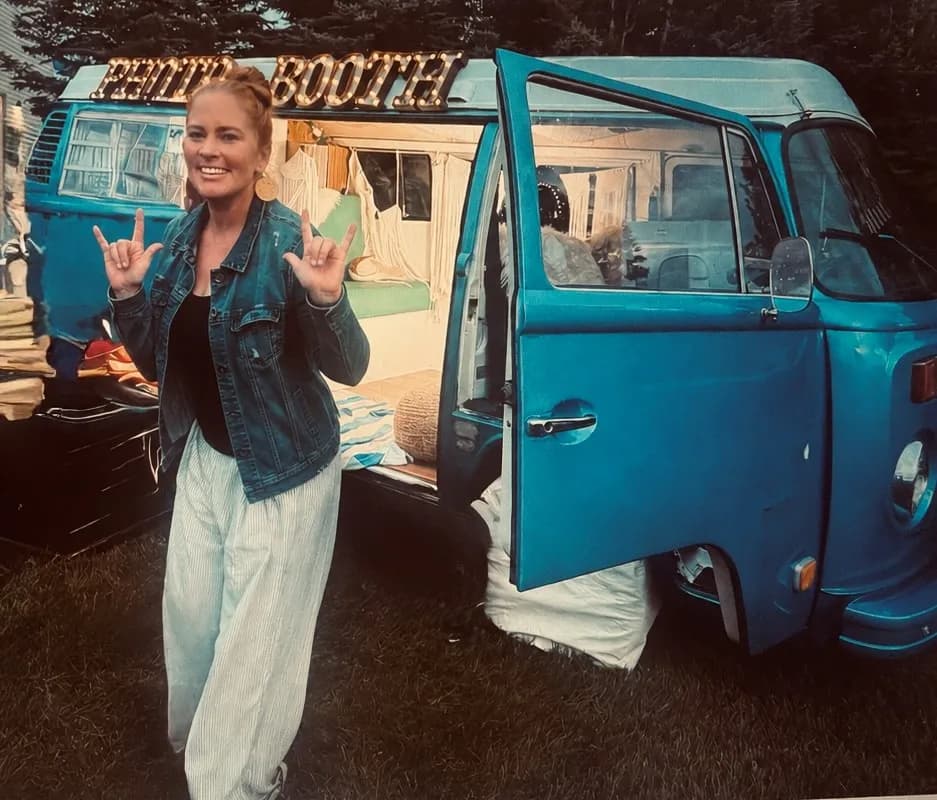
Picture this: a surgical procedure that rewrites the way you experience the world. For Russell, it wasn’t just about hearing better. It was about reclaiming the sounds she had lost. It was about the muffled sound of snow falling. It was about hearing her VW bus putter down the road. It was about music. It was about talking on the phone without straining.
"I am filled with gratitude and optimism for the future," Russell said. "For the first time in a long time, I feel hopeful about reconnecting with simple sounds and conversations that I have been missing."
This is where the story shifts from a medical bill to a community portrait. Russell had worked with the Vail Valley Charitable Fund years earlier, helping raise money for a beloved local doctor battling cancer. She had witnessed the generosity firsthand. She had seen how the organization helped local families facing difficult circumstances. At the time, she never imagined she would be the one needing that same support.
That reversal is the point. The community that gives is the same community that receives. The fund didn’t just pay for a device; it paid for her return to normalcy. It allowed her to step back into the rhythm of life in the valley, where the ability to hear the wind in the trees or the laughter of her twins is not a luxury, but a baseline expectation of living here.
The road ahead still requires patience. Cochlear implants take time to adjust to. But the isolation is gone. The distortion is fading. And for a woman who spent years feeling cut off from the world around her, the return of sound is a return to self.
Russell stands now in the same valley she’s always called home, but the soundscape has changed. The silence that once felt like a wall is now just background noise, manageable and distant. She’s back in the conversation. And that matters because it proves that when the unexpected hits — whether it’s a cancer diagnosis or a failing ear, the net is there. It’s not perfect. It’s not infinite. But it holds.
Outside, the wind picks up, rattling the windows of her home. Russell hears it. Really hears it. And for the first time in years, she doesn’t have to guess what it is.
Keep up with Aspen
The day's Western Slope news, one email each morning. Free.