Aspen Boy Pushes Bike Uphill Before Calling Taxi
An Aspen boy pushed his bike uphill after failing to pedal, finally calling a taxi. The incident highlights how children learn to adjust goals rather than quit when facing steep challenges.

Aspen —“One of the best parts of summer in Aspen is that you can get almost anywhere on two wheels.”
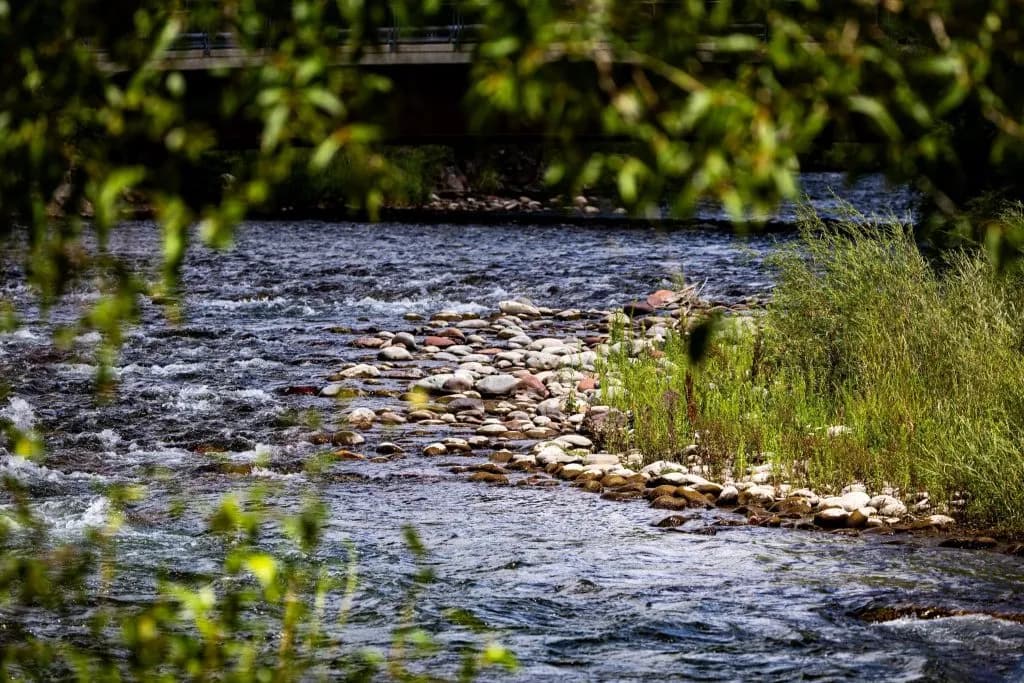
That single sentence, penned by a local nanny in the Aspen Times, captures the specific magic of our valley. It’s a promise that holds true until you’re three miles up a gradient, your legs burning, and the Rio Grande rushing past in a blur of green and brown. The writer describes picking up a seven-year-old boy from summer camp, a kid who had just shed his training wheels and now wore that new independence like a heavy cloak. They decided to go big, biking all the way to Woody Creek Tavern for dinner. The ride out was a dream, a cruise along the river where the boy felt like a professional cyclist. But the ride back? The ride back is where the truth lives.
The ascent toward Aspen is unforgiving, a steady climb that tests more than just your quads. It tests your ego. When the pedaling slowed and then stopped, the boy didn’t fold immediately. He got off his bike and started pushing it uphill. The nanny got off hers too. For a long stretch, they walked side by side, two figures moving slowly against the slope, talking to keep the silence at bay. She offered him exits — maybe it’s going to rain, maybe it’s getting late — but he refused them. To him, stopping wasn’t a practical decision; it was an admission of failure. He had to reach his own limit before changing the plan felt acceptable.
Until he wasn’t. At some point, he stopped walking, let his bike drop dramatically onto the trail, and said, “Let’s just call a taxi.”
The nanny burst out laughing. Then he started laughing too. That shared laughter, sitting on the trail waiting for a ride, is where the real story begins. It’s a reminder that goal-setting with kids often needs to look different than we think. Instead of one huge, distant finish line, maybe we build smaller checkpoints. First, we get to the bridge. Then, we decide whether we want to keep going. We stop saying “quit” and start talking about changing the plan.
This isn’t just a parenting tip; it’s a survival strategy for anyone who has ever tried to conquer the Western Slope. We are a community of people who love a challenge, who pride ourselves on our grit and our connection to the land. But there is a difference between persistence and stubbornness, and often, we blur that line when the incline gets steep. The boy’s journey mirrors our own relationship with this landscape. We want to prove we can do the whole thing, that we are strong enough for the entire distance. But sometimes, the bravest thing you can do is admit that the goal was just too big for that moment.
If you look closely at the trail behind them, you can see the tire tracks of that slow, determined walk. They are faint now, probably already being erased by the next cyclist or hiker who passes through. But for that afternoon, those tracks were a map of resilience. The boy didn’t fail because he called a taxi; he succeeded because he understood the difference between giving up and adjusting. He learned that his worth wasn’t tied to reaching a specific coordinate, but in the way he handled the climb.
The sun was setting over the valley, casting long shadows across the riverbank. The air had cooled, carrying the scent of pine and damp earth. As they waited for their ride back to Aspen, the boy wasn’t defeated anymore. He was just tired. And that’s a very different thing.
Keep up with Aspen
The day's Western Slope news, one email each morning. Free.

Vail Veteran's Dementia Care Gap Sparks Western Slope Debate
Silt Quilt Guild Marks 25 Years of Stitching Friendships