Aspen Honors Late Mead Metcalf at Wheeler Opera House Event
Aspen celebrates the life of Mead Metcalf, the late owner of the Crystal Palace, with a special event at the Wheeler Opera House on April 18.
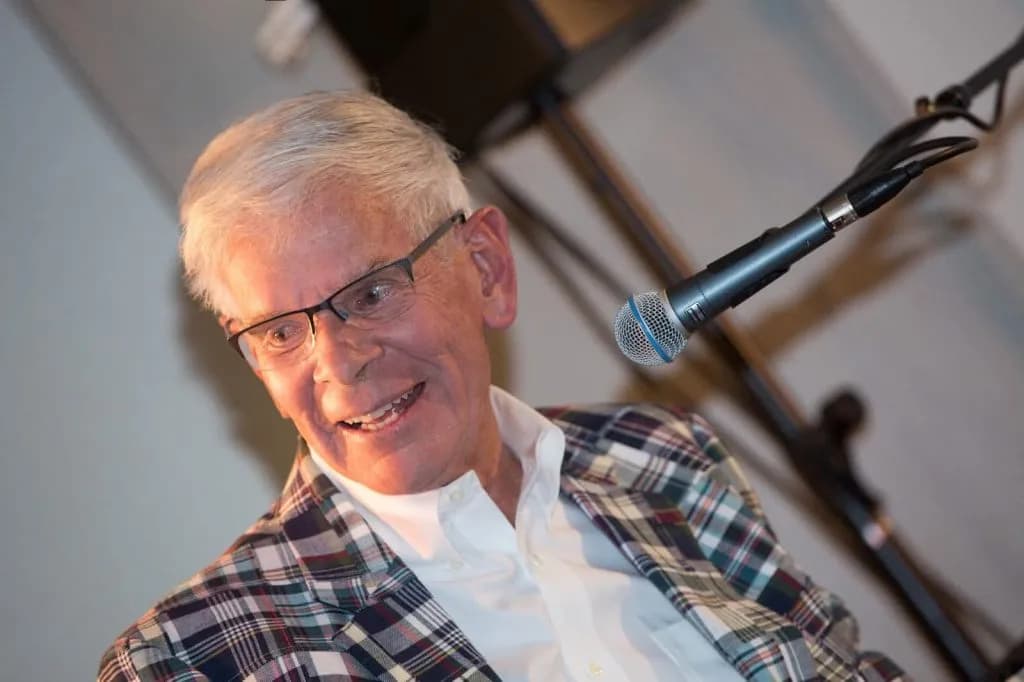
Aspen —The smell of old velvet and stale beer hangs in the air long after the lights have gone up, a scent that seems to have seeped into the very plaster of the Wheeler Opera House walls. It’s the olfactory ghost of the Crystal Palace, a place where satire was served as hot as the food, and where Mead Metcalf ruled the stage like a benevolent, sharp-tongued king.
Now, Aspen is preparing to close the curtain on its most enduring showman.
On April 18 at 3 p.m., the Wheeler will host “What I Did for Love — The Life of Mead Metcalf,” a celebration of the man who turned a St. Louis-born pianist’s dream into a Western Slope institution. Free tickets are available, and the community is being urged to fill the seats, not just for the mourners, but for the 140 alumni, family members, and friends who have already confirmed they’ll be there. It’s a gathering that feels less like a funeral and more like a reunion of a scattered, eccentric family.
“He was a huge part of the community for many decades,” Nina Gabianelli said, her voice carrying the weight of someone who has watched generations of patrons grow old. “It was really an institution in Aspen, and those generations of family are still friends and family today.”
Gabianelli, who joined the Palace in 2003 after trying to break in for years, knows the texture of Metcalf’s legacy better than most. She remembers when the staff tended to stay for years, a rarity in the hospitality world, creating a tight-knit unit that skewered every presidency from Eisenhower to Obama. “The Crystal Palace drew different types of people — that was the fun,” she said. “We skewered every presidency... It didn’t matter, if it was in the news, it was on the stage.”
Metcalf, born in St. Louis in 1932, brought that Midwestern polish to the Rockies. He learned piano at age four, graduated from Dartmouth where he led the Glee Club, and even performed for U.S. troops in Germany before landing in Aspen. On July 1, 1957, he opened the venue, operating it until 2008. His pièce de résistance, “The Peanut Butter Affair,” remains proof of his ability to turn local absurdity into high art.
Though he never had biological children, Gabianelli insists the community is his true kin. “There is a wildly vast amount of people connected to Mead,” she said. “Mead was a consummate performer and brought this together. It’s amazing how close many of us are to this day.”
The event, which will feature classical music and speakers, honors a man who died peacefully in Sedona, Arizona, on November 14, 2025, at the age of 93. He was inducted into the Aspen Hall of Fame in 2009, a year after the theatre closed, recognizing a profound impact that extended far beyond the stage lights.
If you look closely at the history of the dining theater, you see more than just a restaurant. You see a place where Joan Higbie, Metcalf’s first wife, became known as “The Queen of the Crystal Palace,” performing there until 1982. You see Greg Lee, a singer and waiter who worked there for over a decade, and Diane Kelly Laughlin, whom Metcalf married in 2005. It was a ecosystem of performers, waiters, and regulars who found belonging in the satire.
The drive up I-70 to Aspen feels different now, quieter in a way. The Wheeler Opera House stands as a monument to that noise, that vibrant, chaotic energy. When the lights dim on April 18, the audience won’t just be watching a program; they’ll be remembering the man who made them laugh at themselves, who turned politics into punchlines, and who built a home out of a building on Main Street. The silence that follows the final note will be heavy, but it will be the silence of a room full of people who know exactly what was lost.
Keep up with Aspen
The day's Western Slope news, one email each morning. Free.