Low Snowpack Drives Severe Wildfires in Western Colorado Forests
A new study reveals that low winter snowpack directly leads to higher-severity wildfires in Western Colorado by drying out forests earlier, threatening ecosystems and communities like Paonia.
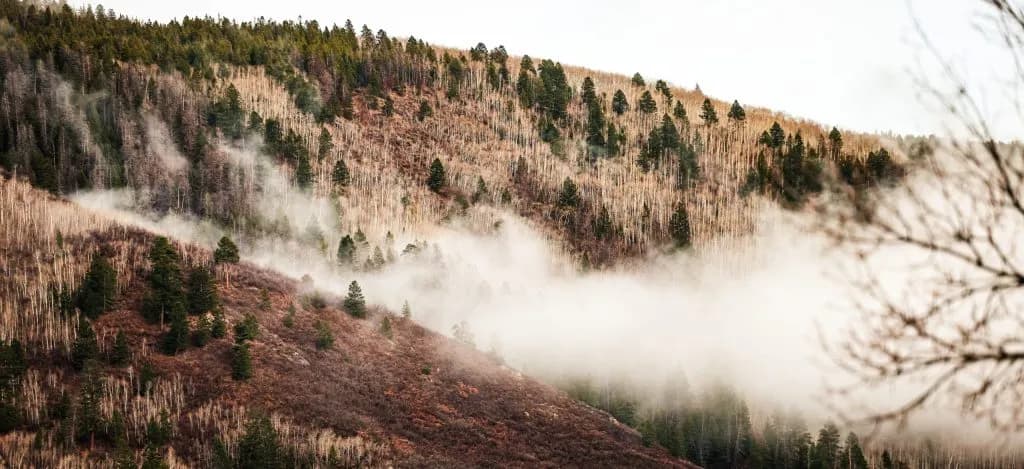
Glenwood Springs —The wind off the Uncompahgre Plateau doesn’t just blow; it scours. It strips the moisture from your skin and the topsoil from the valley floor, leaving behind a landscape that feels brittle, ready to snap. Standing in a meadow near Paonia, you can almost hear the forest holding its breath, waiting for the spark that turns a dry summer into a catastrophe.
Here’s the thing though: we’ve always known that less snow means more fire. We’ve seen it in the calendars, watched the snowpack numbers drop on the radio during morning commutes. But a new study from Western Colorado University suggests we’ve been looking at the problem with the wrong lens. It’s not just about when the fire starts. It’s about how badly it burns.
Jared Balik, the lead author of the study published in Environmental Research Letters, puts it simply. When winter snowpack is low, high-elevation forests don’t just sit there waiting for summer. They dry out. Their fuel moisture drops. The trees become tinder.
“When we have a low-snow winter, those high elevation forests will have lower live fuel moisture and ultimately more flammable conditions during the summer,” Balik said.
This isn’t just academic theory for folks living in the shadow of the San Juans or the Elk Mountains. The study, which analyzed satellite data from 11 Western states between 1985 and 2021, found that low snowpack is directly linked to higher severity wildfires. And that distinction matters. A low-intensity fire might scorch the understory, leaving the big trees standing. A high-severity fire kills the adults and destroys the seed source for the next generation. It changes the ecosystem entirely.
Think of winter snowpack as a savings account for the forest. You deposit water in the winter, and you withdraw it slowly through the growing season. If the deposit is small, the account runs dry fast. Trees get thirsty. They get stressed. They get flammable.
“Together, those two factors provide both more time and opportunity for fires to ignite and spread,” Balik noted. But the study went a step further than just tracking burn area. It looked at the intensity of the burn. The data confirmed what fire ecology scientists have long suspected: the earlier the snow melts, the more severe the fire.
This has implications for the carbon we store and the water we drink. High-severity fires don’t just consume trees; they cascade into other impacts on how ecosystems hold water in subsequent seasons. They alter wildlife habitat. They turn dense forest into shrubland or grassland, sometimes permanently.
Across the West, the pattern is clear. Higher snowpacks are associated with less severe wildfires. Lower snowpacks are linked to more severe ones. And right now, nearly the entire West is facing record-low snowpack conditions. We’re not just looking at a bad fire season. We’re looking at a season where the fires that do start are more likely to stick around and do real damage.
The study used satellites to measure pre- and post-fire conditions, creating models that mapped the interactions between snowpack levels and wildfire seasons. It’s a 36-year dataset that leaves little room for doubt. The earlier the meltout, the drier the landscape. The drier the landscape, the more likely trees are to die.
It’s a simple equation with complex consequences for Delta County, for Montrose, for every town that relies on the forest for its economy and its identity. If the snowpack is the savings account, we’re currently spending more than we’re earning. And when the bill comes due in August, it’s going to be expensive.
Back in that meadow near Paonia, the grass is already yellowing. The air is thin and dry. You can feel the heat building in the soil, waiting for the wind to pick up and carry the smoke. The forest is holding its breath, and it’s getting harder to breathe.
Keep up with Glenwood Springs
The day's Western Slope news, one email each morning. Free.
Twin Lakes Releases 2,500 Acre-Feet to Save Upper Arkansas River

Glenwood Springs Resident Calls for Active Citizenship Amid AI Data Center Water Threats