Colorado Records Worst Snowpack Year on History
Colorado has officially recorded its worst snowpack year on record, driven by a historic March heatwave that melted snow faster than ever before, leaving 18 sites with zero snow-water equivalent.
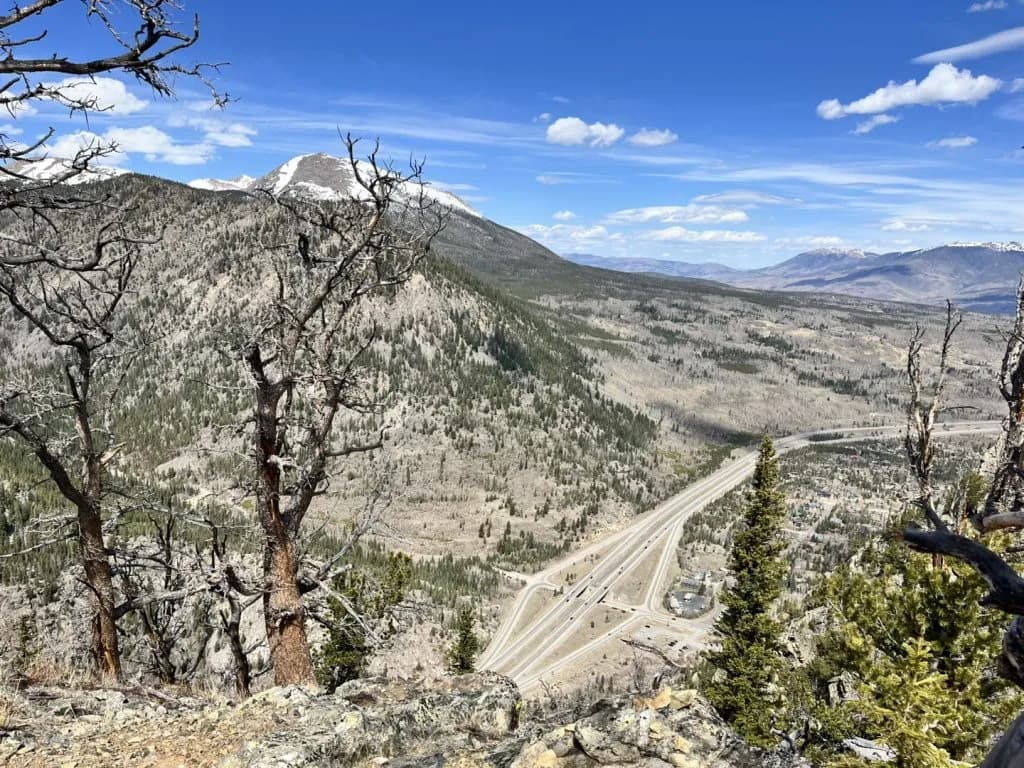
Aspen —The snow course at Hahns Peak, high in the northern mountains, started April with zero inches of snow-water equivalent. It’s never happened before. At 18 other sites across the state, the ground was bare for the first time in recorded history. At five others, the snow depth had never dipped below five inches this late in the season.
This isn’t a prediction. It’s a measurement.
Colorado is officially facing its worst snowpack year on record.
The data comes from the Colorado Climate Center, which tracks manual snow courses at 64 sites across the mountains. These aren’t automated sensors that might miss a blizzard or freeze-thaw cycle. These are people with rulers, digging into the snowpack month after month for more than half a century. And as of April 1, 60 of those 64 sites either tied or broke the record for lowest snow depth.
“The data is clear,” said Russ Schumacher, Colorado State Climatologist. “There’s no sugar-coating it. After the record-smashing heat in March, the mountain snowpack is in historically bad shape for April 1.”
The question locals ask isn’t just “how much water?” It’s “when does it stop?” And this year, it stopped early. And fast.
The culprit was a heatwave in March that scientists say would have been “virtually impossible” without human-caused climate change. For seven straight days, temperatures across large parts of the mountains remained above the previous record highs for that date. In some spots, they were several degrees warmer than any March day in the last 75 years.
Colorado set its all-time high temperature for the month of March: 99 degrees in Burlington, breaking a record set in Holly in 1907. That heat drove the fastest melt-off of snowpack ever recorded before the start of April.
For decades, climatologists pointed to the winters of 1976-77 and 1980-81 as the benchmark for dry years. The SNOTEL system, which began in the mid-1980s, showed this year’s snowpack was bad — second or third worst in decades. But SNOTEL didn’t capture the full depth of history. The manual snow course data does. And it shows that this year’s snowpack is worse than even those notoriously dry winters.
“It’s now safe to conclude that this has been the worst year for Colorado snowpack in recorded history,” Schumacher said.
The implications for the Western Slope are immediate. The snowpack is supposed to be peaking now. Instead, it’s almost gone. That means less water in the reservoirs later this summer. It means less flow in the rivers that feed agriculture and municipalities. It means a higher chance of a dry fall and winter, which compounds the problem for next year.
Schumacher noted that this will go down as the warmest March on record for Colorado, with temperatures running 3 to 4 degrees above average. The heat didn’t just melt the snow; it accelerated the entire seasonal cycle, compressing months of melt into weeks.
The 18 sites that started April completely snowless is the most striking number. None of them had ever been snowless at this time of year before. Five of them had never had less than five inches of snow-water equivalent on April 1. That’s a significant shift in the baseline. It’s not just that it’s warmer; it’s that the old patterns are breaking.
The manual snow courses capture the worst years in the state’s history. This year, it captured the worst of the worst.
“We’re seeing the effects of climate change in real time,” Schumacher said. “And it’s not a gentle trend. It’s a sharp, sudden shift.”
The heatwave was the trigger. The dry soil and low snowpack were the fuel. The result is a state that is officially, undeniably, drier than it has ever been.
“The numbers don’t lie,” Schumacher said. “This is the worst year on record. And it’s only April.”
Keep up with Aspen
The day's Western Slope news, one email each morning. Free.