Aspen Ideas Health Panel Debates Psychedelic Prescription Costs
A panel at Aspen Ideas Health discusses the financial and clinical implications of turning psychedelic drugs like MDMA into mainstream prescriptions, highlighting the high costs and need for clinical oversight.
Aspen —What happens to the average Colorado resident when the government decides to turn a psychedelic drug into a prescription?
That’s the question hanging over Wednesday’s final day of Aspen Ideas: Health. The festival wrapped up Thursday, but the implications of its last major track linger. The discussion wasn’t about fringe science. It was about policy, money, and whether we’re ready to swallow the future of mental health treatment.
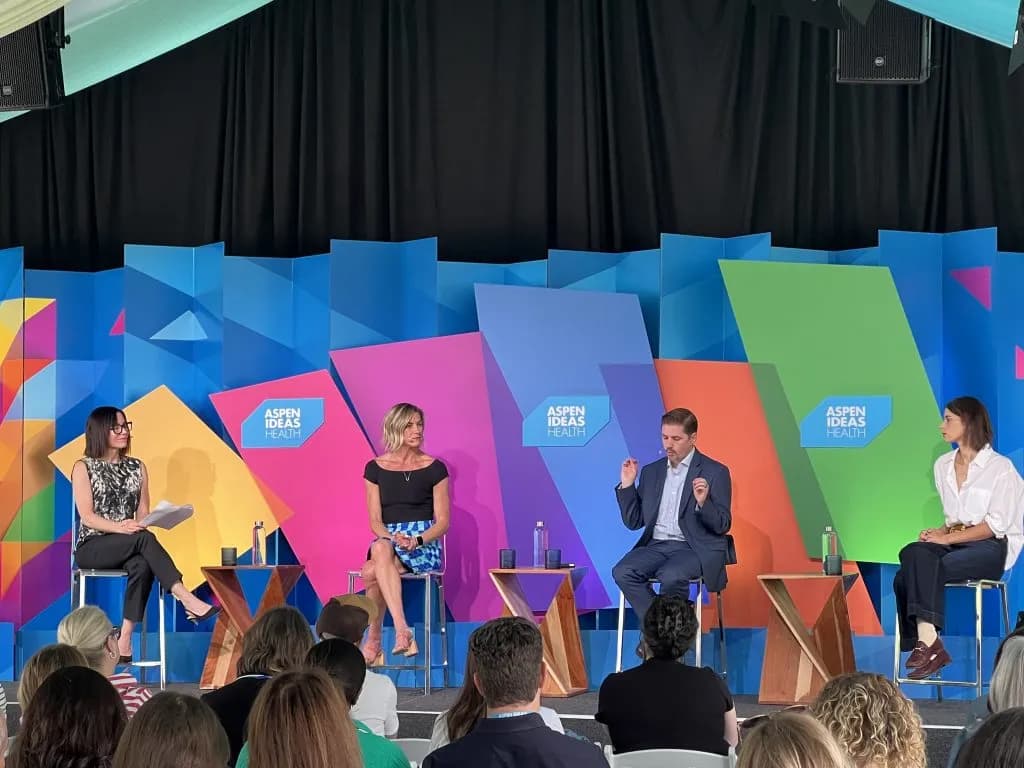
The spotlight fell on “Are We Ready for Psychedelics?” A panel featuring Rachel Yehuda and Matthew Zorn dissected the pros and cons of introducing these substances into mainstream society. Yehuda, director of The Parsons Research Center for Psychedelic Healing at the Icahn School of Medicine, Mount Sinai, argued that clinical administration of MDMA causes more epigenic changes than therapy alone.
It’s not just about feeling high. It’s about rewiring.
Yehuda noted that taking psychedelics for the first time often ranks among the top ten mystical experiences in a person’s life. But she drew a sharp line between the molecule and the method. “I don’t want to be quoted as this molecule can be transformative. I want to be quoted that this treatment can be transformative,” she said. The drug is just the tool. The clinical setting is the hand that wields it.
Matthew Zorn, deputy general counsel for the U.S. Department of Health and Human Services, agreed. He compared the drugs to a powerful sledgehammer. It can break down walls or crush the foundation. The difference is the container.
“If you’re taking a drug that opens your mind, and opens your heart and opens your consciousness,” Yehuda said, “you want someone there that knows what to do when you’re open.”
The catch? It’s going to be expensive.
Introducing psychedelics into medical settings isn’t a cure-all. It’s not a panacea. But it is a radical change. And radical changes cost money. The FDA’s approval would be the green light, but it wouldn’t be the finish line. It would be the start of a billing war.
Then there’s the wellness wash.
Rina Raphael, journalist and author of “The Gospel of Wellness,” warned that pushing unresearched trends is rampant. She likened it to fashion. It comes in, it goes out, and it rarely sticks to solid science. Fruits and vegetables don’t get airtime because they aren’t sexy. We’d rather pay for the latest supplement fad than eat an apple.
The short version: We are betting big on complex treatments for simple problems. We are betting that a sledgehammer can fix a broken mind without breaking the patient.
The festival ended Thursday. The debate didn’t.
Locals watching the rollout should ask themselves who pays when the “container” fails. Is it the insurance company? The patient? The taxpayer? The sources didn’t say. They just said the changes are coming. And they said they will be expensive.
Read that again.
Keep up with Aspen
The day's Western Slope news, one email each morning. Free.