Restore Our Roads Amendment Could Squeeze Medicaid and Education
The Restore Our Roads campaign promises dedicated funding for pavement, but forcing $700 million annually into roads could divert money from Medicaid and K-12 education.
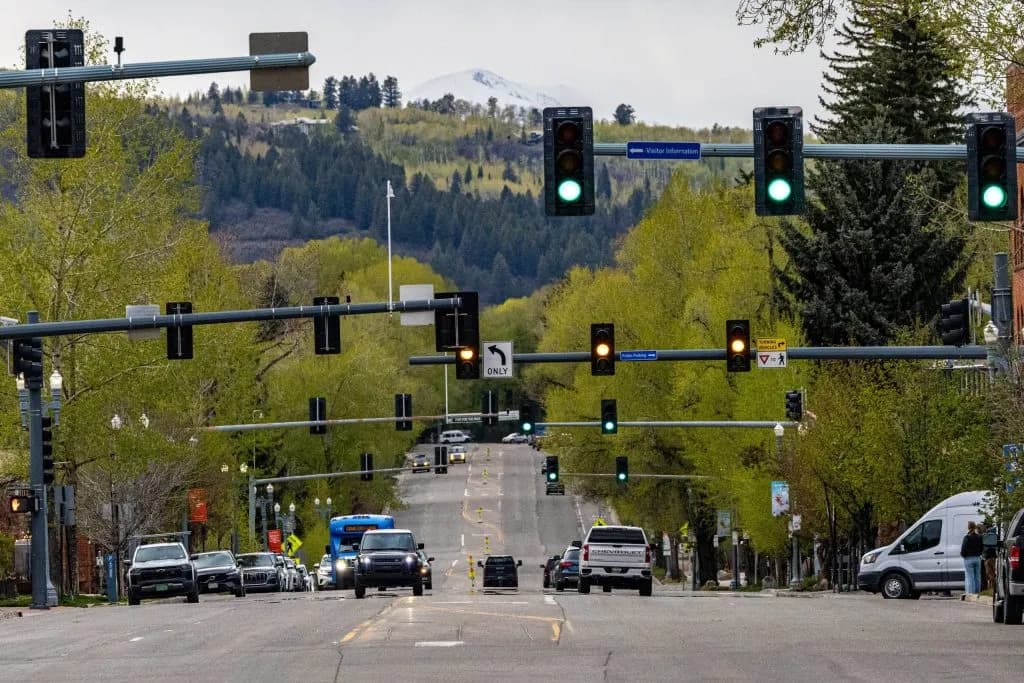
Aspen —The asphalt on U.S. 6 is already softening under the July heat, a sticky, black ribbon that pulls at your tires with every mile. You know the feeling. You know the rattle in the dashboard, the way a single pothole near Glenwood Springs can send a shockwave up your spine. It’s easy to look at those cracks and assume the solution is simply more money, poured directly from the state’s coffers into the pavement. It’s a comforting, visceral logic: broken road, fix road. But what if the fix is actually a gamble with the rest of your life?
That’s the contrarian twist sitting on the ballot this November. The Restore Our Roads campaign has gathered its signatures, and its amendment is headed to Colorado voters. The pitch is seductive in its simplicity: compel lawmakers to spend every dollar collected from vehicle registration, motor parts, and gas taxes exclusively on roads. No more dipping into that pot to balance the budget. No more "transit projects" or administrative overhead. Just roads.
But here is the rough edge that supporters of the initiative, like Tony Milo, president and CEO of the Colorado Contractors Association, are asking you to ignore. The money doesn’t appear out of thin air. It’s already there, sitting in the general fund, waiting to be allocated. And if you compel the state’s elected officials to lock that cash into asphalt, they have to take it from somewhere else.
An analysis by the nonpartisan Legislative Council Staff shows the measure would compel the legislature to appropriate roughly $700 million annually toward road projects. That sounds like a lot. It is. But nearly $540 million of that $700 million would come from the state’s general fund. And where does the general fund primarily support? Medicaid. K-12 education. Affordable housing.
You might be thinking, "I don’t have kids in school, so why should I care?" But look closer. The legislature has already been grappling with billion-dollar shortfalls for the past two years. In 2025 alone, lawmakers cut over $100 million in road funding across two years just to close a $1.2 billion gap. They did it by trimming healthcare and education. If this amendment passes, requiring support from at least 55% of voters to become law, it doesn’t just freeze road funding; it mandates a reallocation that could deepen those cuts. It turns a flexible budget into a rigid one, where every dollar spent on a patch of gravel is a dollar taken from a clinic or a classroom.
The Restore Our Roads committee has raised over $2.5 million and spent more than $1.4 million to push this narrative. They’ve been busy. Milo says, "Coloradans are tired of dodging potholes and wondering why their tax money isn’t making their daily drive any safer or faster." He promises that voters can finally say, "enough is enough: we want money generated from roads to fix our roads — without raising taxes."
It’s a clean sentence. It’s a powerful one. But it’s not entirely true. The measure doesn’t raise taxes. It doesn’t increase state funding. It just changes who gets the check. And while contractors might welcome the guaranteed flow of cash, the four lead sponsors for House Bill 1430, the bill passed by Democrats in the final days of the 2026 session, warned that this reallocation could squeeze the very services that keep the state running. Governor Jared Polis signed that bill, which will effectively neutralize the ballot measure for four years by temporarily reducing taxes used to generate road funding, but only if the amendment passes. It’s a legislative hedge, a bet that the voters will choose stability over the certainty of smoother commutes.
There’s a warmth to the idea of "money from roads to fix roads." It feels fair. It feels like justice. But if you look closely at the ledger, you’ll see that fairness is a zero-sum game. When you lock the door on the general fund, you don’t create new money. You just evict the tenants who were already living there.
The smell of hot tar rises from the construction zones along the valley floor, thick and pungent, mixing with the dust of the dry season. It’s the scent of progress, or perhaps just the scent of trade-offs. You can feel the tension in the air, the same tension that will play out in the voting booths this fall. Will you choose the smooth ride, or the full house?
Keep up with Aspen
The day's Western Slope news, one email each morning. Free.