Aspen Third Grader Lily Spitz Wins Fraser Creative Writing Contest
Lily Spitz takes first place in Aspen’s 25th annual Fraser Creative Writing Contest with her imaginative 'Wavolympics' story, highlighting a quarter-century tradition of fostering student creativity.
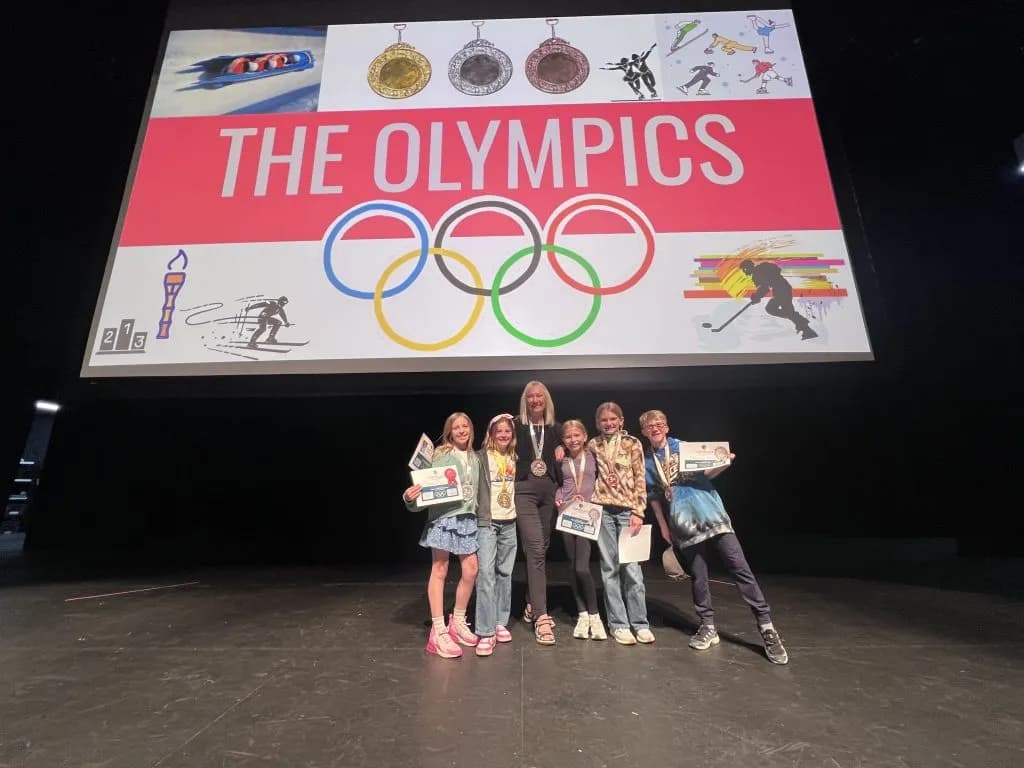
Aspen —Lily Spitz didn’t just write about the Olympics. She wrote about a lake in Maine, a summer camp called Wavus, and a cabin named Respect that had won ten gold medals. Her story, “Wavolympics, The Awesome Race!,” is the first-place entry for third grade in Aspen’s 25th Fraser Creative Writing Contest.
It’s a lot of detail for a child. Pine trees. Rope climbing. Pottery. It’s also the result of a local effort that has quietly sustained itself for a quarter of a century.
Jill Sheeley, the local children’s book author behind the “Adventures of Fraser the Yellow Dog” series, and Ada Friedman from Aspen Elementary School have put on this contest for third and fourth graders. They named the competition after Fraser, the yellow dog protagonist. This year, the theme was the Olympics. But not just the real ones. The prompt allowed for planets, future times, animals competing, and sports that don’t exist yet.
The awards assembly happened at the District Theater. Former Mayor Torre was there. Gold medalist Alex Ferreira sent a video message congratulating the students. The room was full. The stakes were low, but the pride was high.
Sheeley and Friedman didn’t just hand out certificates. They curated a specific kind of literacy. They wanted kids to imagine beyond the local context. They wanted them to build worlds. Spitz’s entry did exactly that. She described the “Respect” cabin. She listed the names: Summer, Sal, Lily, Jada, Katie, Sara, Emily, Susie, Beth, Clara, Maggi, Madi, and Julie. She described the routine. Rise in the morning. Go to bed late at night. Practice every day.
The winners list is long. It’s dense with names that will ring a bell for parents in the valley.
In third grade, Lily Spitz took first. Sasha Hartman was second. Lexi Johnston, Beatrice Robison, and Ella Fortier tied for third. The golden honorable mentions included Finn Anderson, Maisey Farrell, Weston Kay, and Margaret Van Arsdale. The list of honorable mentions stretched on. Charlotte Janian. Piper Sherman. Buddy Pegler. Cooper Cagley. Maddie Louthis. Asha Visram Kulak. Michael Hefner. Cash Coman. Winnie Anderson. Kennedy Knapp. Graham Shook. Lily Marsh. Azura Hechtkopf.
Fourth grade had its own set of victors. Bonnie Boyd won first. Vivienne Gilmore and Zoe Holstein shared second. Christopher Roeder, CC Johnston, and Maddie Waldron took third. Golden honorable mentions went to Sydney Adam, Hana Meleg, Lily Lyons, Sienna Sohn, Luka Marolda, Juniper Jones, Dagney Watson, and Kailani Silva.
The Aspen Times left the stories as-is. No edits. No smoothing over the grammar or the pacing. That’s a deliberate choice. It respects the voice of the child. It shows the raw output of imagination.
This isn’t just about writing. It’s about community infrastructure. Sheeley and Friedman have maintained this program for 25 years. That’s a long time in education. It means four generations of Aspen kids have sat in a classroom, picked up a pen, and been told to imagine something new. The Fraser name anchors it. The dog is the mascot. But the work is theirs.
Alex Ferreira’s video message added a layer of professional validation. A gold medalist talking to third graders. It bridges the gap between elite athletic achievement and creative academic effort. Both require discipline. Both require practice. Spitz’s campers practiced every day. Ferreira trained for the podium. The parallel is obvious, even if the students didn’t spell it out.
The contest is local. The participants are local. The judges are local. The venue is local. The District Theater is a familiar landmark. It’s not a national contest. It’s not a federal initiative. It’s Aspen. It’s the valley. It’s the people who live here.
The winners are named. The stories are preserved. The tradition continues.
What happens next? The stories stay in the archives. The kids move on. But the habit of writing remains. The habit of imagining remains. That’s the real prize. Not the gold medal. Not the certificate. The ability to construct a world from nothing but words. Spitz built Wavus. She created the “Respect” cabin. She invented the sports. She engineered the tension.
The rest of the winners did the same. Boyd. Gilmore. Holstein. Roeder. Johnston. Waldron. They all built something. They all competed. They all finished.
The Fraser Creative Writing Contest doesn’t just teach grammar. It teaches agency. It tells kids they can create. They can compete. They can win. Even if the competition is just against their own blank page.
That’s worth watching.
Keep up with Aspen
The day's Western Slope news, one email each morning. Free.
NWRM CASA Honors Judge O’Hara and Founders at 15th Anniversary
Craig Hosts Only Regional Special Olympics Bowling Competition