Cookie Factory Celebrates One Year Anniversary with Free Baker Neighborhood Party
Philanthropist Amanda Precourt’s Cookie Factory marks its first anniversary with a free community celebration on West Fourth Avenue, highlighting its shift from industrial relic to accessible art hub.
Colorado —The smell of old paper and ink still lingers in the high ceilings of the former fortune cookie factory on West Fourth Avenue, but the air is different now. It smells like fresh paint, expensive art, and the quiet hum of a space that has finally found its footing.
It’s been exactly one year since philanthropist Amanda Precourt threw open the doors to this Baker neighborhood relic, transforming a industrial workspace into a contemporary art gallery. On Saturday, the Cookie Factory turns one. The celebration is free, running from noon to 5 p.m., and it’s designed to be less of a corporate ribbon-cutting and more of a neighborhood block party. There will be cake. There will be balloon animals. There will be art.
The question isn’t whether the space survived its first year — it did. The question is whether it can maintain the specific, somewhat rarefied balance Precourt and her team have struck between high-concept curation and community accessibility.
“Most collectors want to show their collection,” said Jérôme Sans, the Cookie Factory’s artistic director and curator, shortly before the space opened. “So they show what they bought. But showing what you buy is just showing yourself. It’s a beautiful thing, but that’s not what we are doing here.”
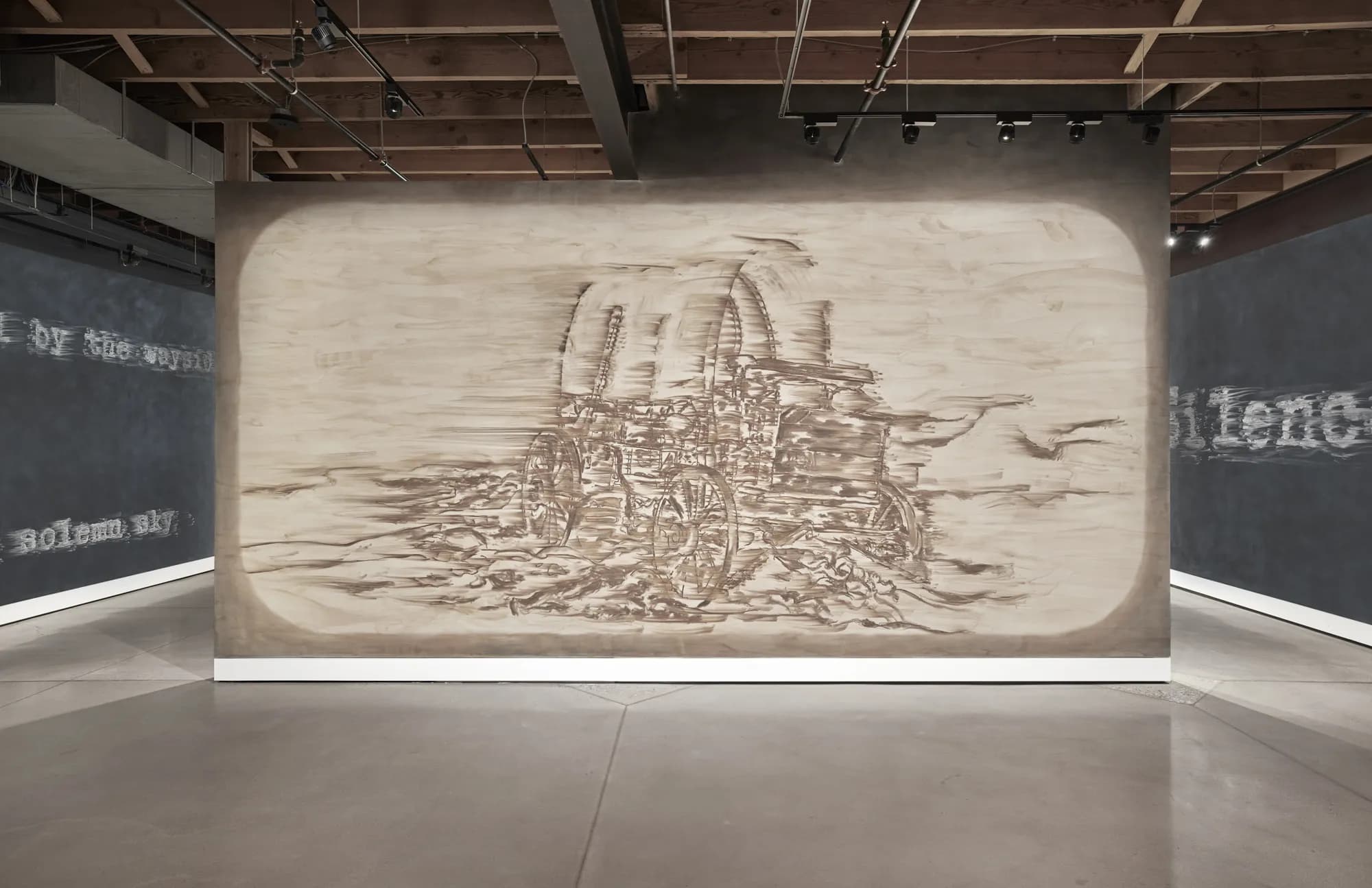
That distinction has defined the past twelve months. Instead of a static museum displaying Precourt’s personal acquisitions, the Cookie Factory has invited artists to create new, large-scale works specifically for the space. The current show, “Rush” by Gary Simmons, is a case in point. Simmons, a New York-raised artist, used sepia tones to explore the mythology of the American West — the urgency, the hope, the expansion. He called sepia the “color of a fictional time,” a fitting aesthetic for a space that repurposes the past for contemporary dialogue.
The closing reception for Simmons’ show doubles as the birthday party. It’s a practical move, too. The factory is located at 425 W. Fourth Ave., a spot that sits comfortably between the bustle of downtown and the residential calm of Baker. For locals who might wonder what happens inside a converted industrial box, the answer is: a lot of noise, color, and conversation.
Sans has been clear that the goal is to avoid the “trophy case” model of private galleries. By commissioning new work rather than just hanging purchased pieces, the Cookie Factory positions itself as a laboratory rather than a showroom. This approach requires more effort, and more money; than simply curating existing assets. But it also creates a narrative that is easier for the public to engage with. You don’t need to know the provenance of a painting to understand the story of a covered wagon in sepia tones.
The birthday party itself is a signal. It’s an invitation to the neighbors who have watched the lights go on and off in that building for a year. It’s a way of saying the doors are open, not just by appointment, but by celebration. The Wednesday evening hours (4-7 p.m.) have already established a rhythm for the community, but Saturday’s event is broader. It’s about scale. It’s about presence.
As the party kicks off, the focus will shift from the curated to the communal. Live music. Food. Games. The art remains, but it becomes the backdrop rather than the sole subject. It’s a subtle but important shift for a space that could easily have become an ivory tower.
Precourt started this project with a clear vision: turn a forgotten factory into a living room for the arts. The data supports that vision. The space is full. The programming is active. The community is showing up.
“The question is whether,” Sans might say, “we can keep the momentum going without losing the soul of the place.”
The outcome is still unfolding. But for now, the cake is cut, the balloons are tied, and the factory is no longer just a building. It’s a community hub. And that’s something worth celebrating.
Keep up with Colorado
The day's Western Slope news, one email each morning. Free.
NWRM CASA Honors Judge O’Hara and Founders at 15th Anniversary
Craig Hosts Only Regional Special Olympics Bowling Competition
Parachute Bike Clinic Seeks Permanent Home After 66 Free Repairs
Federal Report Sets 200,000 Acre-Foot Water Conservation Target for Upper Basin
Colorado Parks and Wildlife Deploys Precision Drones for Weed Control