Aspen's Railroad History Shapes Colorado Development
Discover how the railroad transformed Colorado, from its initial omission to its lasting impact on the state's economy and culture, particularly in Aspen.
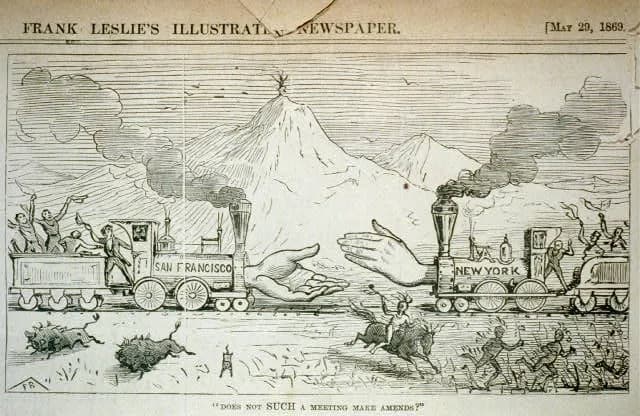
Aspen —Snow-capped peaks tower above the bustling streets of Aspen — a far cry from the dusty, isolated town it was just a few decades ago. The sound of trains rumbling through the valley is a familiar one now, but it wasn't always that way. In fact, the completion of the transcontinental railroad in 1869 didn't even bring rail service to Colorado — at least, not initially.
That omission had significant implications for the state's development. Without a direct rail connection, Colorado was at a disadvantage when it came to trade and commerce. The Denver papers were abuzz with excitement over the railroad's completion, but the lack of a Colorado connection was a major problem. It would take years of negotiation and construction to establish a rail link.
Discussion began in 1870 about connecting lines, but it was a complex issue. Two railroad companies, the Union Pacific and the Kansas Pacific Railroad Company; were vying for control of the mail contract. The fact that most of the land belonged to the federal government added a political layer to the decision, and Colorado's status as a non-state at the time only complicated things.
A small victory came in 1870 when the Denver Pacific Railway and Telegraph Company constructed a short line from Cheyenne, Wyoming, to Denver. This line connected with the Union Pacific, finally providing some rail service to the state. The Rocky Mountain News hailed the arrival of the first train in June, saying it marked the beginning of a "new era of progress and prosperity."
But the dream of an east-west line through Colorado remained just that - a dream. Many in Denver favored the Kansas Pacific Railroad, which would have connected the city to Kansas City rather than Omaha. The D&RG, which would eventually connect to Aspen, had its own plans, but progress was slow due to ownership battles.
The partnership between the Union Pacific and Kansas Pacific in 1875 was seen as a monopoly by many, and the potential for Colorado traffic was a major issue. The Atchison Topeka and Santa Fe Railroad emerged as a competitor, but the battles over rail lines continued into 1878.
Despite the setbacks, the impact of the railroad on Colorado's development cannot be overstated. In just a decade, the state underwent a revolution. A 60-year-old man who attended a depot opening in 1876 said it was the first train he had ever seen. a common occurrence at the time. The Denver paper posed the question of whether lines would ever come to the city, but the answer would have to wait.
By 1880, a new problem had emerged: the building of the Panama Canal. But for Coloradans, the focus remained on developing their state's rail infrastructure. It would take time, but eventually, the sound of trains rumbling through the valley would become a familiar one. The question now is what the future holds for rail service in Colorado, will it continue to play a major role in the state's development, or will other modes of transportation take its place?
Make no mistake, the transformation of Colorado's transportation landscape has been profound. The short version is that the state went from being isolated to connected in a matter of decades. But the details are worth watching; the battles over rail lines, the impact on local development, and the ways in which the railroad changed the lives of Coloradans. Read that again: the railroad changed the lives of Coloradans. That's a fact worth considering.
As folks around here know, the railroad has had a lasting impact on the state. From the mines of the western slope to the tourist attractions of the eastern plains, the railroad played a crucial role in shaping Colorado's economy and culture. But what's often overlooked is the role that local communities played in pushing for rail service. The community in Aspen, for example, was instrumental in bringing the D&RG to town.
The fact that it took years of negotiation and construction to establish a rail network in Colorado is a reminder that the development of the state's transportation infrastructure was not solely the result of external factors - local communities had a say in the matter. Worth watching is how this history continues to shape the state's transportation landscape today.
In Delta County, the impact of the railroad can still be seen. The county spends around $1 million annually on road maintenance. a fraction of what it would cost to build and maintain a rail line. But the benefits of the railroad are clear: it brought people and goods to the area, stimulating local economic growth. The state will balance its transportation needs with the demands of a growing population, and the outcome will have significant implications for Colorado's future.
The transformation of Colorado's transportation landscape will continue to shape the state's development for years to come. The community in Aspen, and indeed across the state, will be watching closely to see how this story unfolds.
Keep up with Aspen
The day's Western Slope news, one email each morning. Free.
Aspen's ACES Returns Annual Harvest Party to Rock Bottom Ranch

Glenwood Ghostwalk Brings Frontier History to Life in Linwood Cemetery