Atria’s Richard Isaacson Ties Brain Health to Belly Size at Aspen Ideas Festival
Richard Isaacson of Atria Health reveals that two out of three Alzheimer's cases affect women and links brain shrinkage to waist size during a key session at the Aspen Ideas Festival.
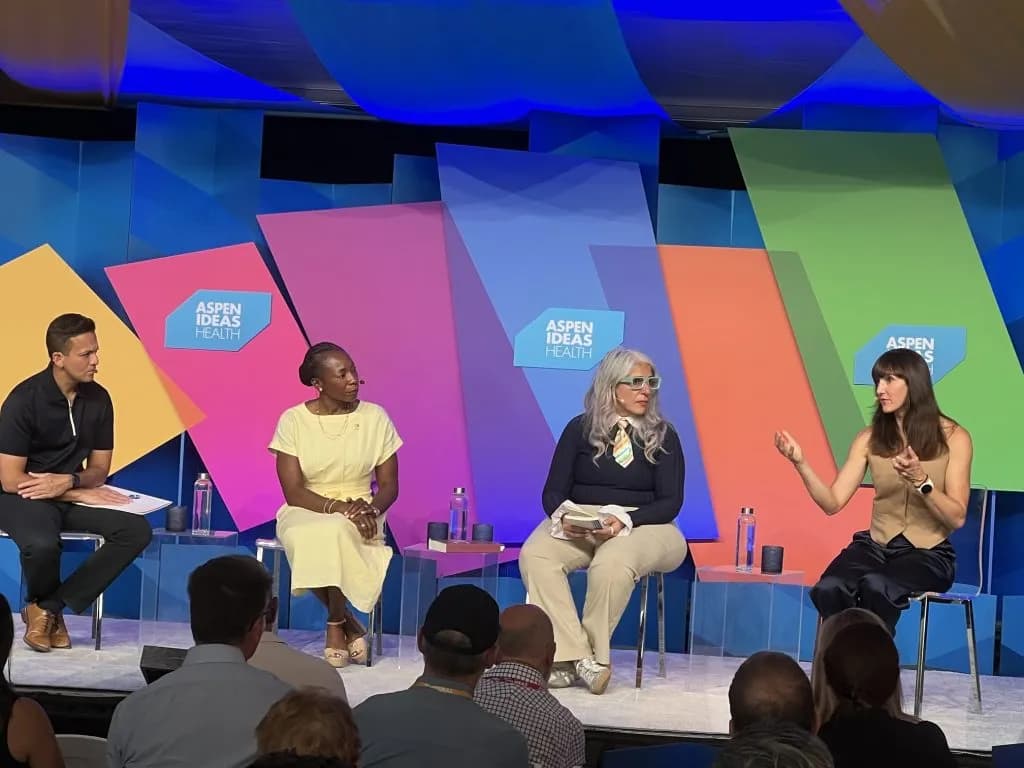
Aspen —“Two out of every three brains affected by Alzheimer’s are women’s brains,” said Richard Isaacson, director at Atria Precision Prevention Program at Atria Health and Research Institute, his voice cutting through the hum of the Aspen Ideas Festival crowd. “You are what you eat when it comes to brain health. Food is medicine, and there is a science to this.”
It’s a stark statistic to drop into a mountain town known for its wellness retreats and high-end supplements, but Isaacson wasn’t talking about the latest superfood fad. He was talking about the biological reality that our bodies, particularly our brains, are in a constant state of negotiation with what we consume, how we move, and how we sleep. This was the opening salvo on day two of Aspen Ideas: Health, a day that felt less like a lecture and more like a urgent briefing for a community that is already living longer and paying closer attention to the machinery of its own existence.
The festival, nestled in the high-altitude air that locals know can make even a short walk feel like a workout, hosted a series of panels that dissected the future of aging and the frontiers of brain health. The air inside the venues was thick with the kind of intellectual curiosity that makes these gatherings worth the drive up the hill, where the pines stand tall and the light hits the peaks in a way that makes you pause and look up.
Isaacson’s message was grounded in the tangible. He pointed to the correlation between belly size and the shrinking of the brain’s memory center, a visceral link between the waistline and the mind. His recommendations were practical, almost old-fashioned in their simplicity: walk quickly for 45 to 60 minutes in the morning, engage in strength training to speed up metabolism, and combine omega-3 fatty acids with B-complex vitamins to slow the inevitable shrinkage. It’s not about perfection; it’s about prevention. He advocated for knowing your body fat, bone density, and muscle mass numbers, treating the body like a complex system that requires monitoring rather than just maintenance.
Wendy Short Bartie, executive vice president and chief corporate affairs officer at Bristol Myers Squibb, added another layer to this narrative, reminding the audience that quality sleep and human connection are not soft skills but biological necessities. Arianna Huffington, moderating the session, noted that sleep has been largely overlooked, yet it remains the fastest and best way to clear toxins from the brain. The stakes are high. Twelve billion days of productivity are lost in the workplace annually due to mental health issues, and every three seconds, someone in the world is diagnosed with Alzheimer’s. Brain health, Short Bartie insisted, is health. It affects everyone, regardless of zip code or altitude.
As the conversation shifted to the broader demographic tide, the focus turned to the "Centenarian population," the fastest-growing segment of our aging society. Zayna Khayat, an applied health futurist, and Jamie Justice of the XPRIZE Foundation, noted that those over 80 now exceed the population of Gen Z. The oldest wave of Baby Boomers is just starting to turn 80, and as they age, the priority shifts from mere survival to maintaining mobility and security — both financial and physical.
Myechia Minter-Jordan, CEO of AARP, echoed this sentiment, emphasizing that living to 100 isn’t an if, but a when. The current older population wants to age safely, without losing their independence. It’s a shift from fearing the aging process to managing it with intention. The panels didn’t just offer data; they offered a roadmap for a community that is watching its own demographics change in real time.
Outside, the Aspen air grows colder as the sun dips below the ridges, casting long shadows across the snow-dusted slopes. The festival buzz fades into the quiet of the evening, but the questions linger in the crisp air. How will we care for our aging parents? How do we keep our own minds sharp as the years accumulate? The answers aren’t in a pill bottle, but in the morning walk, the night’s sleep, and the connections we make with each other, one day at a time.
Keep up with Aspen
The day's Western Slope news, one email each morning. Free.

Tribal members bless Mount Blue Sky summit for Colorado sesquicentennial

Craig Press Merges Two Magazines to Define Northwest Colorado’s Outdoor Identity