Avon Speed Cameras Cut Speeding 97% and Slash Costs
Avon Police Chief Greg Daly reports a 97% reduction in speeding and lower vendor costs since Dacra Tech cameras went live, issuing over 7,000 citations.
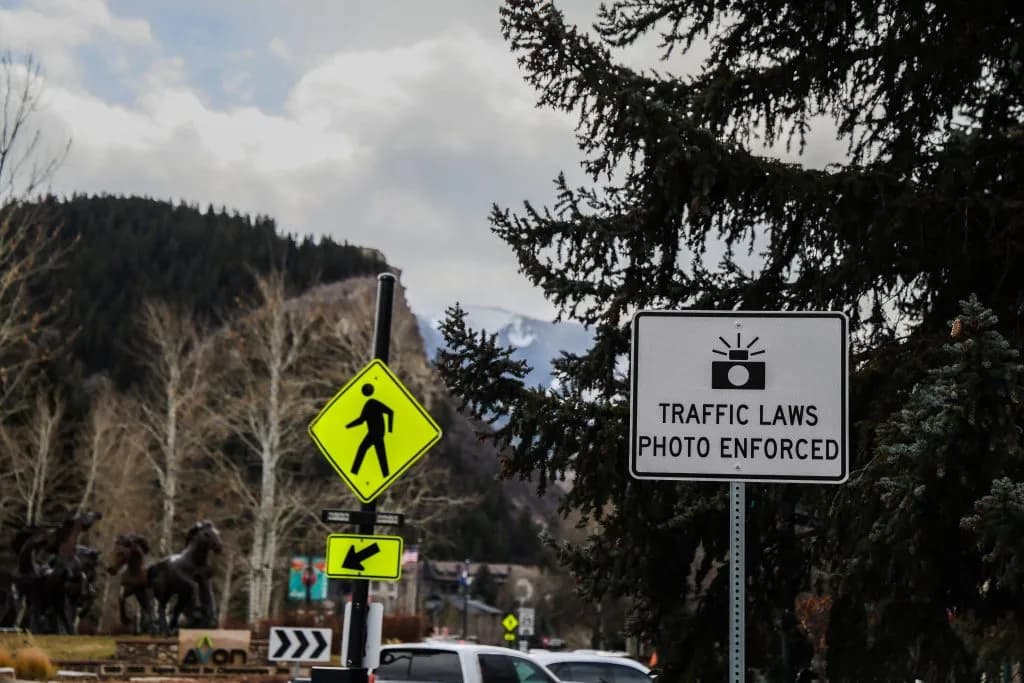
Aspen —The gravel crunches under tires as a sedan rolls past the crosswalk near Avon Elementary, the driver’s foot hovering over the accelerator before settling into the rhythm of the zone. It’s a small, almost imperceptible shift in behavior, but for Avon Police Chief Greg Daly, it’s the difference between a near-miss and a safe afternoon for the children waiting for the bus.
That quiet efficiency is what the town has been chasing since late last year, when five Dacra Tech cameras went live to tame the speeding traffic along Avon Road and U.S. Highway 6. The results, presented to the Town Council this Tuesday, are less about dramatic enforcement and more about a steady, automated correction of driver habits.
“We are seeing 55-60 citations per day,” Daly told the council, noting a staggering 97% reduction in speeding within the camera zones. Since the system kicked into gear on December 21, 2025, it has issued 7,483 citations. That’s not just a number on a page; that’s thousands of drivers who, for a moment, remembered to lift off the gas.
The financial mechanics of the program have shifted alongside the driver behavior. Because the units are working so well, the vendor, Dacra Tech, has adjusted its pricing structure retroactively. The monthly cost per camera dropped from $2,000 to $500, and the processing fee per citation was cut in half. It’s a rare win-win: the town pays less because the enforcement tools are doing their job, and the state’s requirement that net revenue be reinvested in public safety is being met. So far, $156,962 has been collected online, with another $49,620 coming in through in-person payments at town hall.
But the mountain air doesn’t always cooperate with the bureaucracy. The $40 citations are mailed to the vehicle owners’ listed addresses, and in a region where many folks live in rural pockets with no physical street delivery, those letters vanish into the ether.
“Yes, we have had similar issues to Vail regarding retrieving PO box addresses versus the physical addresses,” Daly confirmed. Officers have had to manually track down drivers, a time-consuming process that the vendor is now trying to streamline by working with the Colorado DMV to get the right data upfront. It’s a logistical rough edge in an otherwise smooth machine.
The devices are strategically placed: on Avon Road between Roundabout 4 and 5, targeting the crossings at East Hurd Lane and Riverfront Lane; along U.S. 6 between Frontgate and Riveroaks; and near the busy hubs of West Beaver Creek Boulevard, Harry A. Nottingham Park, and Westlake Village Apartments. They watch the intersections where pedestrians and cars collide most often.
Yet, the story isn’t entirely one of compliance. Some drivers still speed, and the system still has to work harder to find the right mailbox. The revenue generated will fund a hearing officer and a dedicated police position for human verification, ensuring that the automated eye doesn’t become an automated overlord.
As the sun dips behind the Elk Mountains, casting long shadows across the pavement near the elementary school, the lenses blink their steady, unblinking gaze. They don’t care if you’re in a hurry, or if you’re just passing through. They only care if you’re over the line. And for now, most of us are staying just under it.
Keep up with Aspen
The day's Western Slope news, one email each morning. Free.