Basalt Nonprofit Response Sees Surge in Clients
Basalt-based nonprofit Response has seen a significant increase in clients seeking help, attributed to the new Halle Center for Hope and Healing, which provides a safe and secure space for survivors of abuse.
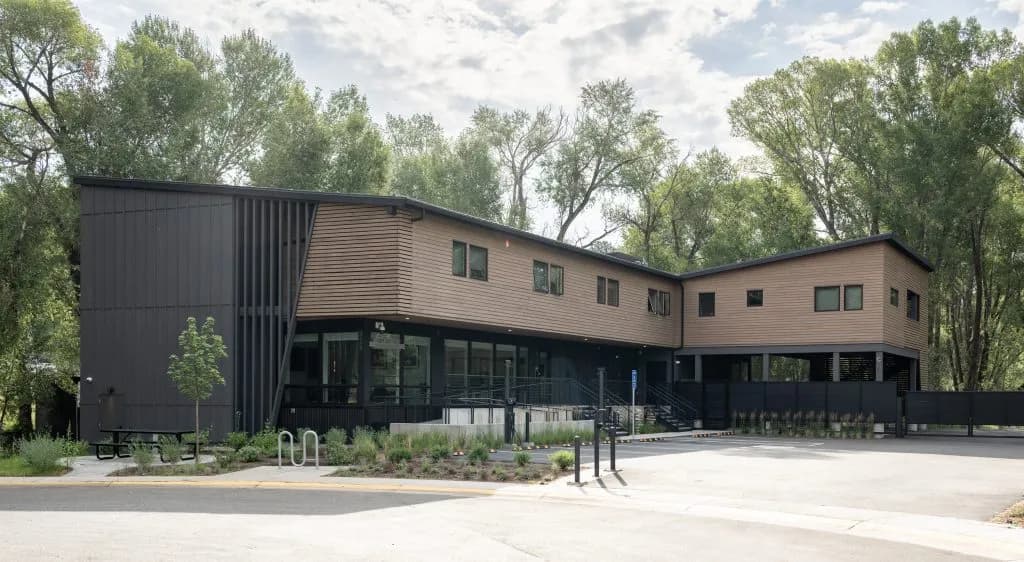
Aspen —The sound of the Roaring Fork River, a gentle hum of water against rock, provides a sense of calm in the midst of a bustling valley, but for many, the tranquility of this place is shattered by the harsh reality of abuse. As I stand in front of the Diane and Bruce Halle Center for Hope and Healing, the new headquarters of Basalt-based nonprofit Response, I'm struck by the warmth and welcoming nature of the building, a stark contrast to the darkness and fear that many of its clients have faced.
Response, which has been supporting survivors of abuse since 1983, has seen a significant surge in clients in 2026, with 126 survivors seeking help in the first four months of the year, putting the organization on track to surpass last year's total of 185 clients. This growth is a result of the Halle Center, which opened in February 2025 and has not only increased the organization's visibility but also provided a safe and secure space for survivors to seek help.
Executive Director Shannon Meyer attributes this growth to the center's public-facing aspect, which was intentional in its design, with features like tours and a grand opening that have helped to raise awareness and reduce stigma around abuse. As I walk through the center, I notice the attention to detail, the emphasis on security and safety, and the warm, open spaces that seem to envelop you in a sense of comfort and support. The center's capacity to provide emergency housing for up to seven adults and 15 children, as well as its 24-hour crisis hotline, support groups, protection orders, and medical support, has dramatically expanded Response's ability to serve the community.
What's also noteworthy is the increase in Latino clientele, a trend that bucks the national average, where many shelters have seen a decrease in Latino clients due to issues with ICE. Meyer credits this to the organization's two bilingual and bi-cultural staff members, who have helped to build trust and confidence within the Latino community. As she says, "People have the confidence that if they come to us, there will be someone who looks like them, speaks their language, can understand their culture and help them." This is a crucial aspect of Response's work, and one that has clearly resonated with the community.
As I delve deeper into the story of Response, I'm struck by the organization's history and evolution, from its humble beginnings in Aspen in 1983 to its current status as a leading provider of support services for survivors. The fact that Response has seen a success rate of only 8% of clients returning to their abusers in 2025 demonstrates the effectiveness of its approach and the impact of the Halle Center.
But despite this success, Response is facing significant challenges, including a 47% decrease in federal funding since 2024, which has created a heavier reliance on local fundraising efforts. As I consider the implications of this funding shortfall, I'm reminded of the importance of community support and the need for ongoing investment in organizations like Response, which are working tirelessly to provide critical services to those in need.
As I stand outside the Halle Center, I'm met with the sound of children's laughter, a stark contrast to the darkness and fear that many of these young people have faced. It's a reminder that there is hope, that there are organizations like Response that are working to create a safer, more supportive community for all. The image of this building, with its warm and welcoming presence in the heart of the valley, stays with me, a reminder of the power of community and the importance of supporting those who are working to create positive change.
Keep up with Aspen
The day's Western Slope news, one email each morning. Free.

S&P 500 Slips Modestly as Weak Retail Sales and Oil Prices Drive Market Correction
Aspen Essay Connects Generations Through Highway 82 Landmarks