Glenwood Springs Council Approves $500,000 for Cavern Springs Mobile Home Park Buyout
Glenwood Springs City Council votes 5-2 to commit $500,000 from the workforce housing fund as a forgivable loan to help Cavern Springs Mobile Home Park residents buy the land beneath their homes.
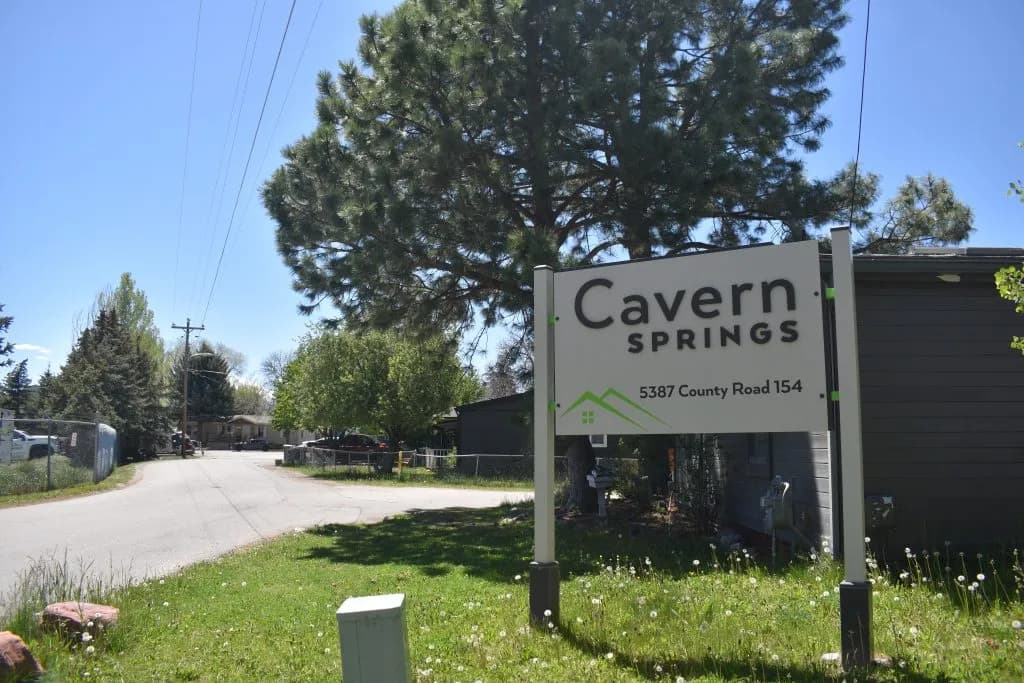
Glenwood Springs —The obvious assumption is that Glenwood Springs is throwing $500,000 at a problem just outside its borders to keep it from becoming their problem. It’s a pragmatic, defensive move. But the city’s leadership sees it differently. They aren’t just buying land; they’re buying stability for a community that’s already half-inside the city’s economic orbit.
On Monday, the Glenwood Springs City Council voted 5-2 to commit that $500,000 from the city’s workforce housing fund. The money isn’t a gift. It’s a forgivable loan designed to help residents of Cavern Springs Mobile Home Park buy the ground beneath their feet.
Cavern Springs sits in unincorporated Garfield County, just a stone’s throw from the city limits. It holds 98 homes and roughly 300 residents, including about 60 children. The owners received a $23 million offer for the park, which triggered Colorado’s right-of-first-refusal laws. Now, the residents — organized as the Sopris Mountain Collective — have to raise enough cash to make a counteroffer the owner must consider in good faith.
“The question is whether,” as Alex Daue, a resident and advisory board member, pointed out, “we can actually close the deal.”
The math is tight. April Long, executive director of the West Mountain Regional Housing Coalition, says the broader acquisition target is about $24 million. That covers the purchase price, operating reserves, capital reserves, and anticipated improvements. The city’s contribution is just one piece of a much larger, regional puzzle.
As the funding pools in from neighbors, the picture becomes clearer. Aspen has committed $2 million. Snowmass Village is in for $1 million. Carbondale pledged $500,000. Pitkin County gave a verbal nod for $1.5 million last week. With Glenwood’s $500,000, local government commitments are sitting at about $5.5 million.
The goal is $6 million in government commitments, plus private donations and loans. ROC Capital, a nonprofit lender tied to the resident-owned community model, is expected to provide a below-market-rate loan between $6 million and $14 million, depending on how much other funding is raised.
“If we do the math with all 98 units, that’s $5,100 a unit,” Daue told the council. He was looking at the 36% estimate of workers in Glenwood Springs who are cost-burdened by housing. This isn’t just about keeping people in a trailer park. It’s about keeping teachers, nurses, and service workers in the valley they serve.
Housing Development Manager Watkins Fulk-Gray made sure the council understood the risk. The $500,000 won’t be spent unless the purchase succeeds. If the deal falls through, the money is deobligated. It’s a clean bet.
Under the current setup, residents own their homes but not the land. They pay monthly lot rent. In a resident-owned cooperative model, they jointly own the land. That gives them control over future lot rents, maintenance, and reserves.
“That is the method for preserving affordability in the park,” Fulk-Gray said.
It’s a simple concept that gets complicated in practice. Who owns the dirt determines who controls the cost of living on it. By shifting ownership to the residents, the city isn’t just subsidizing housing; it’s subsidizing predictability.
Councilors David Townsley and Ray Schmahl voted no. They likely saw the risk of the deal failing or questioned the outlay. Mayor Marco Dehm, Mayor Pro Tem Erin Zalinski, and councilors Mitchell Weimer, Steven Smith, and Sumner Schacter voted yes. The Workforce Housing Fund Advisory Board recommended the request unanimously.
The money is sitting there, ready to move. The residents are making their counteroffer. The rest of the valley is watching to see if the $24 million target is realistic or just a dream.
“If we look at that 36% estimate of workers in Glenwood Springs who are cost-burdened, this is about keeping them here,” Fulk-Gray said. “It’s about ensuring that the people who build our roads and serve our food can afford to live in the town they help run.”
The deal will either close or it won’t. But for now, the city has put its money where its mouth is.
Keep up with Glenwood Springs
The day's Western Slope news, one email each morning. Free.
Twin Lakes Releases 2,500 Acre-Feet to Save Upper Arkansas River

Glenwood Springs Resident Calls for Active Citizenship Amid AI Data Center Water Threats