Beulah Man Swept by Flood Near Aspen Acres Burn Scar
Heavy rain triggered a flash flood in Beulah, sweeping 80-year-old Henry R. Humphreys downstream near the Aspen Acres fire burn scar, highlighting ongoing risks for recovering communities.
Aspen —Henry R. Humphreys was 80 years old when the water took him.
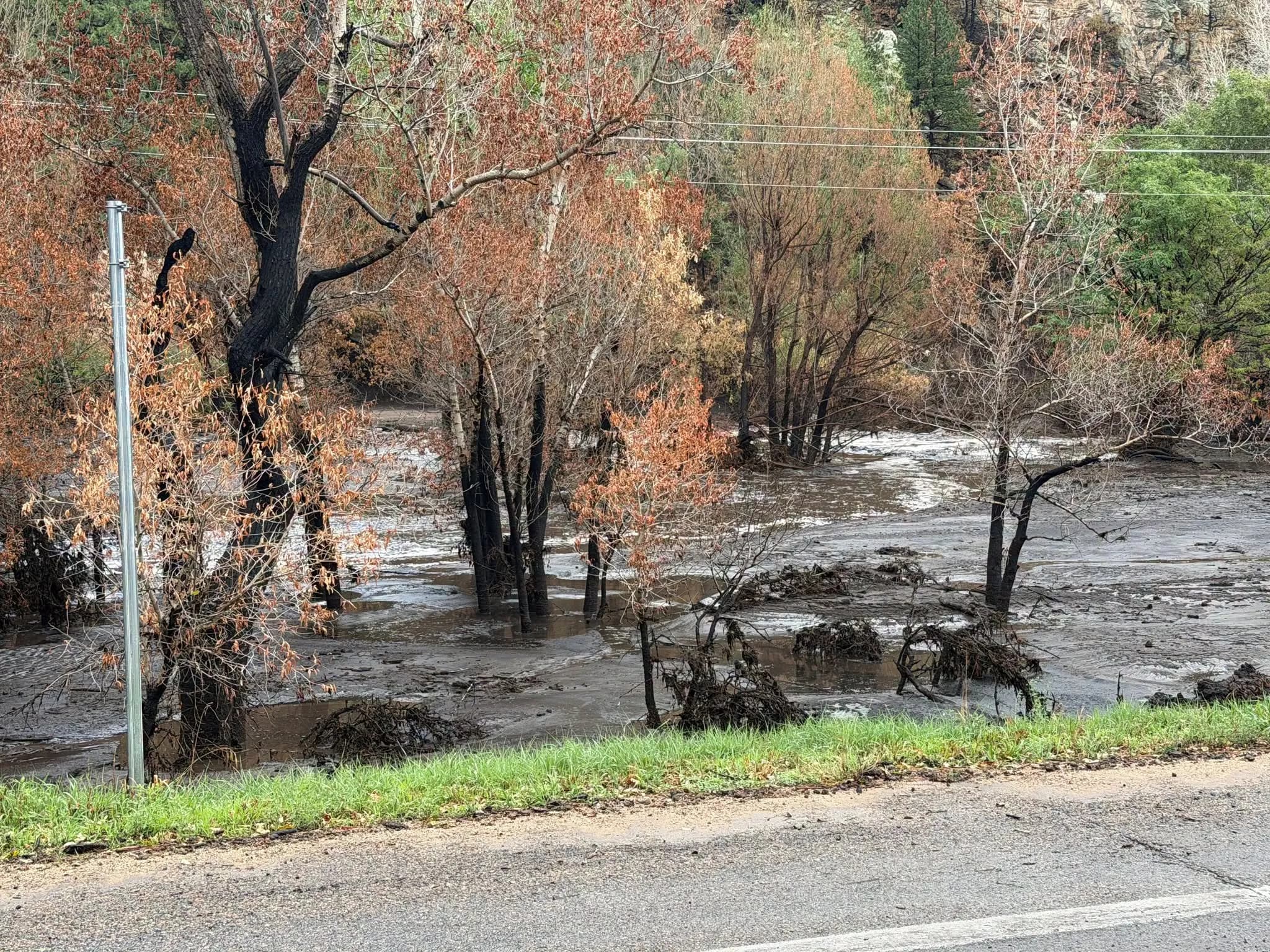
He wasn’t far from home, caught near the intersection of Colorado 78 and Central Avenue in Beulah. But on that Sunday afternoon, the ground beneath him turned into a river. Heavy rain fell in about 1½ hours, dumping 1 to 1½ inches of water on the area. The floodwaters moved fast, sweeping Humphreys downstream and pinning him near where he had been trying to find safety.
Beulah fire crews rushed to the scene, but the water was too high for immediate access. First responders began searching on foot while the county’s drone team and Flight for Life scanned from the air. It took them a short distance to find him — about 2 miles downstream, resting in a creek.
The Pueblo County Coroner’s Office confirmed his identity as Henry R. Humphreys. His death was the latest tragedy to strike a community already reeling from one of Colorado’s most intense wildfires.
To understand why the water moved with such force, you have to look at what happened earlier this summer. The Aspen Acres fire destroyed more than 300 homes across its 102,000 acres. Wildfires strip away vegetation that normally absorbs rainfall. Without those roots and that cover, the soil becomes hydrophobic — repelling water rather than soaking it up. When heavy rain hits a burn scar, the water doesn’t seep in; it rushes downhill, carrying mud and debris with it.
That is exactly what happened to Humphreys. A flood watch had been issued earlier that Sunday, warning residents of the potential for flooding and debris flows. The National Weather Service noted that 1 to 1½ inches of rain fell in a short window, triggering the flash flood that claimed him.
Now, the community faces another test. More monsoonal moisture is moving into the region, and forecasters with the National Weather Service’s Pueblo office expect afternoon thunderstorms to return this week. The question for Beulah is whether the sky will open up again, and if so, where it will hit.
“Confidence in a cell hitting the burn scar is low (less than 20%),” forecasters warned on Monday. “If one does so, it could lead to flash flooding.”
The low confidence figure might sound reassuring, but in a burn scar, even a single cell can be dangerous. The infrastructure is still recovering. Roads are fragile. Homes are vulnerable. For neighbors like Humphreys, who lost their lives or their livelihoods to the fire, the threat of water is just as real as the threat of flame.
The math holds up: less than 20% chance doesn’t mean no risk. It means the odds are against a direct hit, but not by much. And when that rain does fall on exposed earth, it moves quickly.
For now, Beulah waits for the next storm system to arrive. They know how to prepare. They know what to watch for. But they also know that the ground is still healing, and the water is always watching.
“We’re keeping an eye on it,” one local resident said, standing near the dried creek bed where Humphreys was found. “You can’t ignore it when you’ve just come out of the fire.”
Keep up with Aspen
The day's Western Slope news, one email each morning. Free.