Biologist Andreas Weber Brings Ecological Philosophy to Aspen Symposium
Biologist and author Andreas Weber presents his concept of an 'ecology of the divine' at Aspen’s second annual Frontiers of Knowledge Symposium, inviting attendees to experience living reality through a personal relationship with rivers.
Aspen —The late summer heat still lingers in the high country, but the air in Aspen is already thinning with the promise of autumn. It’s a season defined by contrast: the bustle of the tourist influx against the quiet, ancient presence of the mountains. On Sunday, Aug. 23, that contrast will play out inside the Wheeler Opera House, where the town will host its second annual “Frontiers of Knowledge Symposium: Consciousness in the Living World.”
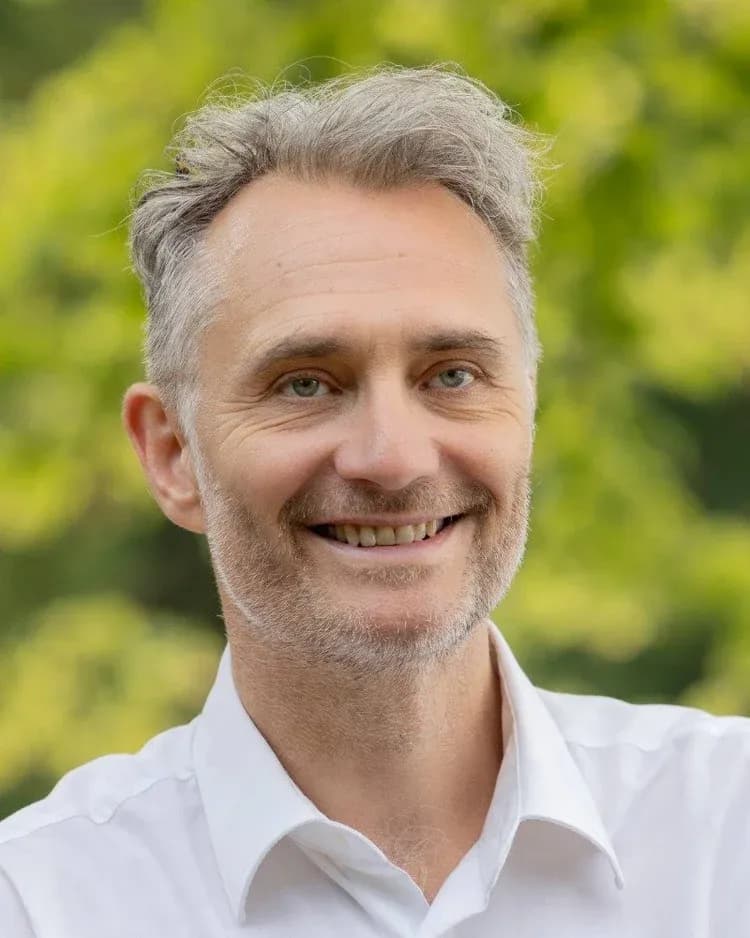
The lineup is eclectic. You’ve got Garth Stevenson, a double bassist who composes music with whales, sharing the stage with Andreas Weber. Weber is a biologist, a philosopher, and the author of 15 books. He’s here to talk about rivers, reality, and what he calls “surrendering to truth.”
It’s not your typical academic lecture. Weber isn’t just listing facts or citing data points. He’s trying to get people to feel something.
“To hear them tell it,” the premise is that we’ve lost our connection to the fundamental nature of reality, and we need to find it again. Weber’s newest book, Butterfly Means Soul, lays out what he calls “an ecology of the divine.” It’s an architecture for understanding the world not as a resource to be exploited, but as a living entity that we are part of.
He’s been working on this book by studying Meister Eckhart, a 14th-century German mystic. Eckhart had a specific take on bliss that Weber finds compelling. It’s not a fleeting emotion or a psychological state.
“It is a state of being — a mode of how you put yourself towards reality,” Weber said.
That distinction matters. If bliss is just a feeling, it’s fragile. If it’s a state of being, it’s foundational. Weber argues that this state is available to all living reality — humans, clouds, the sun, the oceans. It’s a “fundamental joy that is not about the ego.”
The contemporary cultural norm is different. We’re taught to take as much as we can, to fortify ourselves, to separate ourselves from the world around us. Weber is pushing back against that. He’s bringing back an old-fashioned idea: “a sort of ecological proof of the reality of the divine.”
He’s not trying to prove God exists in the traditional, rational sense. Descartes had his proofs. Weber’s is more intuitive, more experiential. He calls it a “tongue-in-cheek ecophilosophical proof” because this kind of joy can’t be exhausted by logic alone.
“I want people to experience living reality,” he said.
So, how do you experience it? Weber has a specific method. He invites people to his home in Italy, near the sea, to enter what he calls “a mentorship with rivers.” It’s not a tour. It’s a relationship. He wants people to start a personal, even romantic, relationship with a local river.
Why a river?
“We need somebody who can reveal to us what is actually our foundational dimension,” he said. “A river is somebody who can do this. A river is somebody who is very close to the source of being.”
The logic is simple enough. Rivers make life possible. They are the source. If you want to understand the source of being, you look to the source of life.
Weber’s work is a sequel to his previous books, including Enlivenment: Toward a Poetics for the Anthropocene and Matter and Desire: An Erotic Ecology, which won a Nautilus Award Gold Medal. He’s been building this argument for years. Now, he’s bringing it to Aspen.
The question is whether the folks in the valley, busy with their own lives and their own rivers, will listen. The symposium is one thing. The actual practice of “mentorship with rivers” is another.
Weber isn’t asking for belief. He’s asking for experience.
“A river is somebody who is very close to the source of being,” he said. “Because, of course, the river is what makes life possible at all.”
Keep up with Aspen
The day's Western Slope news, one email each morning. Free.