Climate Change Doubled Risk of Canada's Massive Summer Wildfires
A new World Weather Attribution study finds human-caused climate change doubled the likelihood of the tinderbox weather conditions that sparked Canada's massive summer wildfires, challenging political narratives blaming poor fire management.
Aspen —A $14 million project. Twelve units.
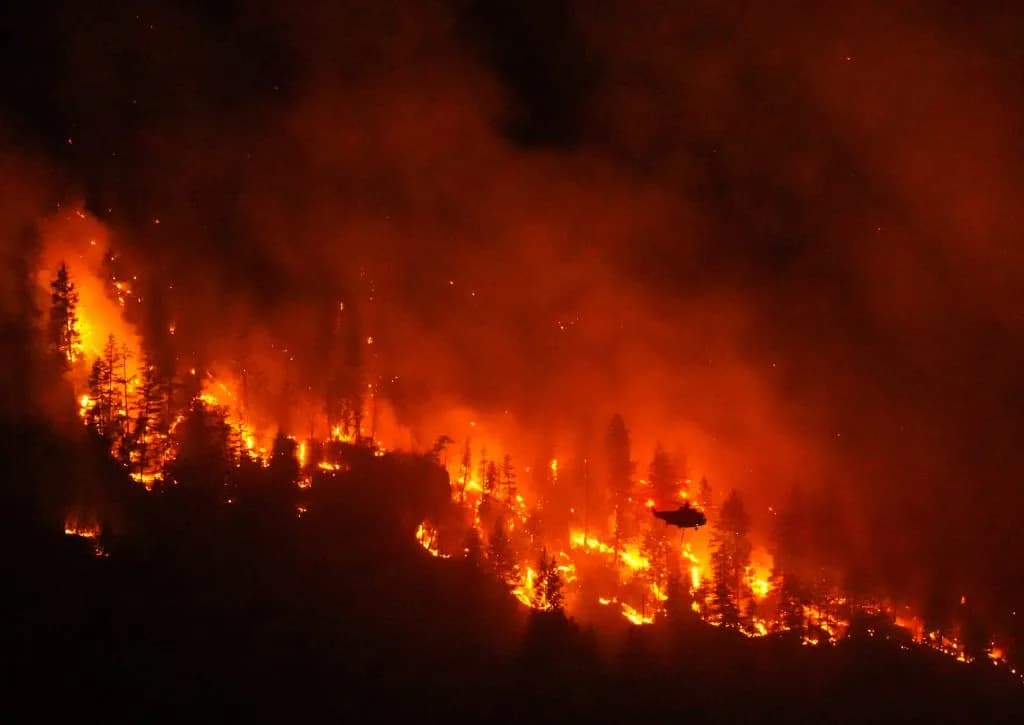
Wait, that’s the wrong story. Let’s look at the actual data. Human-caused climate change doubled the likelihood of the tinderbox weather conditions that sparked Canada’s massive summer wildfires. That is the headline-grabbing statistic from a study released Thursday by World Weather Attribution. It’s not just a vague "it got hotter." It’s a specific, quantifiable doubling of risk.
And yet, President Donald Trump is busy talking about punishing Canada for poor fire management. He’s pointing north, blaming mismanagement for the smoke choking New York and the rest of the East Coast. The scientists say he should look in the mirror. The United States has the huge historical emissions of heat-trapping gases from burning coal, oil, and gas. We built the engine; they’re just driving it.
The study focused on the Northwest Territories and northwestern Ontario. The conditions there — heat, lack of rain, low humidity, wind — are unusual but not entirely rare. However, global warming made them twice as likely to occur. This isn’t a once-in-a-lifetime anomaly. It’s becoming a regular feature of the calendar. The report found that the weeklong weather conditions leading to the fires in Ontario are now the type that happen every six years or so. In a preindustrial climate, this would have been much less likely, maybe once in a human lifespan. Now? It’s a recurring headache.
Jonathan Boucher, a fire scientist at Canada’s Forest Service and study co-author, put it plainly. “In a preindustrial climate this would have been much less likely to occur, maybe once in a lifespan. So climate change has made those events more likely.”
Mike Flannigan, a fire scientist at Thompson Rivers University who wasn’t part of the study, offered a sharper metaphor. “Mother Nature’s been burning. Now she’s on amphetamines and she burns more and more.”
The scale of the destruction is hard to ignore. More than 5,000 square miles burned in the remote Northwest Territories. Lightning started the spark, but the climate conditions took that ignition and made the fire spread too fast to control. Theodore Keeping, the report’s lead author, and Boucher agree: the weather was the fuel.
The smoke didn’t stay in Canada. It spread across both countries, choking major cities. The Vail Daily reported that Trump has been vocal about the cross-border pollution, but the data suggests the root cause isn’t Canadian policy, it’s global fossil fuel consumption. The study, done quickly and not yet peer-reviewed, compared current conditions to a world without the 2.5 degrees of warming that’s occurred since the industrial age. The fingerprint is clear.
For context, the team found a similar doubling of likelihood for summer fires in France. But it’s not nearly as clear a climate fingerprint as the Spanish fires, which scientists calculated were 20 times more likely because of climate change. The Canadian fires are serious, but they’re part of a broader, accelerating pattern.
Flannigan summarized the human cost of our energy choices. By burning more and more fossil fuels, “we’re putting nails in our coffins.”
The bottom line is simple. We are creating the conditions for more frequent, more intense fires. Blaming Canada for the smoke is a distraction from the fact that we are the ones heating the planet. The math doesn’t lie. The likelihood has doubled. And it’s only going up.
Keep up with Aspen
The day's Western Slope news, one email each morning. Free.