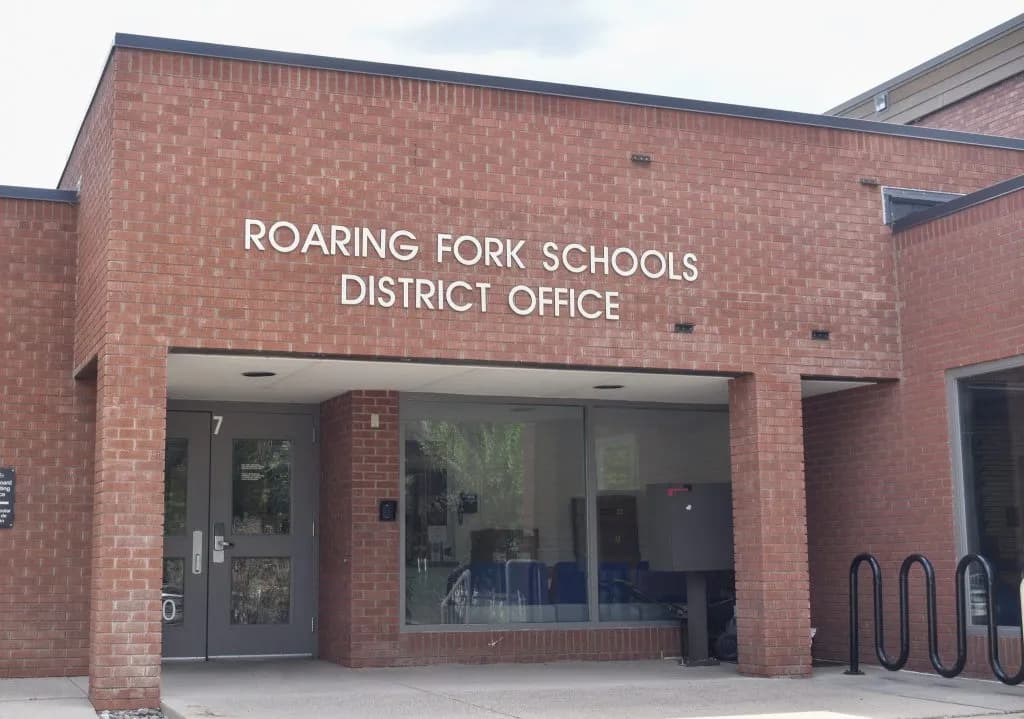
CMC President Brags Back at Linda McMahon's Value Letter
Colorado Mountain College’s president confidently rejected Linda McMahon’s demand for proof of value, citing open admissions and free speech. Critics question if low tuition truly benefits taxpayers.

Glenwood Springs —Secretary of Education Linda McMahon sent a letter to every college president in America. The premise was simple: prove your worth, or explain why you exist. For most institutions on the Western Slope, that letter likely triggered a panic response about budget cuts and enrollment dips. For Colorado Mountain College (CMC), it was an opportunity to brag.
President of CMC, writing in the Post Independent, didn’t hedge. He stated plainly that he “seldom miss[es] an opportunity to brag about CMC’s awesomeness.” He responded to McMahon’s seven topics with a series of confident, almost dismissive affirmations. On admissions? “Done and done.” On free speech? The First Amendment is “alive and well.”
The obvious take from this column is that public higher education is secure. That CMC is a model of efficiency, affordability, and civic duty that needs no external validation. I disagree. The letter reveals a fundamental disconnect between how a public university defines its value and what it actually costs the people funding it.
Let’s do the math on that disconnect. McMahon asked for a reaffirmation of commitments to “academic rigor, free inquiry, workforce preparation and service to country.” CMC’s response focused heavily on the first two. The president highlighted that CMC admits 100% of qualified applicants and hosts speakers from a broad range of political beliefs through its Center for Civics Education and Engagement. These are internal metrics. They measure the health of a campus culture, not the economic return on investment for a taxpayer in Glenwood Springs or Montrose.
The column cuts off right as it addresses the fourth topic: affordability, value, and student outcomes. It claims CMC “truly shines” here, offering one of the most affordable educations in the nation. On paper, that is a strong defense. In practice, “affordable” is relative to what? If the cost of living in the Roaring Fork Valley rises 8% a year, and tuition stays flat, you haven’t solved the affordability crisis. You’ve just made the rent more expensive by comparison. The letter asks for a demonstration of “clear public benefit.” A low sticker price is not the same as a clear benefit if graduates are still priced out of local housing or forced to leave the valley for work.
The president’s tone is telling. He describes the principles in McMahon’s letter as “reasonable expectations” that college leaders ask themselves every day. This suggests the federal government is asking for what public institutions should already be doing by default. If that’s true, why does the Secretary of Education need to send a letter? The answer is that public confidence has fallen. People are questioning whether their tax dollars are buying a degree or just a certificate of attendance at an institution that prioritizes its own ideological neutrality over economic utility.
CMC is a public institution. It exists because the state decided that higher education was a public good, not just a private luxury. The social contract is straightforward: the state provides funding and land; the college provides access, workforce skills, and civic engagement. McMahon’s letter is a stress test of that contract. CMC passed the free speech portion with flying colors, as expected from a public entity bound by the First Amendment. But the workforce preparation portion is where the rubber meets the road for locals.
The column leans on institutional pride. It mentions CMC’s “accomplishments” and its commitment to service. But it doesn’t quantify that service in dollars saved or jobs created within the specific counties CMC serves. It relies on the premise that because the college is open-enrollment and politically neutral, it is therefore valuable. That’s a logical leap. A library is open to everyone and politically neutral, but we don’t judge its value solely on whether it lets you check out a book. We judge it by how many people use it and what they do with the information.
For neighbors in the valley, the practical impact of this column is limited. It tells us CMC is comfortable with its identity. It does not tell us if a graduate can find a job in Eagle County that pays enough to cover their student debt. It does not tell us if the college is adapting its programs to the specific industrial needs of the region, or just maintaining a broad catalog that serves national trends.
The social contract for public higher education is being renegotiated right now, in boardrooms and state capitols. CMC’s response is a defense of status quo values: access, speech, and neutrality. But the public benefit argument requires more than a restatement of mission statements. It requires proof that the output matches the input. Until then, the letter from Washington is less a compliment and more a warning label.
Keep up with Glenwood Springs
The day's Western Slope news, one email each morning. Free.