Colorado Amendment 81 Trails 55% Threshold With Votes Still Counting
Colorado’s Amendment 81, which mandates local police notify ICE on certain charges, trails the required 55% threshold by over a point as final votes are certified.
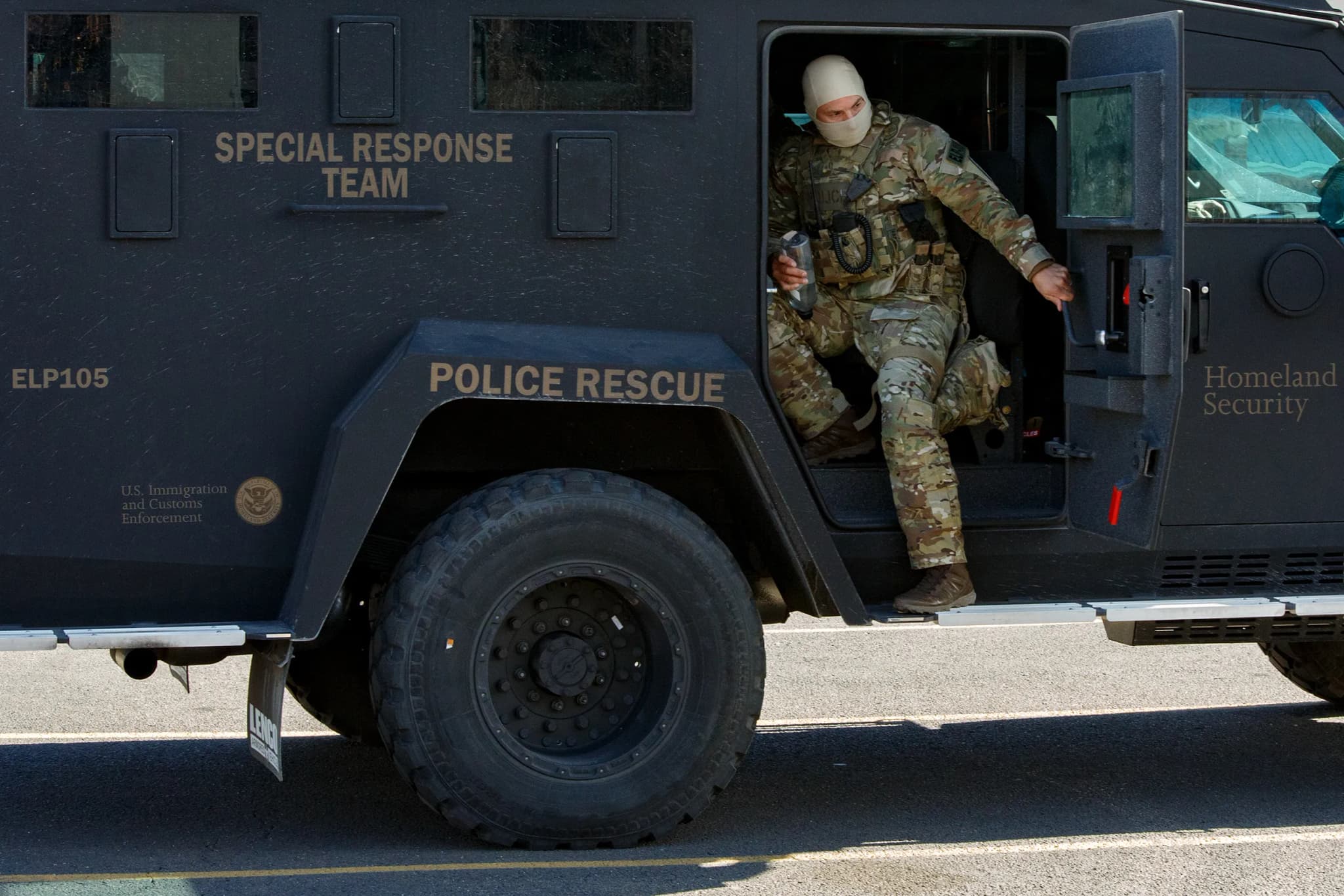
Amendment 81 was too close to call Tuesday night.
The measure, which would amend the state constitution to force local law enforcement and prosecutors to work with federal immigration agents, sat at 44.8% in favor as of 11:57 p.m., according to the Secretary of State’s website. The other side held 55.2%.
Read that again.
The initiative needs at least 55% of the vote to pass because it changes the state constitution. It is currently trailing by more than a full percentage point with votes still being counted.
The stakes are specific. Amendment 81 requires police officers, sheriff’s deputies, and prosecutors to alert the U.S. Department of Homeland Security if they formally charge someone whose immigration status is in question. The trigger is narrow: the person must have a prior felony conviction or face a charge for an alleged violent crime, such as murder, first-degree assault, kidnapping, or aggravated robbery.
Local agencies have 72 hours after charging to make that notification. They must also "make a reasonable effort" to determine the suspect’s immigration status. If the status cannot be confirmed, and the charge is violent or involves a prior felony, the notification to DHS is mandatory.
DHS houses U.S. Immigration and Customs Enforcement (ICE) and Customs and Border Protection. This amendment would override recent laws passed by Colorado lawmakers to limit cooperation between ICE and local law enforcement.
The money behind the measure is opaque. Advance Colorado, a conservative political nonprofit that does not disclose its donors, filed the initiative. A Common Sense America, another conservative nonprofit with no donor disclosure, spent hundreds of thousands of dollars to collect the signatures needed for the ballot.
Brighter Colorado backed the measure and raised about $6.1 million. Most of that cash came from conservative political nonprofits that do not disclose their donors.
On the other side, Colorado Communities First was the main issue committee fighting Amendment 81. It raised about $560,000 during the cycle. Its major donors included the Colorado Immigrant Rights Coalition, the ACLU of Colorado, and the Rose Community Foundation.
Vote Common Sense also fought the measure, raising about $1.1 million. Much of that funding came from the Green Advocacy Project, Denver philanthropist Merle Chambers, and the Colorado Fund for Children and Public Education.
The disparity in funding is stark. The "yes" side raised nearly eleven times what the primary "no" committee did. Most of that money came from groups whose donors remain anonymous to the public.
Make no mistake: if Amendment 81 passes, the legal landscape for local law enforcement changes immediately. The current laws that limit ICE cooperation get overridden by the state constitution. That makes them harder to repeal in future legislative sessions.
If it fails, the status quo holds. Local agencies continue operating under current statutes that limit federal cooperation.
The final tally will determine whether the 72-hour notification clock starts ticking for every violent crime charge or felony re-offense in the state. For folks around here, that means a direct line from local booking rooms to federal immigration offices.
The Secretary of State’s website will update as the remaining votes are certified. The 55% threshold is a high bar for any constitutional amendment, but the current gap is thin.
The donors who funded the "yes" campaign have not revealed their names. The donors on the "no" side are public record.
That asymmetry is worth watching as the final numbers come in.
Keep up with the Western Slope
The day's Western Slope news, one email each morning. Free.