Colorado Lets Vendors Charge Truckers For Chain Installation
CDOT approved a program allowing private vendors to charge drivers for chain installation. The initiative aims to clear backups at I-70 chain stations by addressing a critical skills gap among truckers.
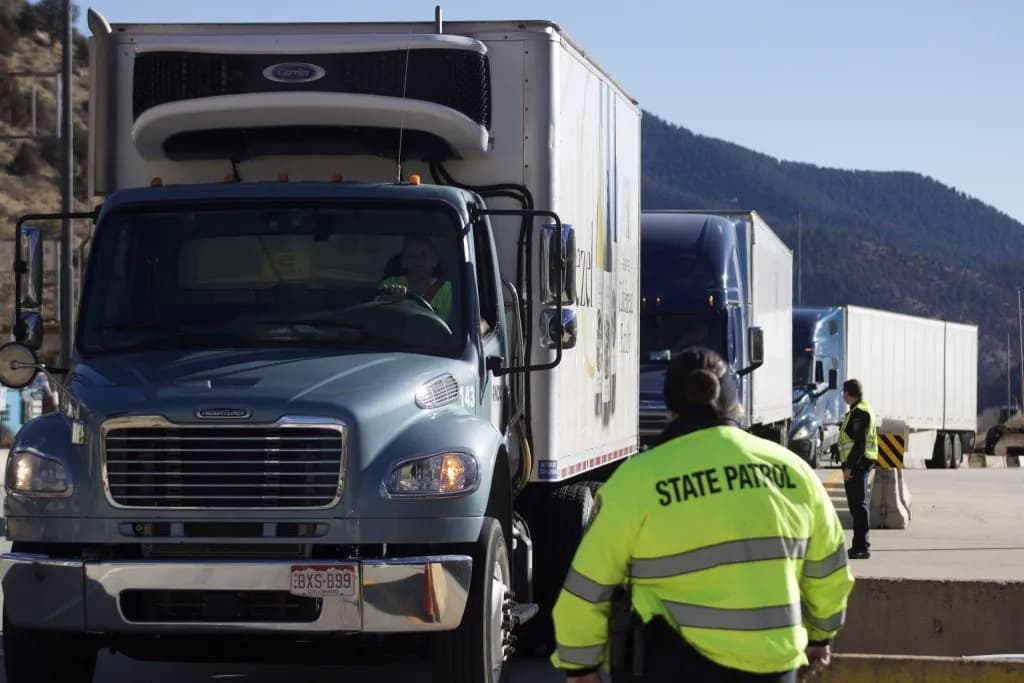
Steamboat Springs —Truckers on I-70 don’t lack chains. They lack the ability to use them.
That is the core problem Colorado is trying to solve this winter. The Colorado Department of Transportation (CDOT) will soon allow private vendors to charge drivers for chain installation. It is a service economy for a basic skill.
The Colorado Transportation Commission approved the program unanimously on Nov. 19. CDOT aims to issue the first permits by early 2027.
Jori Ernst, a program manager at CDOT’s Office of Emergency Management, explained the bottleneck. Truckers pull into chain stations. They plug up. Then they sit.
“They either don’t have chains or they won’t know how to install them,” Ernst said. “So they just sit there, which causes safety concerns with all the other truckers out there that are trying to do the right thing: chain up and move on.”
The law requires semitrailers to carry chains on specific mountain roads from Sept. 1 to May 31. When CDOT activates chain law, drivers must install them. Non-compliance costs up to $500 plus a $79 surcharge. If the truck blocks the road, the fine jumps to $1,000 plus a $157 surcharge.
Enforcement data shows roughly 90% of semitrailers carry chains. Most trucks are legal. Most drivers are still stuck.
Ernst noted that many drivers arrive at accident scenes wearing shorts and flip-flops. They are not dressed for the task. They are not going to put chains on. They are going to wait.
For years, officials handed out pamphlets. They pointed drivers to YouTube tutorials. It did not work. Now, a vendor will do it for them.
The program targets backups at chain stations near the Eisenhower-Johnson Memorial Tunnels and Vail Pass. Those spots clog during storms. Efficient chaining clears the lane. Paying a pro clears the lane faster.
Read that again. The state is paying for labor because the driver cannot perform the labor himself. The chain was on the truck. The truck was on the road. The road was blocked.
This is not a charity. It is a transaction. The trucker pays the vendor. The vendor installs the chain. The truck moves. The backup clears.
Make no mistake. This is a market solution to a skills gap. The state is not teaching truckers to chain up. It is hiring someone else to do it.
The next time you see a line of trucks at a chain station, look closely. Some drivers are struggling with the hardware. Others are waiting for a vendor to arrive. The ones waiting are paying for speed. The ones struggling are paying for time.
Both are stuck. Only one is moving.
Keep up with Steamboat Springs
The day's Western Slope news, one email each morning. Free.



Steamboat's Free Thanksgiving Dinner Combats Local Loneliness

Is it actually easier to talk about mental health in the valley