Colorado Parks and Wildlife Release 3,500 Boreal Toad Tadpoles Near Leadville
Colorado Parks and Wildlife and the Denver Zoo released 3,500 boreal toad tadpoles at a historic breeding site near Leadville to combat chytrid fungus and prevent the species from vanishing.
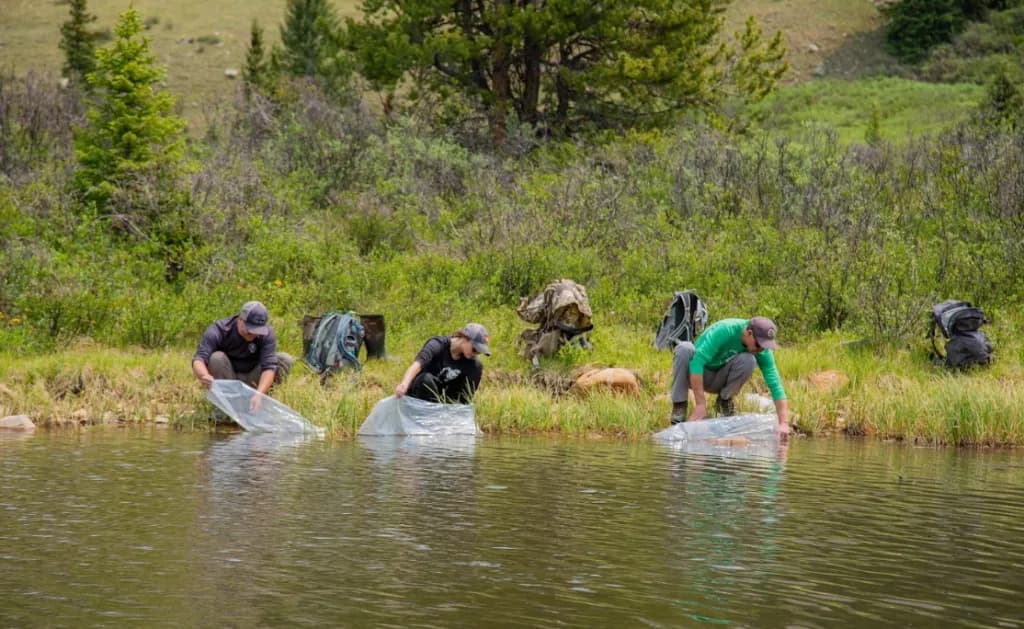
Gunnison —3,500. That’s the number of endangered boreal toad tadpoles released into a historic breeding site near Leadville last June. It was the fourth, and largest, release for the partnership between Colorado Parks and Wildlife and the Denver Zoo Conservation Alliance, which kicked off in 2021.
The goal is simple enough on paper: stop the species from vanishing. In practice, it’s a desperate race against a microscopic killer.
There are currently fewer than 800 adult boreal toads left in the wild in Colorado. They are the only native alpine toad in the Southern Rocky Mountains. Once common, their numbers suffered dramatic declines starting in the late 1970s and early 1980s.
Alex Jouney, a native aquatic species biologist with Parks and Wildlife, put it bluntly in a news release: “Boreal toads could disappear in Colorado without all the proactive work our teams do every year.”
Let’s look at the biology. Boreal toads exist only in high-elevation forested habitats above 7,500 feet. They breed in shallow, quiet water — lakes, marshes, bogs, ponds, and wet meadows. The adults are distinct: brown-black, warty skin with a white or cream-colored stripe down the back and dark spots on a light underside. The tadpoles? Jet black.
The threat isn’t just us, though we’ve contributed. Timber harvest, grazing, recreation, and water development have degraded suitable habitat. But Parks and Wildlife’s 2001 conservation plan doesn’t point to human activity as the primary driver of the collapse. The main suspect is pathogens, specifically the chytrid fungus. This fungus has caused widespread die-offs across many amphibian species globally. It’s a biological sledgehammer that habitat restoration alone can’t always fix.
The Denver Zoo Conservation Alliance calls the boreal toad an “indicator species.” That’s bureaucratic speak for a canary in the coal mine. If the toads are thriving, the mountain ecosystem is likely healthy. If they’re dying off, something is wrong with the water, the air, or the food chain.
The breeding program has a physical footprint. Over 700 adult toads are housed at Colorado Parks and Wildlife’s Native Aquatic Species Restoration Facility in Alamosa. That facility supports the breeding and restoration efforts that make this June release possible. Volunteers and students helped staff from both agencies release these 3,500 tadpoles into the Leadville area. This site was historically occupied by the species, meaning the environment was once suitable before the chytrid fungus and habitat loss took their toll.
The toad has been a state-endangered species in Colorado since 1993. Nearly three decades of research and work have gone into trying to create a self-sustaining population. The 2001 conservation plan outlined the strategy back then; today, it’s about execution.
Historically, the species was abundant across portions of the Park, Sierra Madre, Mummy, Gore, Mosquito, Ten-Mile, Sawatch, Elk, West Elk, and San Juan mountain ranges. It was also present in the Flat Tops Wilderness and on the Grand Mesa. Between the early 1900s and the 1950s, boreal toads were found in 25 Colorado counties. By February 2001, they were known to exist in only 11 counties: Routt, Larimer, Grand, Eagle, Summit, Clear Creek, Pitkin, Gunnison, Chaffee, Hinsdale, and Mineral.
The Leadville release is a step toward reversing that geographic shrinkage. But it’s not a magic bullet. It’s a data point.
For locals, the impact isn’t immediate financial — it’s ecological. The health of the high-country water systems we rely on for recreation, drinking water, and tourism is tied to these amphibians. Losing them means losing a key indicator of ecosystem stability. The cost of the program isn’t listed in the source material, but the investment is clear: staff time, facility maintenance in Alamosa, zoo partnership resources, and volunteer hours.
The bottom line is that without this proactive, year-round work, the boreal toad disappears from Colorado. The 3,500 tadpoles are a temporary buffer against extinction, bought with decades of conservation effort and millions of dollars in cumulative state and zoo investment.
Keep up with Gunnison
The day's Western Slope news, one email each morning. Free.