Colorado Secretary of State Race Pits Uniform Voting Against Local Experiments
Democrat Amanda Gonzalez and Republican James Wiley clash over Colorado voting standards, with Gonzalez favoring uniform mail ballots and Wiley proposing 64 distinct local election experiments.
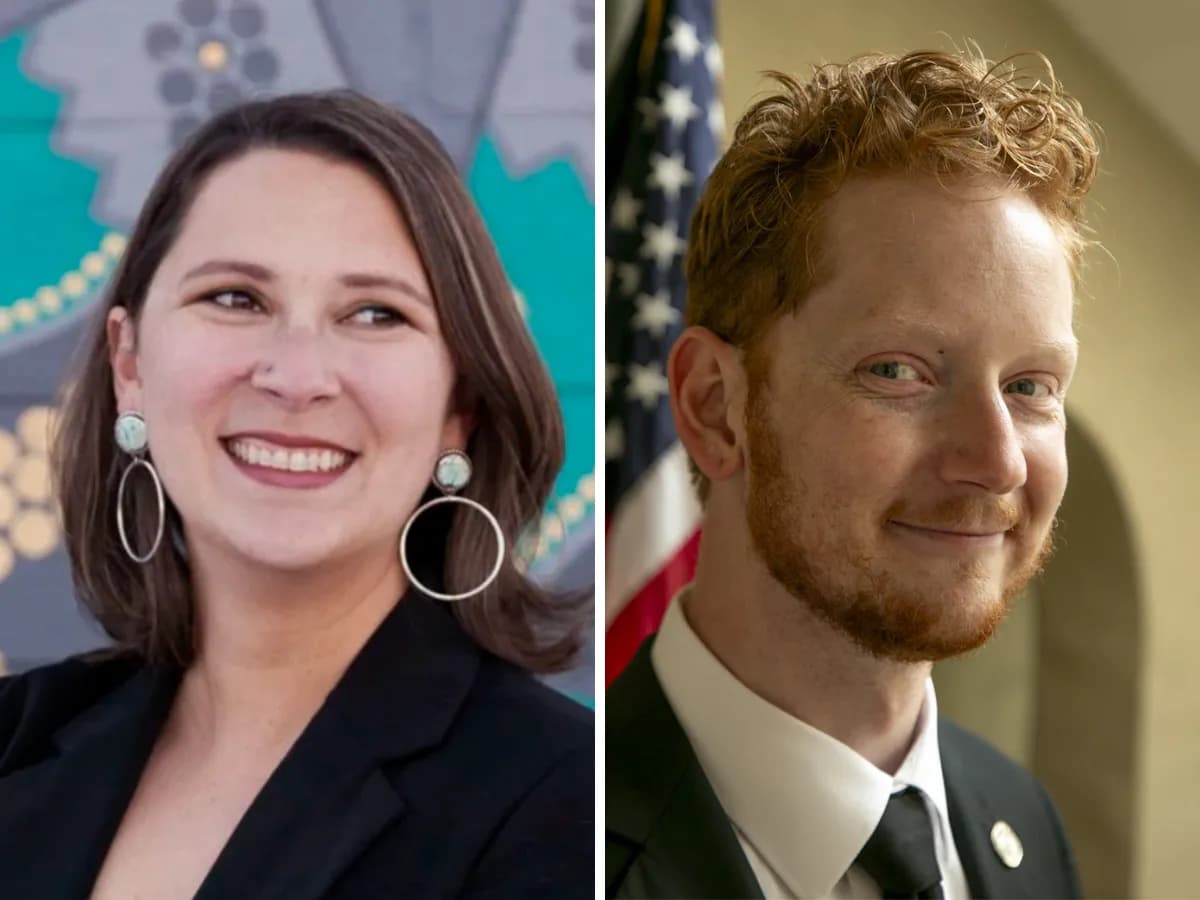
The most striking number in this race isn’t a dollar figure or a square-footage total. It’s zero. Zero new voting locations proposed by the Democrat, and zero standardized rules proposed by the Republican. On paper, Amanda Gonzalez wants to keep everything exactly as it is. In practice, James Wiley wants every county clerk to run their own experiment.
The Colorado Sun reported on the stances of Amanda Gonzalez, a Democrat and Jefferson County clerk since 2023, and James Wiley, a Republican and small business owner in Holyoke. They are competing to replace Jena Griswold, who is term-limited and running for attorney general.
Gonzalez, 42, lives in Arvada. She is an attorney who previously led Common Cause, a left-leaning nonprofit focused on government transparency. Her platform is simple: maintain the status quo of universal mail ballots and in-person voting options. She wants to add more ballot drop boxes "as budgets allow" and ensure people with disabilities or past criminal convictions can register and vote. She believes the current system works for everyone.
Wiley, 33, takes a different approach. He lives in Holyoke and was a Libertarian until last year. He wants to scale back mail voting so only those who request an absentee ballot can vote by mail. Instead of a statewide standard, he proposes letting county clerks decide how to conduct their elections. He recommends they expand in-person voting and hand-count ballots. He also wants electronic election equipment to be optional.
"We’ll have 64 different experiments, pursuing the highest level of trust possible and sharing their experience and learnings from that," Wiley said.
Let’s do the math on that phrase. Colorado has 64 counties. If Wiley wins, we don’t get one election system. We get sixty-four. Some will hand-count. Others might use machines. Some will rely heavily on mail; others on in-person precincts. For context, this means your ballot might be counted differently than your neighbor’s if you live in a different county. The secretary of state’s office is supposed to oversee uniformity, but Wiley is proposing a patchwork.
Gonzalez argues for consistency. She wants to keep all current options, including automatic mail ballots, and add infrastructure where money allows. Her focus is on accessibility for specific demographics — disabilities and criminal history — rather than changing the mechanics of how votes are cast.
The race also includes minor-party candidates: Sean Vadney (Libertarian), Amanda Campbell (American Constitution Party), and Celeste Landry (Forward Party). But the main contest is between two fundamentally different visions of administrative control. One seeks to preserve a centralized, universal system. The other seeks to decentralize it into local experiments.
This isn’t just about who counts the votes. It’s about who decides how they’re counted. If Wiley wins, a voter in Larimer County might have a different experience than a voter in Arapahoe. If Gonzalez wins, the system stays uniform but static, with new drop boxes added only if budgets permit.
For locals, the practical impact is logistical and financial. Under Gonzalez, expect the same mail ballot in your mailbox every election cycle. Under Wiley, you might need to request one, and your county might decide whether it’s hand-counted or machine-scanned. There is no cost estimate provided for the potential administrative overhead of managing sixty-four distinct election protocols, but it’s safe to assume it won’t be free. The secretary of state’s office oversees business filings and election security, so the scope is broader than just voting day.
Gonzalez wants to make sure every eligible voter knows they’re eligible. Wiley wants to restore trust through local autonomy. One is a promise of stability. The other is a bet on chaos as transparency.
The choice comes down to whether you trust a single statewide rule or sixty-four local ones.
Keep up with the Western Slope
The day's Western Slope news, one email each morning. Free.