Colorado Senator Baisley Runs for Senate on Less Government Platform
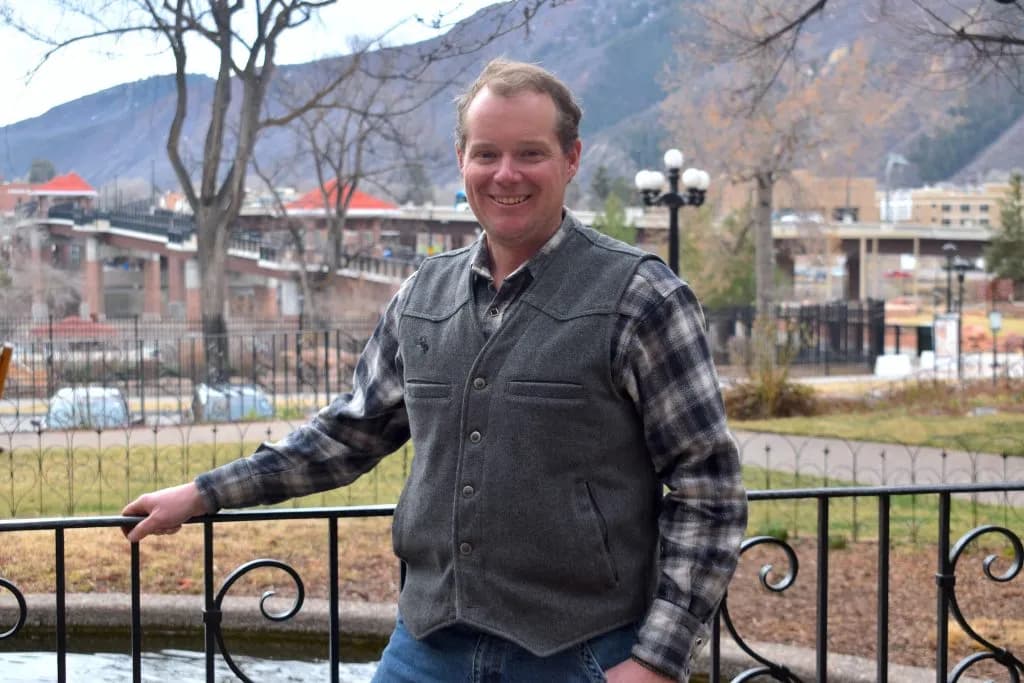
Colorado State Senator John Baisley launched his U.S. Senate campaign promising to shrink federal regulatory reach. He cites high housing costs as evidence that government overreach burdens everyday families.
Telluride —On the shoulder of U.S. Highway 50, where the asphalt meets the sagebrush and the wind off the Rockies cuts through a jacket that’s too thin for July, the landscape offers no pause. It is just open space and the hum of tires. In that same uncluttered setting, state Sen. John Baisley is running for the U.S. Senate on a platform that asks voters to trust him with less, not more.
Baisley, who has served in the Colorado State Senate after four years in the House of Representatives, told the Craig Daily Press that his primary goal is to shrink the federal government’s reach into daily life. He frames this not as a partisan tilt, but as an engineering problem: find the most effective solution to keep costs down.
"I will aim to reduce the footprint of government in our lives, if elected," Baisley wrote.
To hear him tell it, the math holds up when you look at the cost of a new home. Baisley cites a report from the National Association of Home Builders, which he says found that regulations add $131,734 to the cost of a new single-family home. For folks in the valley watching their property taxes climb and their heating bills spike, that figure lands with a specific weight. It’s not just about the price tag; it’s about who is deciding what you can buy, how you heat your house, and what car you drive.
Baisley points to a quote from Thomas Jefferson’s inaugural address as his blueprint. Jefferson argued that good government should "restrain men from injuring one another" but otherwise leave them free to regulate their own pursuits. Baisley takes that in reverse order, starting with the idea that government shouldn't "take from the mouth of labor the bread it has earned."
That translates, in his view, to keeping taxes at a minimum. He argues that every new program, law, or regulation increases the price of products, food, housing, and fuel. "Today’s lack of affordability is primarily the burden of government at all levels: city, state and federal," he wrote. He added that socialism would make those challenges far worse, as it always has.
The question is whether voters in the district will accept that diagnosis. Baisley brings a background that leans heavily on technical problem-solving rather than political theory. He is an IT systems engineer who worked for NASA and large defense contractors before entering politics. He says he thrives on finding effective solutions to complex challenges, a skill set he hopes will carry over to Washington.
He also brings a long history of working "across the aisle," a phrase that has become a standard claim for moderate candidates but one Baisley backs with his record of serving in both chambers of the state legislature. He notes that he adheres to his oath to support the constitutions of Colorado and the United States, a nod to the conservative principles that underpin his campaign.
Baisley’s personal history is equally grounded in stability rather than spectacle. He married his high school girlfriend 48 years ago, and they have four adult children and seven grandchildren. He traces his political awakening to a trip to South Africa in 1980, where a teacher directed him to read the Declaration of Independence. That experience, he says, gave him an appreciation for the exceptional character of the United States that he now wants to protect from what he sees as overreach.
He invokes Benjamin Franklin’s 1787 response to Elizabeth Willing Powel: "A republic, if you can keep it." For Baisley, keeping that republic means resisting the urge to expand federal power into areas like energy policy and housing codes.
The campaign will ultimately be judged on whether voters believe that less government is the answer to high costs. Baisley’s pitch is simple: if you want lower prices, you have to cut the regulatory machinery that drives them up.
"I will aim to reduce the footprint of government in our lives, if elected," he wrote, leaving the final judgment to the voters who will decide if his engineering approach fits the political reality of Colorado.
Keep up with Telluride
The day's Western Slope news, one email each morning. Free.