Colorado Skies Clear For Thursday's Near-Total Blood Moon Eclipse
Meteorologists forecast clear Front Range skies for Thursday's near-total lunar eclipse, with peak visibility between 9:45 and 10:45 p.m. Cloud risks increase south of the Palmer Divide, prompting viewers to check local conditions.
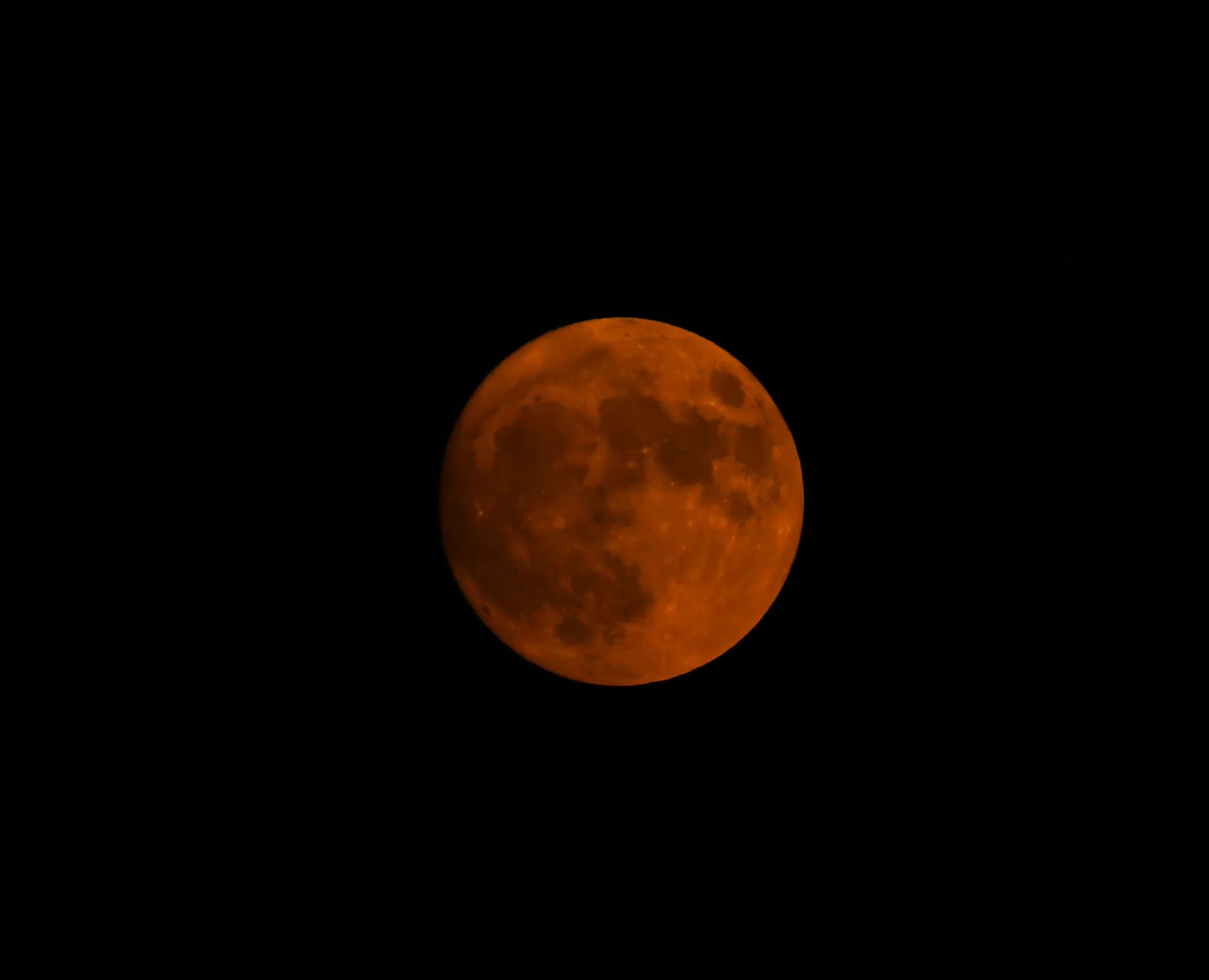
92% to 95%. That is the percentage of the moon’s surface that will be covered by Earth’s shadow during Thursday night’s near-total lunar eclipse. It is not a total eclipse for Colorado, but it is close enough to produce the deep red tint that stargazers call a "blood moon."
The event begins changing the moon’s appearance around 8:30 p.m. and runs until 1 a.m., with the peak visibility hitting between 9:45 p.m. and 10:45 p.m., according to Chris Bianchi, a senior meteorologist for 9News. The Colorado Sun reported that skies along the Front Range are currently looking clear, giving viewers a 70 to 80 percent chance of good conditions around the peak.
Bianchi noted that while a few clouds could threaten the view south and east of Denver, most areas can expect an unobstructed show. The risk increases the further south you travel. He forecasts a greater chance for cloud cover south of the Palmer Divide in Colorado Springs and down around La Junta and Lamar.
"The further south you go, unfortunately the more cloud cover is possible," Bianchi said. "So that is not ideal. Still, it’s gonna be hit or miss."
For those in the Denver metro area looking to maximize the red hue, Bianchi recommends steering clear of city lights. He suggests heading out east past Denver International Airport to get closer to the conditions that mimic totality. However, because that direction carries a higher probability of cloud cover, he advises drivers to be ready to move. If a patch of clouds hides the moon, you may need to drive a few miles in any direction to find a clear break.
You do not need specialized equipment to see this. A telescope or binoculars will help you zoom in on the details, but the naked eye is sufficient to catch the event. The eclipse occurs when Earth moves between the moon and the sun, casting a shadow over the lunar surface. The red color comes from sunlight filtering through Earth’s atmosphere, bending and scattering blue light while allowing red wavelengths to reach the moon.
The practical impact for locals is simple: clear your schedule for roughly four hours starting at 8:30 p.m. If you are in the Front Range or northern Colorado, your odds of a clear view are strong. If you are south of the Palmer Divide, check local cloud forecasts closer to the hour and have a backup location in mind. The show is visible across the entire state, but the quality of that visibility depends entirely on whether a cloud decides to sit between you and the moon at 10:15 p.m.
Keep up with the Western Slope
The day's Western Slope news, one email each morning. Free.