Colorado Supreme Court Hears Breckenridge Short-Term Rental Fee Challenge
The Colorado Supreme Court will decide if Breckenridge’s $756 short-term rental charge is a constitutional fee or an unauthorized tax, potentially reshaping housing funding across the Western Slope.
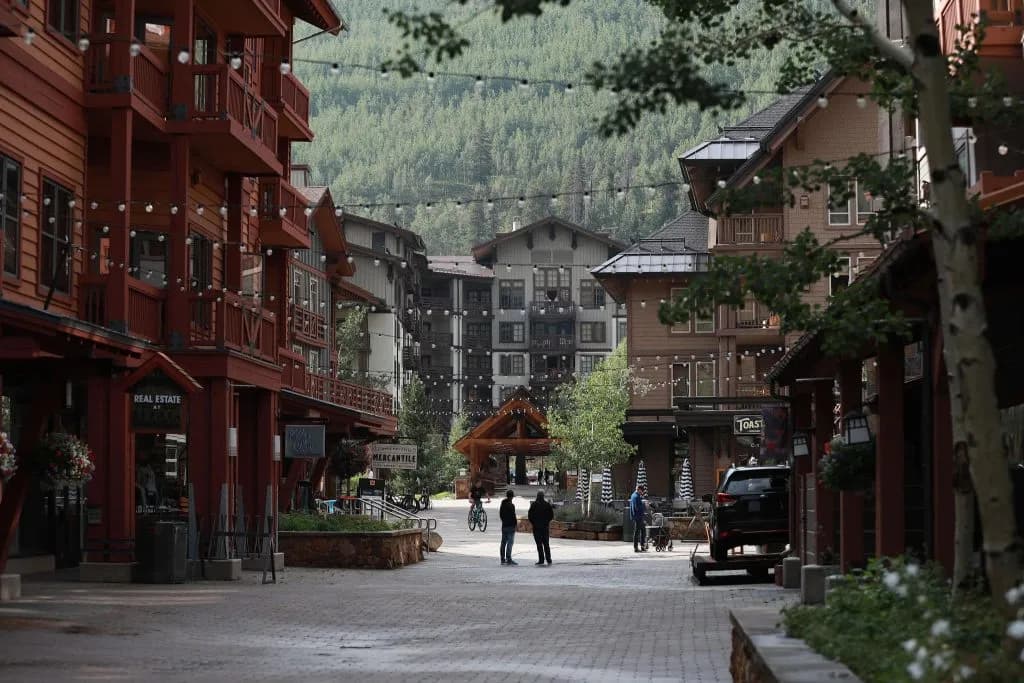
Glenwood Springs —Alexander Dorotik owns a short-term rental property in Breckenridge. He also founded Ingenuity Law Colorado, a Denver-based firm. In September 2024, he filed a lawsuit in Summit County District Court arguing that the town’s annual charge for short-term rentals isn’t actually a fee. To him, it functions like an unconstitutional tax that bypassed the voters.
The Colorado Supreme Court has now agreed to hear his case, an announcement made on Oct. 19. After two years and two dismissals by lower courts, the high court is stepping in to resolve a legal question that could ripple across the entire Western Slope.
The dispute centers on an ordinance passed by the Breckenridge Town Council in 2021. The town established an annual per-bedroom charge on short-term rentals, a figure that has risen to $756 as of 2026. At the time, the council pointed to a commissioned study showing that spending by short-term rental guests — particularly in retail, food, and recreation — drove up demand for local workers who couldn’t afford market-rate housing.
Representatives from Economic & Planning Systems, the firm that helped draft the ordinance, said in 2021 that the fee was calculated based on two factors: the difference between the impact of a short-term rental unit versus a year-round resident, and the gap between what local employees can afford and the actual cost of living in Breckenridge.
The math holds up, according to the town’s logic. The ordinance directs revenue from this fee specifically toward municipal housing programs, including deed-restricted housing acquisition and construction. It can also cover the “secondary impacts” of the industry, such as limited parking, noise, and increased trash. Crucially, the town cannot transfer that revenue to its general fund.
Dorotik argues this restriction doesn’t save the fee from being a tax. He claims the revenue generated through existing sales and lodging taxes on guest purchases already exceeds the costs created by short-term rentals. If that’s true, he contends, the $756 charge is raising revenue for general expenses rather than covering specific regulatory costs. Under state fiscal policy, that distinction matters.
The Colorado Supreme Court has previously ruled that a charge is a fee if its purpose is to cover the direct and indirect costs of providing a service or regulating an activity. If its purpose is to raise revenue for the general expenses of the government, it is a tax. Taxes require voter approval under the Colorado Taxpayer’s Bill of Rights (TABOR). Fees do not.
To hear them tell it, the outcome in Breckenridge will set a precedent that stretches from Summit County to the valleys of the Western Slope. Short-term rental owners and organizations say a reversal of the lower court dismissals could open doors to more legal challenges in towns like Glenwood Springs, Steamboat Springs, and Durango. These communities have implemented similar per-unit or per-night charges to address housing affordability and infrastructure strain caused by the short-term rental boom.
The question is whether a fee tied to housing and secondary impacts survives scrutiny when the town already collects lodging taxes. If the Supreme Court sides with Dorotik, it could invalidate a primary tool used by Western Slope towns to manage the tension between tourism revenue and local housing costs. If it sides with Breckenridge, it validates a regulatory approach that many mountain towns have adopted in the last few years.
For neighbors paying property taxes and watching housing prices climb, the stakes are practical. The ruling will determine whether towns can use targeted fees to fund housing solutions without going back to voters for approval.
Dorotik sees the case as a check on municipal power. “What I’m asserting is that it doesn’t qualify as a fee because Breckenridge doesn’t have any expe[nditure]” that isn’t already covered, he said.
The court hasn’t set a date for oral arguments or a decision. But the fact that it took the case signals the justices see a significant legal issue worth resolving, one that will shape how Colorado towns regulate their most visible economic engine.
Keep up with Glenwood Springs
The day's Western Slope news, one email each morning. Free.



White River Forest Starts Prescribed Pile Burnings Across Summit County

Steamboat Wildlife Manager Warns Halloween Pumpkins Attract Bears