Colorado Surgeon Calls Opioid Heart Infections National Crisis
Surgeons at UCHealth Memorial Hospital Central report a steady stream of endocarditis cases linked to the opioid epidemic. Doctors call the trend a national crisis, noting that state health officials do not officially track the condition.
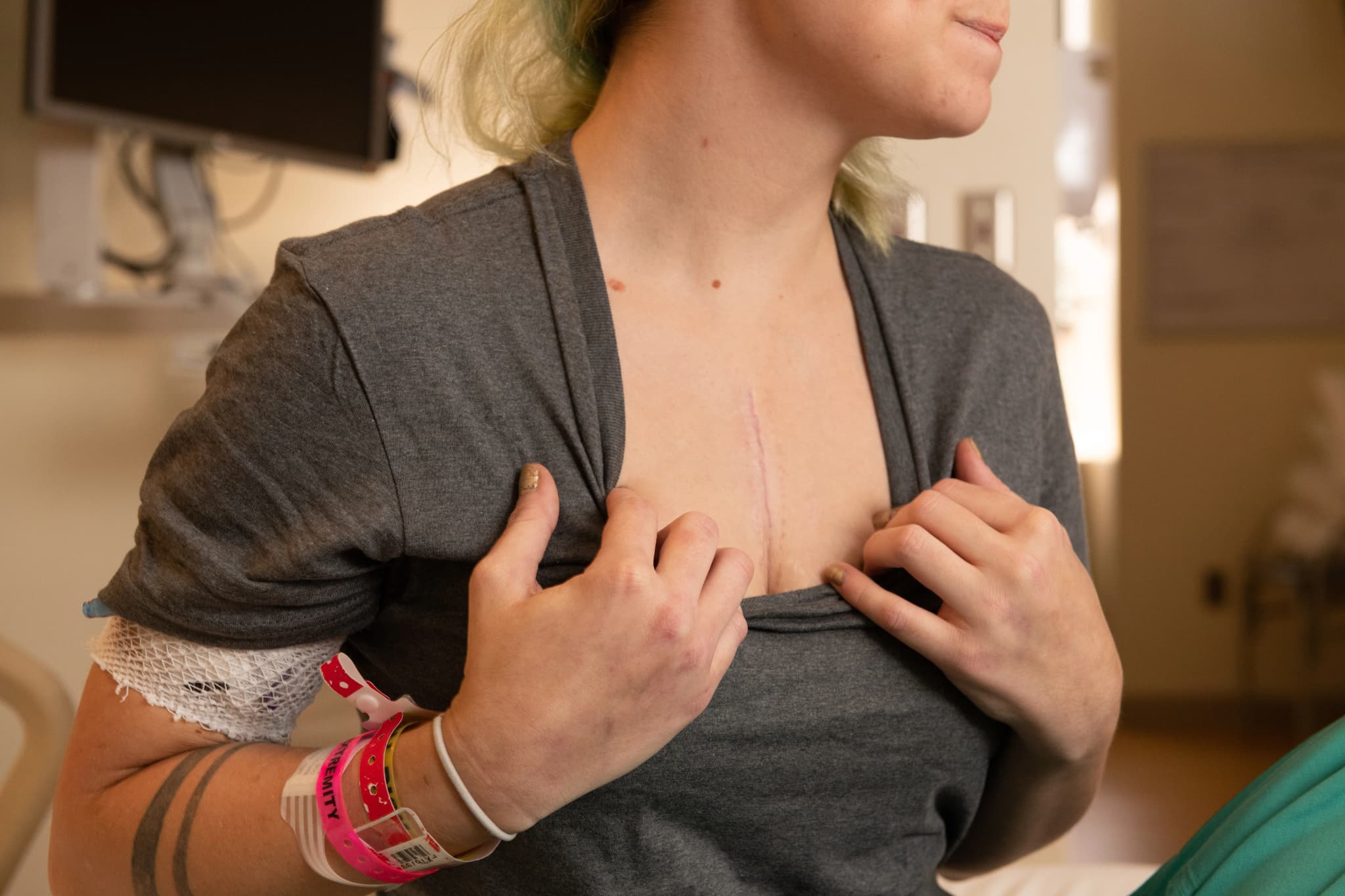
One twenty-seven-year-old woman. One open-heart surgery. One near-death experience in Palmer Park.
That is the human face of a statistical trend that doctors in Colorado Springs are calling "frighteningly common." Lisa Seiling was playing with her dog when the pain hit. She described it to The Colorado Sun as feeling like "someone was stabbing me right in the chest and the lung." She dropped to the ground. She blacked out. She woke up in UCHealth Memorial Hospital Central with a diagnosis of endocarditis.
On paper, endocarditis is rare. It is an infection of the inner lining of the heart and valves. In the general population, you don’t see it often. But let’s do the math on who is getting it. The needle is the vector. Bacteria enter the bloodstream through unsterile injection sites, travel to the heart, and colonize the valves. For context, this isn’t a new disease. What is new is the volume.
Dr. Peter Walinsky, the senior medical director for cardiothoracic and vascular surgery at UCHealth Memorial Hospital Central, performed Seiling’s operation. He told The Colorado Sun that surgeons used to see these infections among people who injected drugs only a handful of times a year. Now, there is a steady stream.
"You see this all over the country now," Walinsky said. "This is a national health crisis, really, with the opioid epidemic. It’s a potentially life-ending event, no question about it. If you get bad endocarditis, even if you are treated for it, you can certainly die. And we’ve certainly seen people whose hearts are so infected that even with surgery they die. Even if you survive the surgery, it is a life-changing event."
Here is where the bureaucratic fog gets thick. Endocarditis is not tracked by state health officials. That means there is no official ledger. There is no dashboard showing a 40% spike or a 10% dip. We are relying on the anecdotal consensus of surgeons who are staring down the barrel of these cases daily. The data is invisible because the metric doesn’t exist.
This invisibility creates a specific kind of pressure on the surgical teams. Walinsky noted that some patients are unable to stop using needles. This forces doctors to make a tough choice: do they operate again, knowing the infection might return? Or do they allow the patient, in some cases, to die? It is a brutal calculus. You are trading a known, painful death for a potential second surgery that might fail.
The cost of treating this condition is high. It involves opening up a patient’s chest and fixing or replacing their heart valves. This is not a minor procedure. It is major cardiothoracic surgery. And yet, the funding for these cases often falls on the hospital’s charity care budgets or insurance gaps, depending on the patient’s status. The financial burden is real, but it is secondary to the biological reality of the infection.
Across Centura Health’s 13 hospitals in Colorado and two in Kansas, the pattern is similar. The opioid crisis is breaking hearts — literally. The valves are damaged. The lining is infected. The blood is compromised.
For the neighbors in the valley, this means that the opioid crisis is no longer just a social issue or a law enforcement problem. It is a medical emergency that is landing in the operating rooms of local hospitals. It is changing the caseload of the surgeons. It is increasing the complexity of the cases. It is raising the stakes for the patients.
The practical bottom line is this: if you or someone you know is injecting drugs, the risk of heart infection is higher than you think. The needle is the danger. The heart is the target. The surgery is the cure. But the cure is expensive, invasive, and not guaranteed. The data is missing, but the trend is clear. The crisis is breaking hearts, and doctors are making the tough choices to save them.
Keep up with the Western Slope
The day's Western Slope news, one email each morning. Free.