Colorado Wildlife Staff Back Amendment 83 Hunt Rights
Colorado Parks and Wildlife staff endorsed Amendment 83, breaking decades of neutrality to defend scientific management against ballot initiatives.
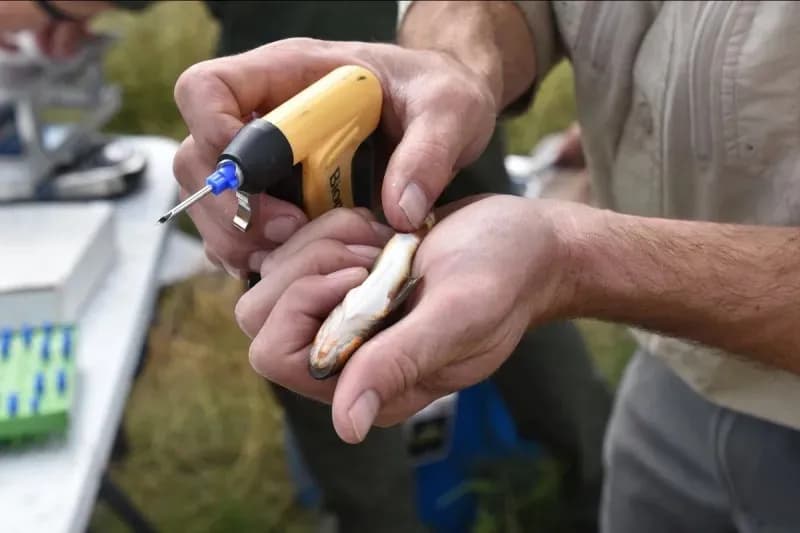
Glenwood Springs —The parking lot at the Colorado Parks and Wildlife headquarters is quiet. The trucks are parked, the badges are clipped to belts, and the science is settled in a binder on a desk somewhere inside. But outside those walls, a constitutional battle is raging over who gets to decide how many elk roam the Roaring Fork or how many trout survive in the Gunnison River.
It is a fight that defies the usual narrative of bureaucratic neutrality versus passionate activists. In this case, it is the bureaucrats themselves who are breaking their silence.
For 79 years, the Colorado Wildlife Employees Protective Association has largely stayed out of electoral politics. It represents roughly 230 of the agency’s approximately 1,000 employees — biologists, officers, and administrators who spend their days in the field, not at the ballot box. Yet this year, after a membership vote, they issued a formal statement supporting Amendment 83, the measure on November’s ballot that would enshrine hunting and fishing as fundamental rights in the Colorado Constitution.
It is only the second time in nearly eight decades that the group has taken a formal position on an election issue.
That shift matters because it signals a fracture in the consensus that wildlife management should remain strictly technical, insulated from political winds. Just a few years ago, the association adopted a resolution stating that decisions about wildlife management should be left to science-based professionals and not subject to ballot initiatives. That stance emerged as voters faced Proposition 127, a failed 2024 measure proposing to ban big cat hunting. The association then watched that vote fail, and something changed in its internal calculus.
“When issues directly challenge the principles and proven practices of professional wildlife management, our members believe their experience matters,” the association’s board wrote in an email to The Aspen Times. They argued that Colorado’s wildlife successes have been built over generations through sound science and field experience, positioning well-regulated hunting as a proven tool within that system.
Luke Hilgemann, executive director of the International Order of T. Roosevelt, a Wisconsin-based nonprofit that has been the largest funder of Amendment 83, seized on this endorsement. He told reporters that these are the “frontline workers” who stepped forward to say science needs to continue driving management. For Hilgemann, the endorsement is proof that the measure isn’t just a political stunt; it’s a defense mechanism for the very professionals who do the work.
But there is a counter-argument that gets lost in the cheerleading from advocacy groups. State statute already requires Parks and Wildlife to protect, preserve, enhance, and manage wildlife for the use, benefit, and enjoyment of residents and visitors. The law explicitly declares that the state shall utilize hunting, trapping, and fishing as primary tools for that management. Opponents of Amendment 83 point to this existing legal framework, arguing the measure is a solution in search of a problem. If hunting and fishing are already legal and mandated by statute, what exactly does the constitutional amendment add?
Supporters argue it adds a shield. By elevating these activities to constitutional status, they claim they create an extra layer of protection against future legislative swings or ballot measures like the failed cats ban. Critics call it redundancy, a legal fortress built to protect against threats that may not exist.
The irony is thick enough to cut with a knife. The employees who joined the association are bound by state law from speaking for or against ballot measures in their official capacity. They had to organize as a private association, leveraging their collective identity as professionals, to make their voices heard. They are using the very structure of the government they work for to argue that the government should change how it operates.
Stand there long enough and you can see the tension in that dynamic. These are the people who count the herds, map the habitats, and enforce the seasons. They believe in their data. But they are now asking voters to trust a political mechanism — Amendment 83, to protect the scientific process they already run.
The ballot measure will land in mailboxes across the state this fall, from the valleys of Pitkin County to the plains of Weld. For the folks in Glenwood Springs, it’s not just about whether you like hunting. It’s about who holds the pen when the rules change: the scientists in the field, or the voters at the kitchen table.
The association’s board believes their experience matters more than a single ballot initiative. They have cast their vote, in a sense, by speaking out. Now they wait to see if the rest of Colorado agrees that protecting the science requires changing the law.
Keep up with Glenwood Springs
The day's Western Slope news, one email each morning. Free.



Battle Mountain Huskies Defeat Glenwood Springs to Secure Playoff Host

Pueblo Teacher Challenges Silent Incumbent in Colorado Education Race