Colorado Youth Mental Health Corps Boosts School Attendance
Colorado’s pilot Youth Mental Health Corps deployed 144 near-peer navigators to schools, successfully improving student attendance and reducing behavioral issues through immediate, accessible support.
One hundred and forty-four corps members. Sixty schools. A pilot program that actually moved the needle on attendance.
That’s the headline for Colorado’s Youth Mental Health Corps (YMHC). On paper, it looks like another well-funded initiative designed to make policymakers feel good about themselves. In practice, it’s a data-driven intervention that is quietly fixing the most visible symptom of our education crisis: kids not showing up.
Colorado was one of just four states to pilot the program in fall 2024, according to reporting by the Colorado Sun. The state deployed these near-peer navigators into middle and high schools, after-school programs, and one community health center. The results from that first full year are in, and they contradict the common assumption that mental health support is a luxury add-on. It’s infrastructure.
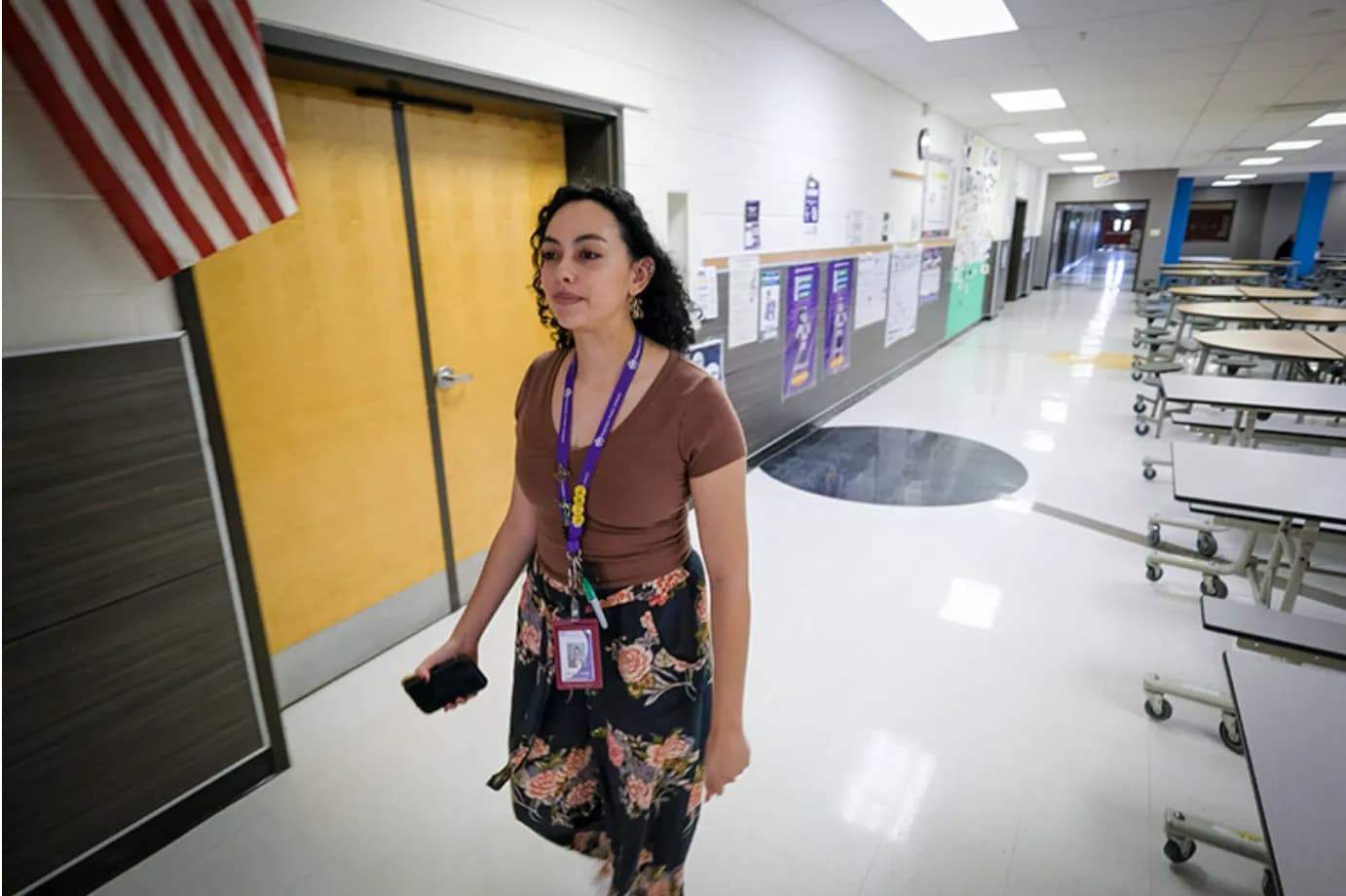
Marissa Garcia, 24, works full-time at York International School in Thornton. She isn’t a licensed therapist. She doesn’t have the 47-year-old assistant principal’s pedigree, but she has something else: proximity. She sits in a blue-walled wellness room decked out with pillows, fidget spinners, and games. She has curly black hair, gold hoops, a nose ring, and she looks like the students she serves.
Garcia manages a caseload of 27 high schoolers who struggle with attendance and engagement. Teachers refer students to her, or they walk in. She helps them access clinical support, reliable transportation, and social-emotional skills. Sometimes, she just listens.
“Marissa, because of her young age, can really connect with students in ways that I can’t as a 47-year-old,” Ben Schneider, the assistant principal at York International School, told the Colorado Sun. “She has the ability to connect with them and develop relationships and be really in their corner in a really significant way.”
Let’s do the math on the scale of this effort. The YMHC expanded to 11 states for the 2025-26 school year, with five more starting this fall and eleven in planning for 2027. Colorado’s pilot proved that placing young adults — people who are just a few years out of the high school experience themselves — into schools creates a direct line to student behavior.
The data shows simultaneous improvements in attendance and behavioral health. This matters because chronic absenteeism is a leading predictor of dropout rates, and it strains school budgets through remedial costs and lost instructional time. By keeping students in seats and reducing behavioral disruptions, the corps reduces the friction of daily school life.
Forty percent of high school students in the U.S. report feeling sad or hopeless, according to the Colorado Sun’s reporting. That is a global crisis, but it manifests locally in empty desks and crowded hallways. The YMHC addresses this by making the path to mental health support less bureaucratic and more immediate.
Garcia provides connections, not just counseling. She helps students get to school. She helps them stay in class. That is a tangible return on investment for Thornton taxpayers and the broader Western Slope community, which is watching these pilots closely as potential models for local expansion.
The program isn’t just helping students; it’s building the workforce. It makes it easier for young adults like Garcia to access training and start careers in behavioral health. This creates a pipeline that keeps talent in the state, addressing the staffing shortages that plague our local clinics and schools.
The bottom line is simple. We spent money on 144 young navigators, and we got better attendance and fewer behavioral incidents out of it. That’s a trade-off that adds up. For locals, this means fewer empty seats in classrooms and more support for kids who are struggling to keep up.
Keep up with the Western Slope
The day's Western Slope news, one email each morning. Free.

Stone Creek Charter Sets $55,000 Jog-a-Thon Goal Amid Funding Gaps

Holy Name Preschool Suspends Operations After Staffing Crisis