Colorado’s Record Turnout Stalls in Northwestern Mountain Counties
Colorado saw a record 8% jump in midterm turnout, but participation in northwest counties like Moffat and Garfield remained flat or declined. This geographic split contrasts with state-level Democratic gains.
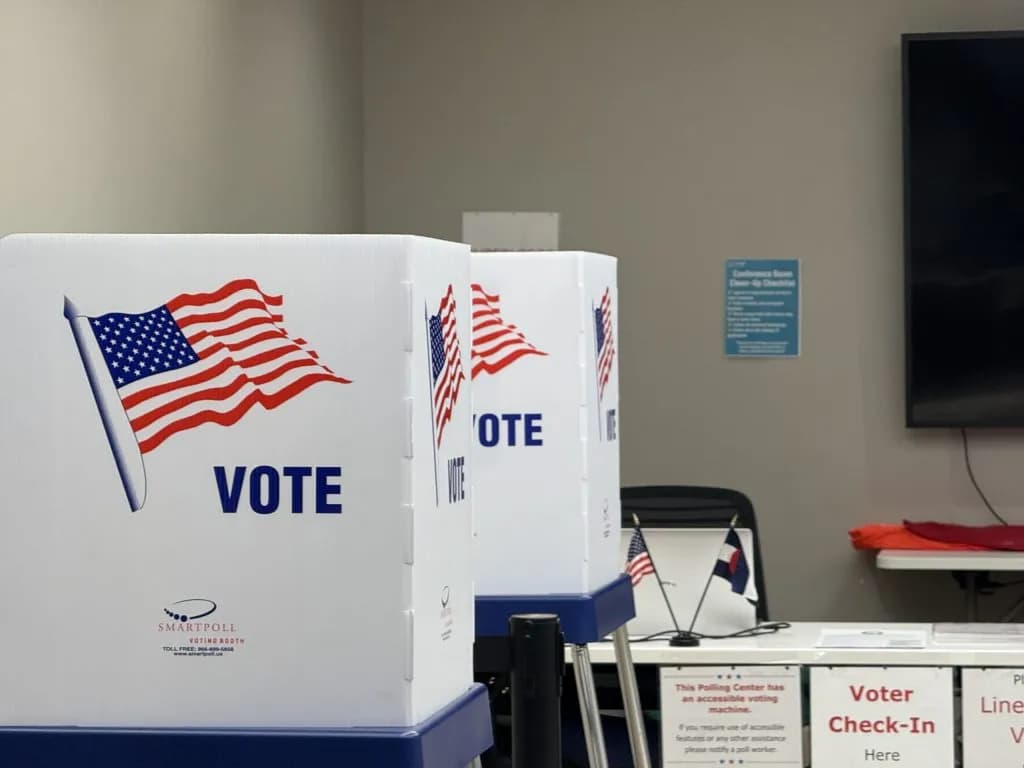
Aspen —Colorado voters turned out in record numbers for the November 3 midterm election, but the surge did not reach the mountains. While the state saw a roughly 8% increase in participation compared to 2022, turnout in northwestern counties remained flat or declined, according to uncertified results from the Colorado Secretary of State’s Office.
The Vail Daily reported that about 2.7 million Coloradans cast ballots, representing 67% of active voters. This marked a significant jump from the 58% turnout recorded in the 2022 midterms. However, the data reveals a stark geographic divide. In Eagle, Summit, Pitkin, Rio Blanco, and Routt counties, voter turnout hovered around the state average of 67%. Grand County slightly exceeded this mark, with roughly 71% of active voters participating.
The stagnation is even more pronounced in other parts of the region. Garfield County saw turnout dip below the national trend, with about 25,451 voters casting ballots, or 64.5% of active voters. Moffat County experienced a sharper drop, with only 56% of active voters participating — a decline of nearly 400 voters from the previous two midterms.
To hear them tell it, the political landscape shifted dramatically despite the flat turnout in these areas. The Vail Daily noted that a "blue wave" swept through the state, with Democrats securing control of both chambers of the state legislature and winning key congressional races. This outcome occurred even as the number of registered Republicans who cast ballots dropped by more than 10% from 2022 levels.
The question is whether this divergence signals a permanent shift in how mountain communities engage with state politics. In 2018, these same counties saw turnout between 70% and 80%, significantly above the statewide average of 64%. Now, with participation tracking within a percentage point or two of the 2022 figures, the momentum of the statewide surge has failed to cross the Continental Divide.
Unaffiliated voters drove much of the state’s growth, with 1.27 million casting ballots — an increase of over 200,000 since 2022. Yet in the high country, the math holds up differently. The community didn't just stay put; in places like Moffat, it shrank. As the Vail Daily observed, the election saw less interest than a presidential year, but the pattern in the west suggests a deeper disengagement from the midterms themselves.
For locals, the result is a paradox: a state that voted more, in counties that voted less. The Vail Daily’s analysis points to a electorate that is increasingly defined by its location as much as its party. With Democrats holding the legislature and Republicans losing ground in the 5th and 8th districts, the flat turnout in the mountains may prove to be a strategic advantage for the party that can mobilize the fewest voters to win the most seats.
The Vail Daily concluded that while the state moved forward, the west stayed still. "Turnout in these northwestern counties was significantly lower than in the 2018 midterm," the paper noted, highlighting a decade-long trend of declining engagement that finally broke the state’s upward trajectory. For folks around here, the message is clear: the wave came, but it stopped at the foothills.
Keep up with Aspen
The day's Western Slope news, one email each morning. Free.