Defense Secretary Pete Hegseth Issues Six-Month NATO Review Warning in Brussels
Defense Secretary Pete Hegseth announced a six-month review of American forces in Europe during a speech in Brussels, warning that allies must take primary responsibility for their own security or face a reduced U.S. presence.
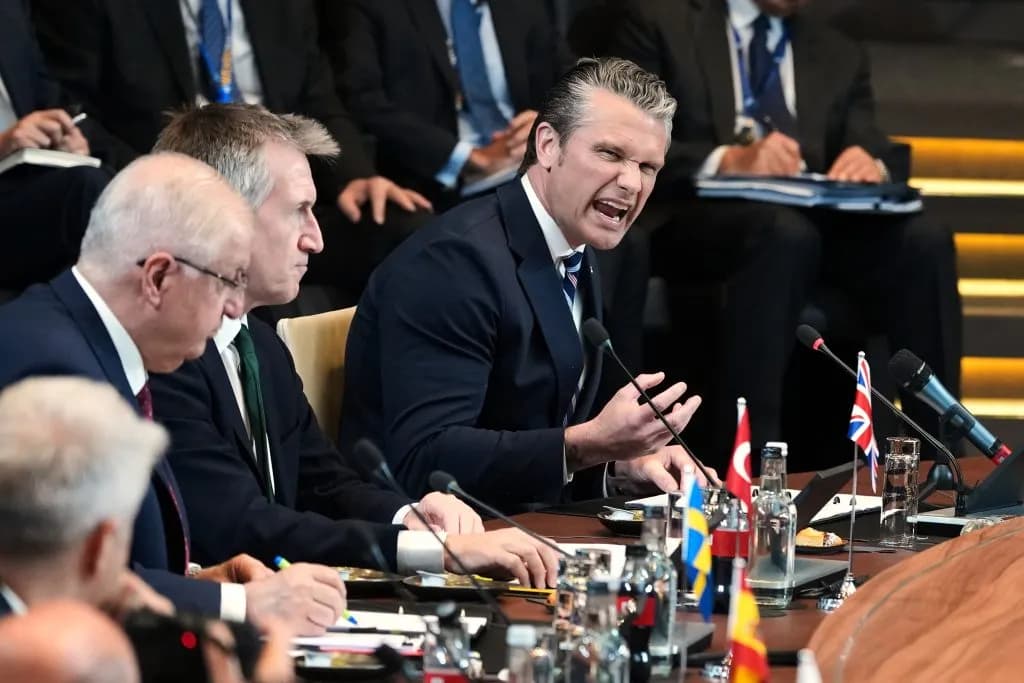
Aspen —Pete Hegseth stood in Brussels on Thursday and told Europe to get its act together, or the United States would pack up and leave.
The Defense Secretary didn’t mince words. He announced a six-month review of American forces in Europe, a move that signals a stark shift from the steady, predictable alliance locals have relied on for decades. The outcome? It depends entirely on how fast European allies take responsibility for their own security.
“This will be a real review,” Hegseth told his NATO counterparts. “It will be designed to ensure that NATO is moving fast and irreversibly toward Europe leading, stepping up to take primary responsibility for the defense of Europe.”
He added a blunt warning: “It’s a review that some countries will fail and others will pass with flying colors.”
For folks in the valley who follow the news, this isn’t just abstract geopolitics. It’s about the stability of the global order that keeps trade routes open and conflict distant. But right now, the message from Washington is loud, clear, and increasingly unpredictable.
Hegseth’s speech was a dressing down on multiple fronts. He lambasted European allies for denying U.S. forces access to bases needed to launch attacks on Iran, calling it “shameful.” He argued that by restricting access, these allies were putting “America’s sons and daughters at risk.”
But he didn’t stop at military logistics. He railed against migration and gender equality policies, echoing the rhetoric of Vice President JD Vance. He claimed Europe had traded tanks and fighters for “gender equity and climate change,” leading to crated defense budgets and open borders.
Hegseth pointed to the idea that while Europe accepted large numbers of migrants, its defense spending was lagging.
NATO Secretary-General Mark Rutte pushed back on the austerity claim. He noted that allies and Canada spent $90 billion more on defense last year, a 20% increase over 2024. The spending is there. The question is whether it’s aligned with U.S. expectations.
German Chancellor Friedrich Merz offered a more measured response. He said allies have long known the U.S. would pull troops eventually. They just need to prepare.
“We know that we must do more and we are doing it,” Merz said.
The timing of this review matters. In recent months, the Trump administration has sent conflicting signals. Sometimes they talk about reducing the military footprint; other times, they hint at expansion. Just weeks ago, the administration said it might not provide as much support if a NATO member came under attack. Now, with the threat of annexing Greenland hanging over Denmark, the pressure is on.
This isn’t a sudden whim. It’s a strategic recalibration. Hegseth wants Europe to pay the bill and man the fort. If they don’t, the U.S. presence shrinks.
The review will assess whether the U.S. has full access and overflight rights when needed. It’s a simple metric, but a powerful one. If European bases aren’t ready for immediate U.S. deployment, the alliance weakens.
Hegseth’s comments largely mischaracterized the current state of European defense, according to critics. The spending has gone up. The forces are modernizing. But the political will to match U.S. expectations? That’s where the friction lies.
As the six-month clock starts ticking, the question is whether Europe can unify its response. Can they present a united front that satisfies Washington’s demands for access and autonomy? Or will the review reveal fractures that lead to a deeper retreat?
Hegseth made it clear: this isn’t a negotiation. It’s a test.
“Some countries will fail,” he said. “Others will pass with flying colors.”
The rest of the world is watching to see which side Europe falls on.
Keep up with Aspen
The day's Western Slope news, one email each morning. Free.