Delta County Commuters Wait as State Holds $116M Surplus
Delta County commuters face continued pothole delays as the state holds a $116 million surplus instead of funding local infrastructure, with recession risks looming.
Delta —What happens to the roads in your county when the state decides to keep its surplus instead of fixing the potholes?
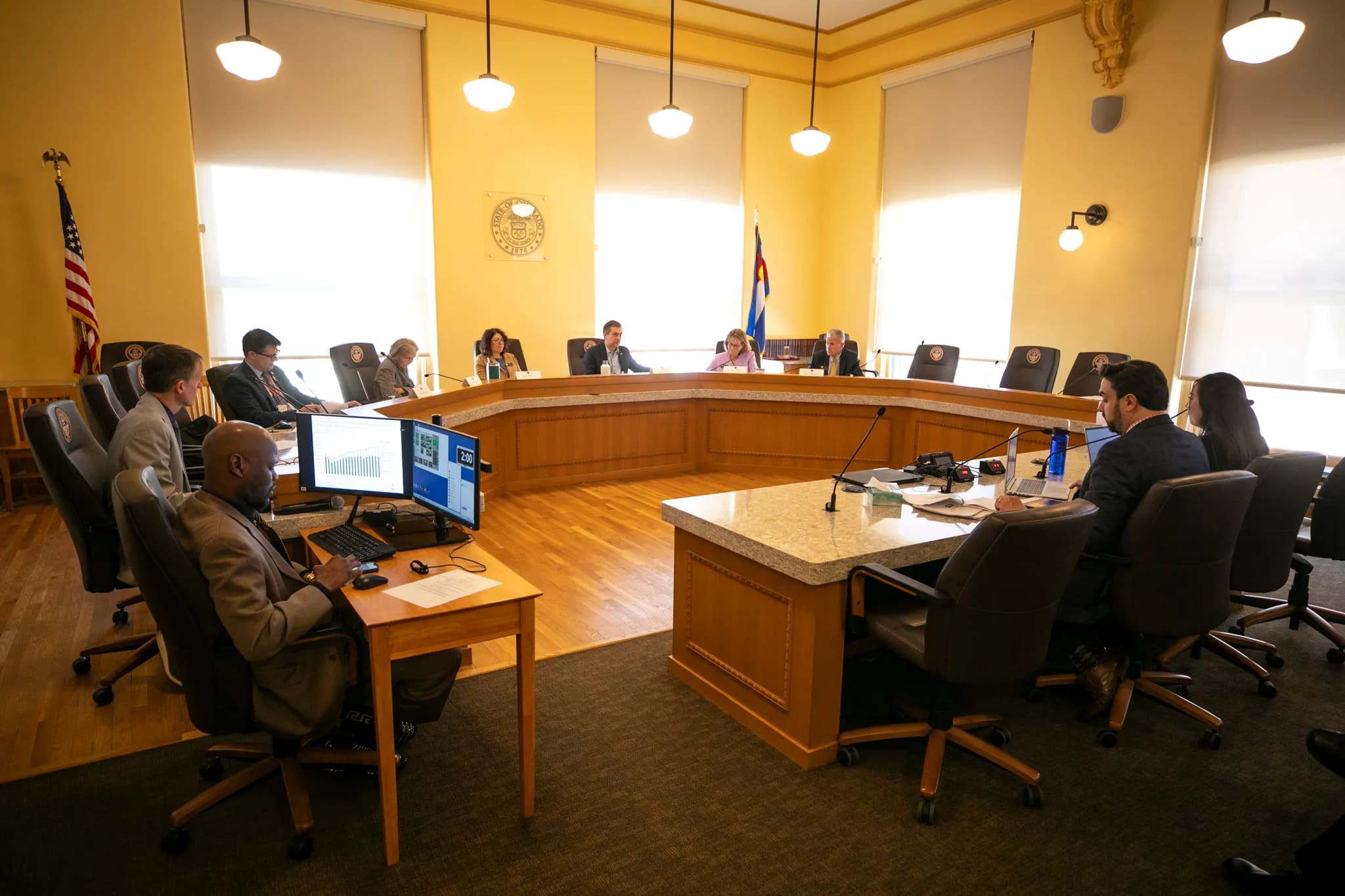
That’s the question hanging over Delta County’s commuters this week, even as Denver’s Joint Budget Committee celebrated a rare moment of fiscal calm. The state’s economic forecasters just called it the “Goldilocks forecast.” Greg Sobetski, the chief legislative economist, told the committee that revenue is sitting “just right” for the 2027-28 budget cycle. It’s the best-case scenario he can present.
But don’t get too comfortable.
The relief is temporary. It’s a one-time reprieve, not a permanent fix for the long-term financial grind Colorado faces. Healthcare costs and other expenses are still rising faster than the state is allowed to spend under the Taxpayer’s Bill of Rights (TABOR). And if the economy stumbles — and there are growing signs it might, with gas prices biting into consumer wallets — that surplus could vanish faster than a summer storm. The governor’s office estimates a 40% chance of a recession in the coming years.
Here’s the local reality: after two years of enduring $1 billion in budget deficits, lawmakers are finally looking at a surplus of $116 million for the current fiscal year ending June 30. That’s a far cry from the black hole they were staring down. But it’s not free money. It’s money that has to be allocated, and the choices made in the Capitol will ripple out to every county on the Western Slope.
Lawmakers aren’t facing another $1 billion shortfall next year. Instead, they’re looking at a $315 million cut if they want to restore state reserves to 15% of general fund spending. If they keep reserves at the current 13%, no further cuts are needed. That sounds like a win for taxpayers who’ve watched their property taxes climb while services shrank. But it’s a win for the state treasury, not necessarily for the local agencies that rely on state aid.
The improvement comes from two sources. First, the federal tax and spending bill (H.R. 1) didn’t cut state tax collections as badly as feared. Second, inflation is pushing the TABOR cap higher than expected, allowing the state to spend more. It’s a mathematical trick, but it works for now.
Yet, the caution from economists is clear. The budget picture is improving, but it’s not reversing the cuts to public services that have defined the last decade. The $315 million gap is still a gap. It’s still a choice between funding education, healthcare, and infrastructure, or padding the reserve. And with recession risks looming, that padding might be the only thing standing between a balanced budget and a new round of austerity.
Picture a driver on U.S. Highway 50, watching the speedometer tick up as they leave Delta. The road is paved, mostly. But the potholes are still there, waiting for a budget cycle that might not come. The state is breathing easier, yes. But the lungs are still shallow. The surplus is a bandage, not a cure. And when the recession hits, and the forecast says it might; that bandage will tear.
The Joint Budget Committee met on March 19, 2026, to discuss the economy. They’re meeting again in the fall to decide what to do with the surplus. Will they rebuild reserves? Or will they try to stretch the money thin across every county, every road, every school district? The answer isn’t in the forecast. It’s in the politics. And politics, unlike economics, doesn’t care about your potholes.
Keep up with Delta
The day's Western Slope news, one email each morning. Free.