Delta County Sheriff Enforces Stage One Fire Restrictions Amid Drought
Delta County Sheriff Mark Taylor announces Stage One Fire Restrictions for unincorporated areas, banning bonfires and limiting smoking to curb human-caused wildfires amid severe drought.
Delta —The air in Delta hangs heavy, dry as bone dust. You can smell the cured sage from the highway, but you can’t burn it. Not anymore.
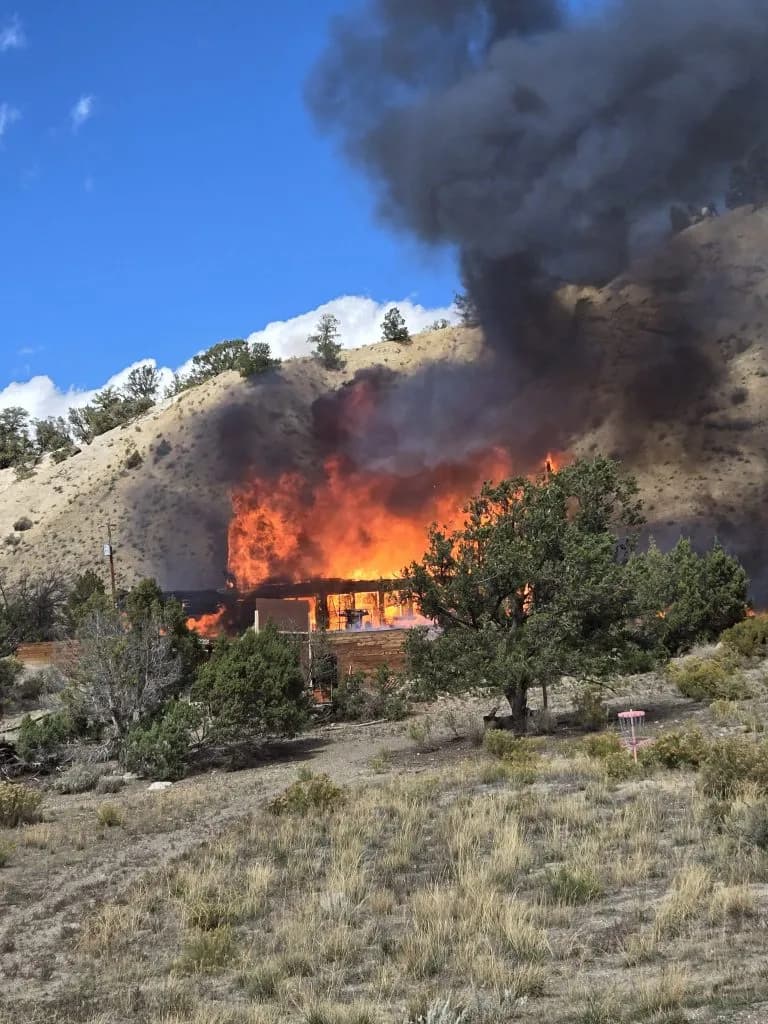
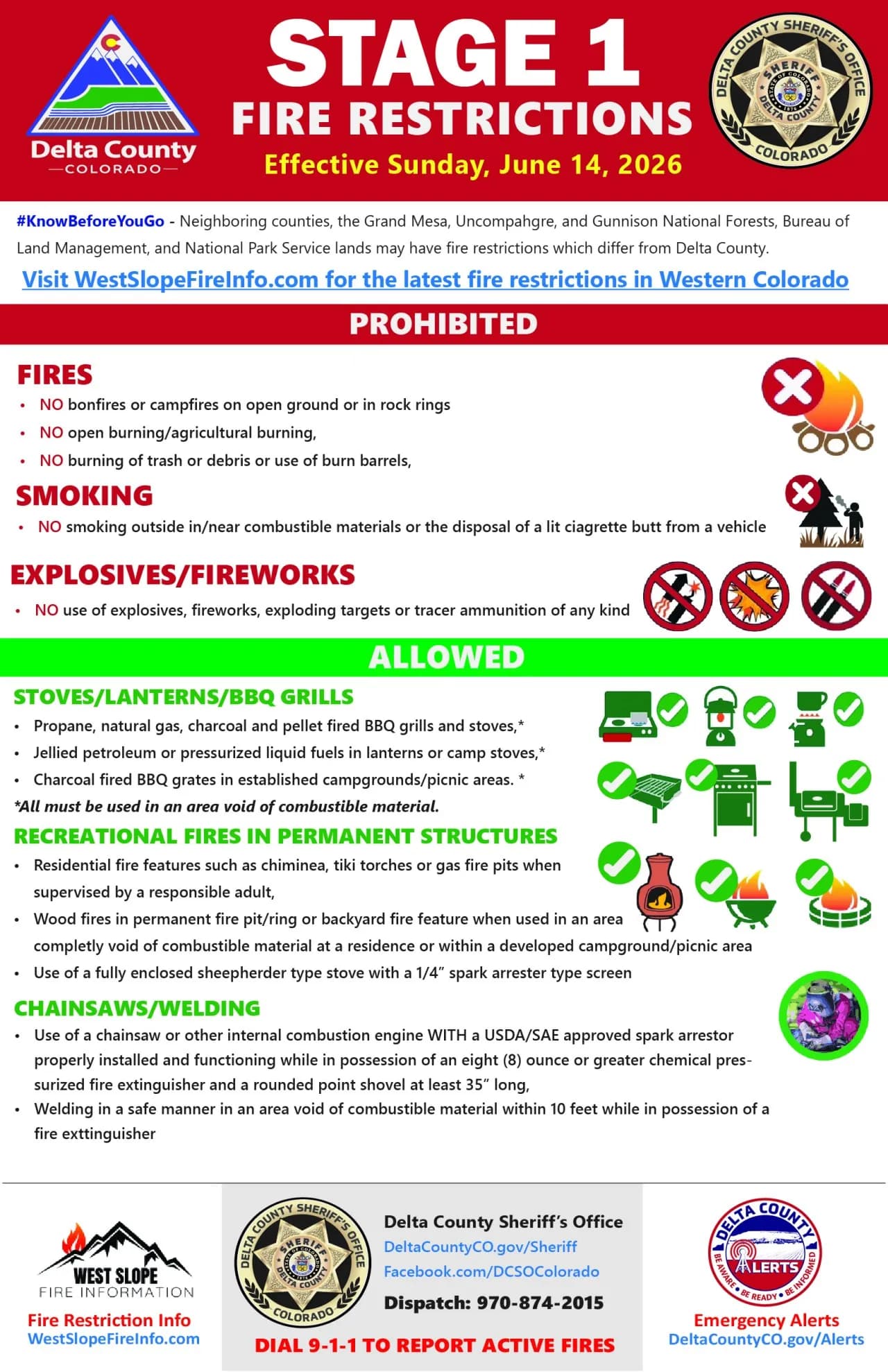
Stage One Fire Restrictions kicked in at midnight Sunday, turning the entire county into a tinderbox where a single careless match could rewrite the summer landscape. Delta County Sheriff Mark Taylor didn’t mince words when he issued the Friday announcement: this is a necessary, prudent step to stop human-caused wildfires from consuming personal property. The alternative? A severe drought that has left the ground so dry it practically begs for a spark.
Let’s look at who actually has to follow these rules. The restrictions apply to all unincorporated areas of Delta County. That includes Crawford. It includes the Sweitzer Lake State Parks and State Wildlife Areas. It also covers any town limits that have elected to adopt the restrictions within their own jurisdiction. If you’re living in the county, you’re under the microscope.
But here’s the catch that often gets lost in the press releases: the restrictions don’t automatically apply to every acre of public land. The Delta County order specifically excludes lands managed by the Grand Mesa, Uncompahgre and Gunnison (GMUG) National Forests, the Bureau of Reclamation, the Bureau of Land Management (BLM), or the National Park Service. Those agencies set their own rules. On Friday, the BLM placed all its lands in Delta County under Stage One Fire Restrictions, but that’s a separate regulatory layer. You can’t assume one blanket rule covers the whole map.
So, what can you actually do with a fire? Under Stage One, fireworks, explosives, bonfires, and campfires on the ground in stone rings are out. Open burning of trash, debris, or for agricultural use is prohibited. Smoking is restricted to inside a vehicle or outside in an area with zero combustible material. If you’re welding or grinding, you need a fire extinguisher within 10 feet and no flammable vegetation nearby.
If you want a campfire, it has to be in a permanent fire pit, ring, or BBQ grill at a private residence or a developed recreational site. Natural gas stoves that can be turned off with a valve are still fair game.
Violate the rules, and you’re looking at a citation. But the real sting is financial. If your fire escapes and causes a wildfire, you’re liable for restitution costs. We aren’t talking about a $50 fine. We’re talking about covering the cost of suppression, which can run into the millions for a single large blaze. For context, that’s more than what the county spends on road maintenance in a year.
Sheriff Taylor emphasized that residents need to take this seriously. He’s consulting with Delta County Emergency Management, chiefs of fire protection districts, and state and federal wildlife management partners to make these calls. The decision wasn’t made in a vacuum; it was based on current fire indices and the reality of the drought.
The restrictions will stay in effect until the weather breaks and the Sheriff rescinds the order, or until conditions worsen and Stage Two Fire Restrictions are implemented. Stage Two usually means total fire bans, including portable stoves. We’re not there yet, but the trajectory is clear.
For locals, this means adjusting your weekend plans. It means checking if your specific area is unincorporated or if you’re in a town that opted out. It means signing up for Delta County Alerts at deltacountyco.gov. And it means creating defensible space around your home. Hardening your home against fire embers isn’t just a suggestion; it’s the difference between a smoldered roof and a standing structure.
The bottom line is simple: the risk is high, the rules are strict, and the cost of failure falls on your wallet. Don’t test the system.
Keep up with Delta
The day's Western Slope news, one email each morning. Free.