Denver Tourists Pay $28 to Walk Cheesman Park's Unmarked Graves
Denver operators charge $28 for sensory-based tours of Cheesman Park, a public space built over 1,500 to 3,000 unmarked graves relocated in the 1890s.
$28. That is the price of entry to stand on top of an estimated 1,500 to 3,000 unmarked graves in Denver’s Cheesman Park.
For most people on the Western Slope, that number is abstract. We don’t have a major urban park built directly over a mass burial ground with no headstones to point at. But the question it raises is one locals should ask about any new development project or public land use: Who profits from the ground we walk on, and does that profit require a conscience?
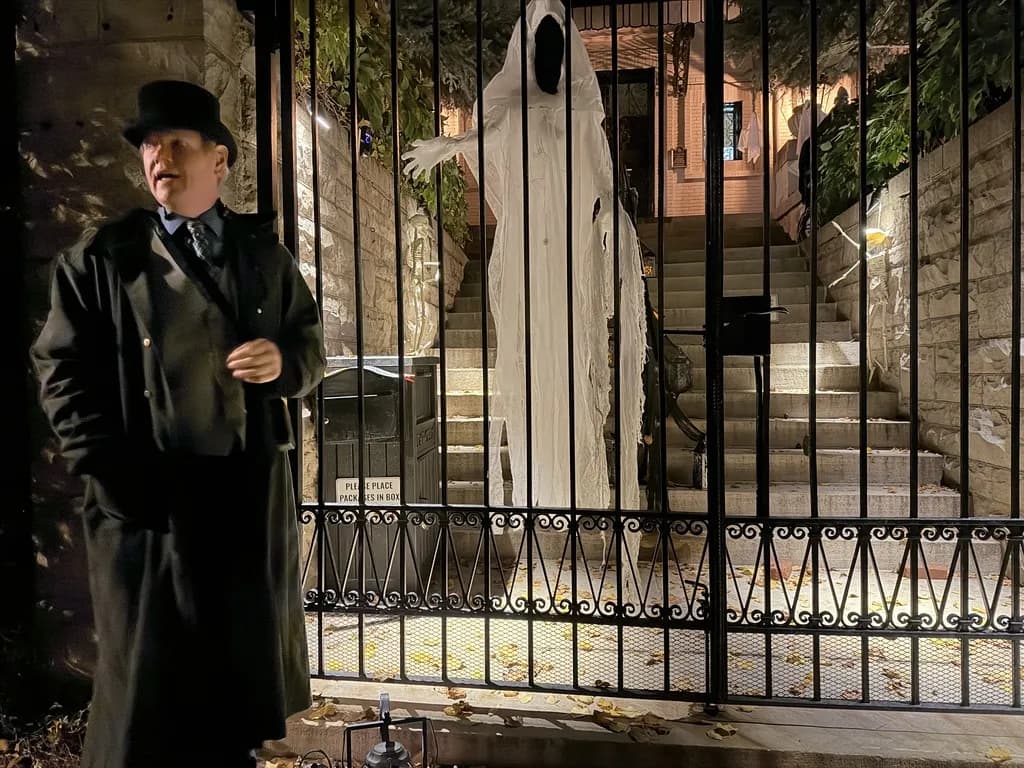
The Colorado Sun reported Tuesday on the ethical friction emerging around Halloween tours in Denver. The piece details a scene at the Cheesman Park Memorial Pavilion where two distinct groups gathered: roughly 50 cyclists from a social club called Bike + Brew Denver, and a smaller group of walkers led by Will Olson.
The cyclists were there for the "bikes and boos" experience. Their itinerary included a ride past purportedly haunted houses on the East 7th Avenue Parkway, a stop at Fairmount Cemetery on Quebec Street, and a drink at the Crypt Bar in Uptown. It is a commercial package: ride, see ghosts (or think you do), buy alcohol, go home.
Olson’s group was different. They were staying in the park. There are no headstones in Cheesman Park’s 80 acres. No markers denote the macabre history of the 1890s, when Denver relocated the cemetery to a nearby site and left bodies behind. Olson’s tour relies on sensory claims: cold spots with "no explanation," sunken rectangles in the grass shaped like coffins, and the smell of roses blooming out of season.
Olson, who founded Denver Local Tours in 2020, told the outlet he has "walked through Cheesman like 10,000 times." He claims to have experienced unexplainable phenomena, such as seeing his breath when the temperature is 70 degrees.
Here is where the data gets uncomfortable for anyone who thinks about land use and public access.
Olson’s 1.5-hour tour costs $28. The Bike + Brew group pays for their ride and their drinks at the Crypt Bar. In both cases, a business is extracting revenue from a public space whose primary historical feature is the presence of dead people who cannot consent to being marketed.
The report notes that archivists and even other graveyard tour proprietors pause when they consider this dynamic. The dead are interred beneath the dirt. They are powerless. Is it acceptable for operators to commodify them?
Olson waffles on the question, according to the coverage. He makes part of his living from these tours, so the conflict of interest is built into the business model.
Let’s do the math on what this means for local governance, even if Cheesman Park is in Denver.
- Public Land as Private Product: When a city designates land for public use, it implies access without mandatory cost. Cheesman Park is free to enter. But if the only way to "experience" its history is through a paid, guided narrative that leans on unverifiable paranormal claims, the public good becomes a private revenue stream.
- The Verification Gap: There are no headstones in Cheesman Park. The "evidence" for the haunting is sensory and subjective. Cold spots happen in October. Sunken rectangles can be erosion or root systems. The smell of roses is a biological fact, not necessarily a supernatural one. Yet the $28 price tag sells certainty to people who want it.
- The Relocation Precedent: Denver moved this cemetery in the 1890s. That was a logistical decision, likely driven by urban expansion or sanitation concerns of the era. The bodies were left behind. Today, they are a tourist attraction.
This isn’t just a Denver problem. It is a template for how Western Slope communities handle historical sites and public parks.
We often measure success in square footage of green space or vehicle throughput. We rarely ask what is underneath, or who owns the narrative of that ground once it’s paved over.
If a business can charge $28 to tell you the grass is haunted, what happens when a developer charges you property tax increases to build a trail on that same ground? The principle is the same: public land, private profit, historical erasure.
The coverage highlights that Americans’ interest in the paranormal peaks during Halloween, but the business model doesn’t stop when the costumes come off. Olson’s tour runs year-round. The Bike + Brew social club meets regularly.
For locals, the practical impact is a shift in how we view public spaces. A park is not just a place to walk; it is a stage for commercial storytelling. If you visit Cheesman Park, or any local historical site, ask yourself: Who is guiding your gaze? And what are they selling you?
The dead don’t pay rent. But their land pays dividends to those who know how to market the mystery.
Keep up with the Western Slope
The day's Western Slope news, one email each morning. Free.