Eagle County Parties Unify on Mail Ballots After Supreme Court Ruling
Eagle County party chairs unified in support of local mail ballot procedures after the Supreme Court rejected federal restrictions, allowing the Nov. 3 election to proceed without disruption.
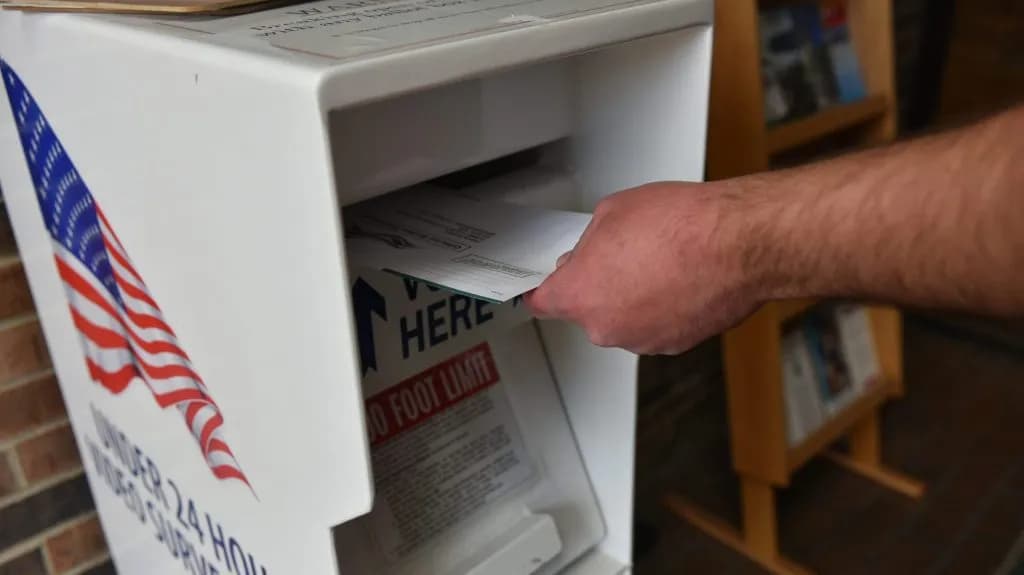
Aspen —Becky Close, the Eagle County Clerk and Recorder, spent the last few weeks navigating what she described as “noise surrounding mail-in ballots causing unnecessary confusion.” She was preparing to send out ballots to every registered voter in the county starting Oct. 5, a process Colorado has safely executed since 2014, only to have federal legal battles threaten to upend the timeline.
That threat dissipated late Monday when the U.S. Supreme Court rejected President Donald Trump’s bid to restrict mail ballots for the midterm elections. The decision, reported by the Associated Press, allows states to continue using established processes that have accounted for nearly a third of votes cast in recent cycles. For the people living and working here, it means the election proceeds as planned, without the bureaucratic blockades that federal actions in recent weeks had threatened to introduce.
The immediate reaction from local political leadership was strikingly unified. Both major party chairs in Eagle County expressed their trust in Close’s administration of the Nov. 3 general election, a stance that stands out against the national backdrop of partisan tension over voting access.
Lisa Lewis, chair of the Eagle County Democratic Party, wrote in an email that her party has confidence both in the Colorado Secretary of State’s Office and in Close and her team to administer a safe, secure, and accessible election. The math holds up for the Democrats: if the federal government had succeeded in restricting mail ballots, it would have complicated a system that Colorado voters rely on heavily.
Dan King, chair of the Eagle County Republican Party, offered a similar endorsement, but with a specific nod to his personal experience. “I know Ms. Close personally and have toured the new county facility that facilitates ballot counting,” King wrote in an email to the Vail Daily. “I never worry about how the ballots are counted in Eagle County.”
King’s comment highlights a key distinction between local operations and national politics. While Washington was litigating the validity of mail-in voting, the infrastructure here in the valley is physical and transparent. The new county facility allows for public observation and standardized counting, a detail that resonates with neighbors who might otherwise be skeptical of remote ballot processing.
The federal victory was celebrated by political figures with direct ties to the region. Democratic U.S. Rep. Joe Neguse, whose district includes most of Eagle County, stated in a release that House Democrats won their fight against what he called “disastrous” attempts to impose unworkable restrictions. He emphasized that no party, and certainly no president, is above the rule of law.
Gov. Jared Polis also issued a statement praising the decision as good news for democracy, noting that it allows Colorado’s “gold-standard” elections to proceed without confusion or chaos. He pointed out that the administration’s efforts would have made it harder for election officials to administer free and fair elections, a point that resonates with local clerks who are tasked with executing these processes under tight deadlines.
There has been no evidence of widespread mail-in voting fraud impacting elections in Colorado, a fact that underpins the local confidence. Notably, Trump voted by mail in Florida during this summer’s primary election, a detail that underscores the practicality of the method regardless of political affiliation.
For Close and her team, the Supreme Court’s ruling removes a significant layer of uncertainty. The focus now shifts entirely to logistics: ensuring ballots reach voters by Oct. 5 and that the counting process at the new facility runs smoothly in November. The political noise may continue, but for those on the ground in Eagle County, the playbook is clear.
“Engaged citizens are the best line of defense,” Close noted, a sentiment that both party chairs seem to share in their quiet confidence in the local process.
Keep up with Aspen
The day's Western Slope news, one email each morning. Free.