Ecotone Biodigester Turns Snooze Denver Waste Into Fertilizer
Ecotone Renewables installs biodigesters in Denver parking lots to convert restaurant food waste into liquid fertilizer, helping Snooze comply with citywide diversion mandates.
The smell hits you first. It’s not the sharp, acidic tang of spoiled milk or the heavy, sweet rot of fruit peels. It’s earthy. Loamy. Like turning over a garden bed in late October when the rain has just stopped and the soil is still damp.
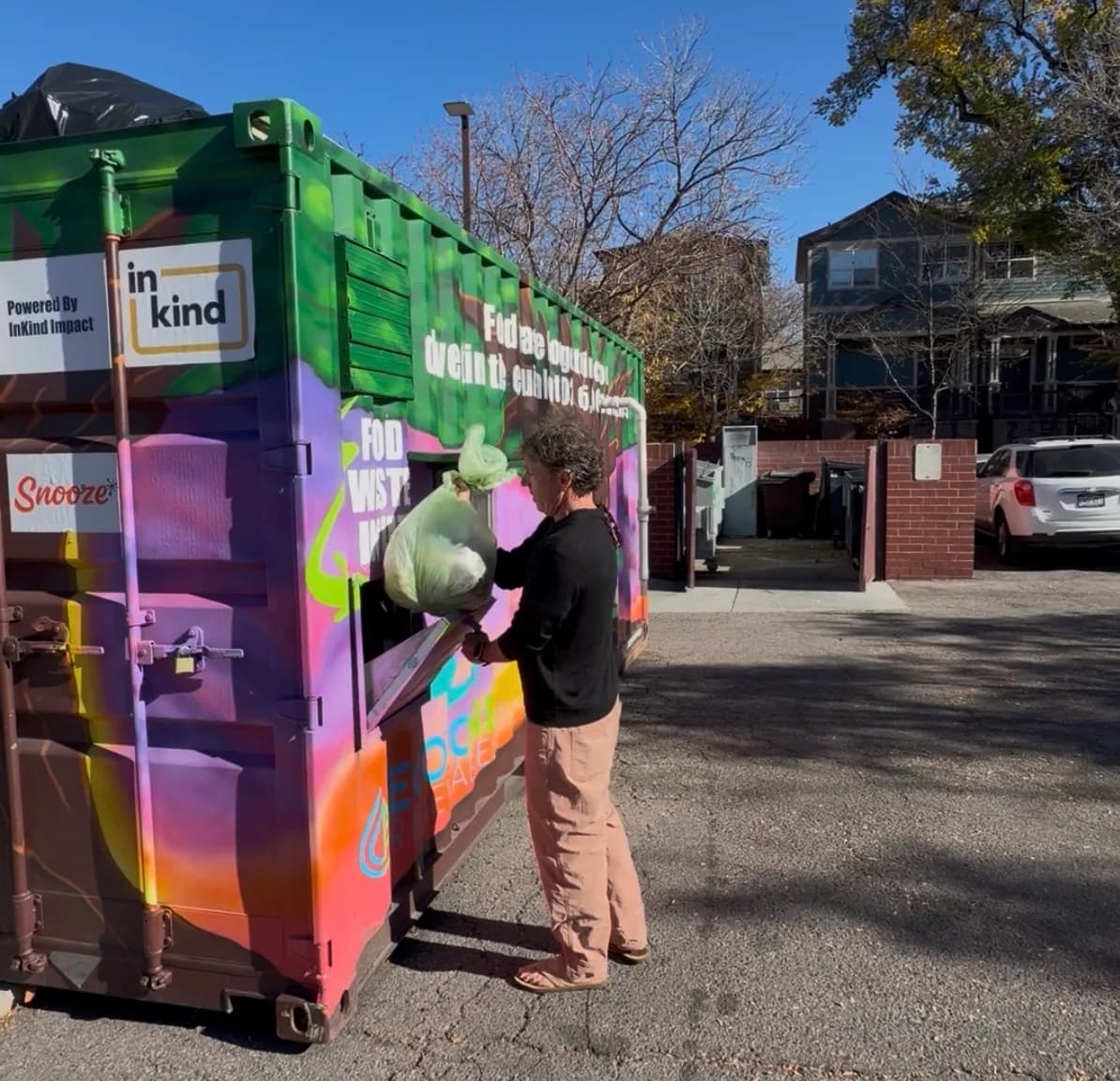
Adam Schlegel, chief growth and strategy officer for the Snooze restaurant group, stands in the parking lot at 7th and Colorado, a compostable bag tied tight in his hands. Inside is the morning’s detritus: spent coffee grounds, cantaloupe rinds, the sad remains of an eggs Benedict that didn’t make it to a plate. He pulls open a hatch cut into the side of a rainbow-painted storage container, and drops the bag in. No flies. No odor cloud. Just a soft plop into the dark, steel belly of the box.
Schlegel leans against the container, looking at the rainbow paint with a mix of skepticism and genuine excitement. “It does seem a little bit too good to be true,” he told The Colorado Sun. “That sounds like my CFO … but man, I’m so excited about where this could go. And I hope we and as many other people as possible can start leaning into this, because it’s a real opportunity in our cities and beyond, and I think that they’ve helped unlock it.”
The company behind the container is Ecotone Renewables. A few times a week, an employee walks into that colorful box, opens the bags deposited by Snooze, Anthony’s Pizza, and other businesses on the block, and feeds them into a biodigester. The process is biological alchemy: organic waste goes in, and 15 feet away, a plastic nozzle trickles out rich liquid plant fertilizer. It’s bottled, branded as “Soil Sauce,” and sold across the country.
For Schlegel, this isn’t just a novelty; it’s a solution to Denver’s new waste diversion laws. After a citywide vote, landlords were required to extend recycling and composting services to businesses and apartment buildings. The goal is to improve Colorado’s diversion rates, which have historically lagged behind the national average. For a high-volume brunch spot like Snooze, where food waste is a daily logistical headache, the Ecotone unit solves two problems at once: it keeps the trash out of the landfill and turns that waste into a product.
Snooze is currently negotiating to try a smaller version of the biodigester outside its RiNo location. Schlegel hopes Ecotone will make a go of it, dropping these “magic factories” into the parking lots of restaurants, grocery stores, and other food processors across the state. If you look closely at the nozzle, you can see the liquid moving, a steady stream of nutrient-dense brown fluid. It’s worth the drive to see it in action, or at least to know that the coffee grounds you scraped into the bin didn’t just vanish into a landfill.
The system relies on consistency. The bags must be compostable, the waste organic, and the process regular. It’s a small, quiet revolution happening in a parking lot between a Trader Joe’s and a pizza shop. There’s a warmth to the idea that our daily scraps, the things we usually toss without a second thought, can be transformed into something that feeds plants. It’s not magic, exactly. It’s biology, working as it should.
As Schlegel walks back toward the kitchen, the parking lot settles into its usual afternoon hum. The rainbow container sits quiet, humming with activity inside. A few feet away, a bottle of Soil Sauce rests on a shelf near the register, waiting for someone to take it home and pour it into their garden. The liquid is cold to the touch, dark as slate, and smells like rain on dirt.
Keep up with the Western Slope
The day's Western Slope news, one email each morning. Free.