Federal Court Halts White House Ballroom Construction
A divided federal appeals court ruled Friday that President Trump’s administration must halt the $400 million White House ballroom construction because Congress has not approved the project.
Aspen —“Whether or not a massive ballroom should be constructed is for Congress to decide and is not a matter for Executive self-help,” the court wrote.
That sentence stopped $400 million in concrete and steel dead in its tracks.
A divided federal appeals court ruled Friday that President Donald Trump’s administration must halt construction of the White House ballroom. The reason is simple. Congress has not approved the project.
The decision comes from a three-judge panel in the U.S. Court of Appeals for the District of Columbia Circuit. It is a 2-1 ruling. The majority sided with historic preservationists who sued to stop the work.
Trump called it “unjust.” He blasted the ruling on social media. He vowed to appeal directly to the Supreme Court.
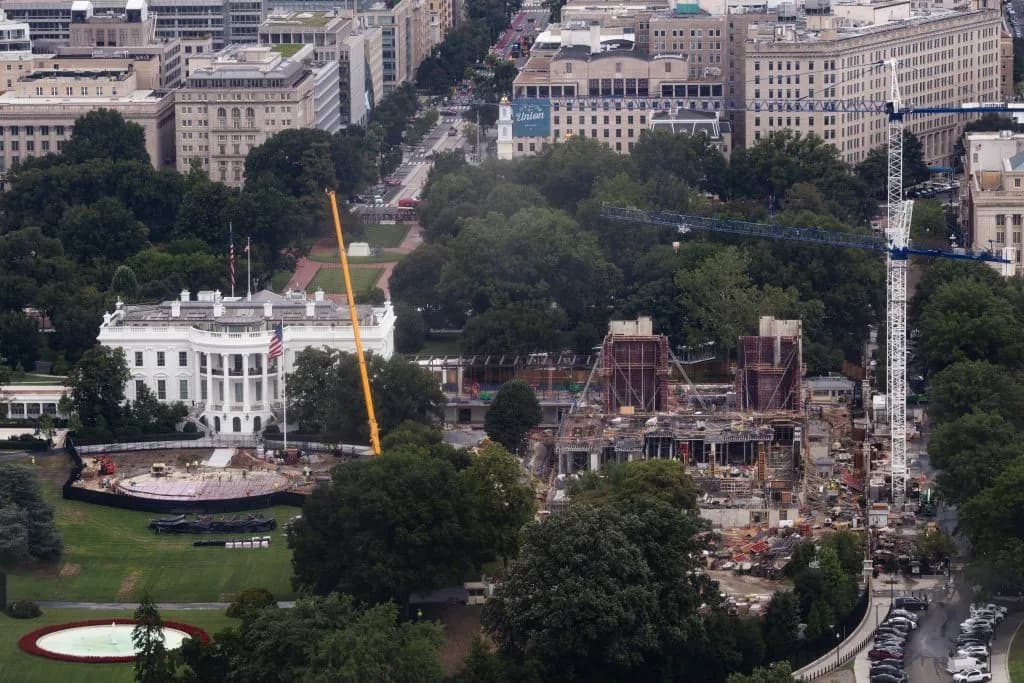
The ballroom is already rising above ground on the east side of the White House. Aerial photos show the structure taking shape where the old East Wing once stood. The president ordered that wing’s demolition last fall.
Now, he has two weeks to file his appeal before the ruling takes full effect. The court stayed its decision during that window.
Trump insists congressional approval is unnecessary. He quoted Judge Neomi Rao in his dissenting opinion. Rao was nominated by Trump himself.
The president argues this is about national security, not just square footage. He described the facility as including bomb shelters, a hospital, and “Top Secret Military Facilities.” The Military and Secret Service view the ruling as a threat to the nation’s protection.
“The entire Complex is being built for the protection of our Country and, additionally, all future Presidents,” Trump wrote.
Make no mistake: The court did not say the ballroom is a bad idea. It said the president cannot build it alone.
“This holding has nothing at all to do with whether the proposed ballroom is desirable, or not, as a matter of policy,” the court noted. “This ruling does not even necessarily mean that the Defendants may not ultimately construct the ballroom.”
What it means is procedural. The administration cannot bypass Congress during this litigation. They must secure authorization as the Constitution requires.
This is the second construction dispute to hit headlines this week. The National Park Service released an assessment regarding a proposed 250-foot-tall triumphal arch. That structure, planned for a traffic circle between the Lincoln Memorial and Arlington National Cemetery, could compromise dozens of historic sites.
The ballroom case is different. The work has begun. The demolition happened. The foundation is set.
The lower court ordered a halt to aboveground construction earlier this year. Trump argued permission was not needed then, either. He lost that argument too.
The district court’s expeditious litigation process is now the bottleneck. The ballroom cannot proceed until Congress acts or the Supreme Court intervenes.
Trump’s social media posts were lengthy. They detailed security features and military utility. They dismissed the ruling as politically motivated.
The court’s response was dry. It focused on authority, not politics. Executive self-help has limits.
The ballroom is 90,000 square feet. It costs $400 million. It sits on the White House grounds.
Congress holds the purse strings and the power of approval. The president holds the executive power. This ruling draws a line between them.
Trump will appeal. He has two weeks. The concrete waits.
Keep up with Aspen
The day's Western Slope news, one email each morning. Free.