Federal Judge Rejects Colorado GOP Effort to Block Unaffiliated Voters
A federal judge has denied the Colorado GOP's request to block unaffiliated voters from participating in the party's primary, upholding state law and ensuring voting access.
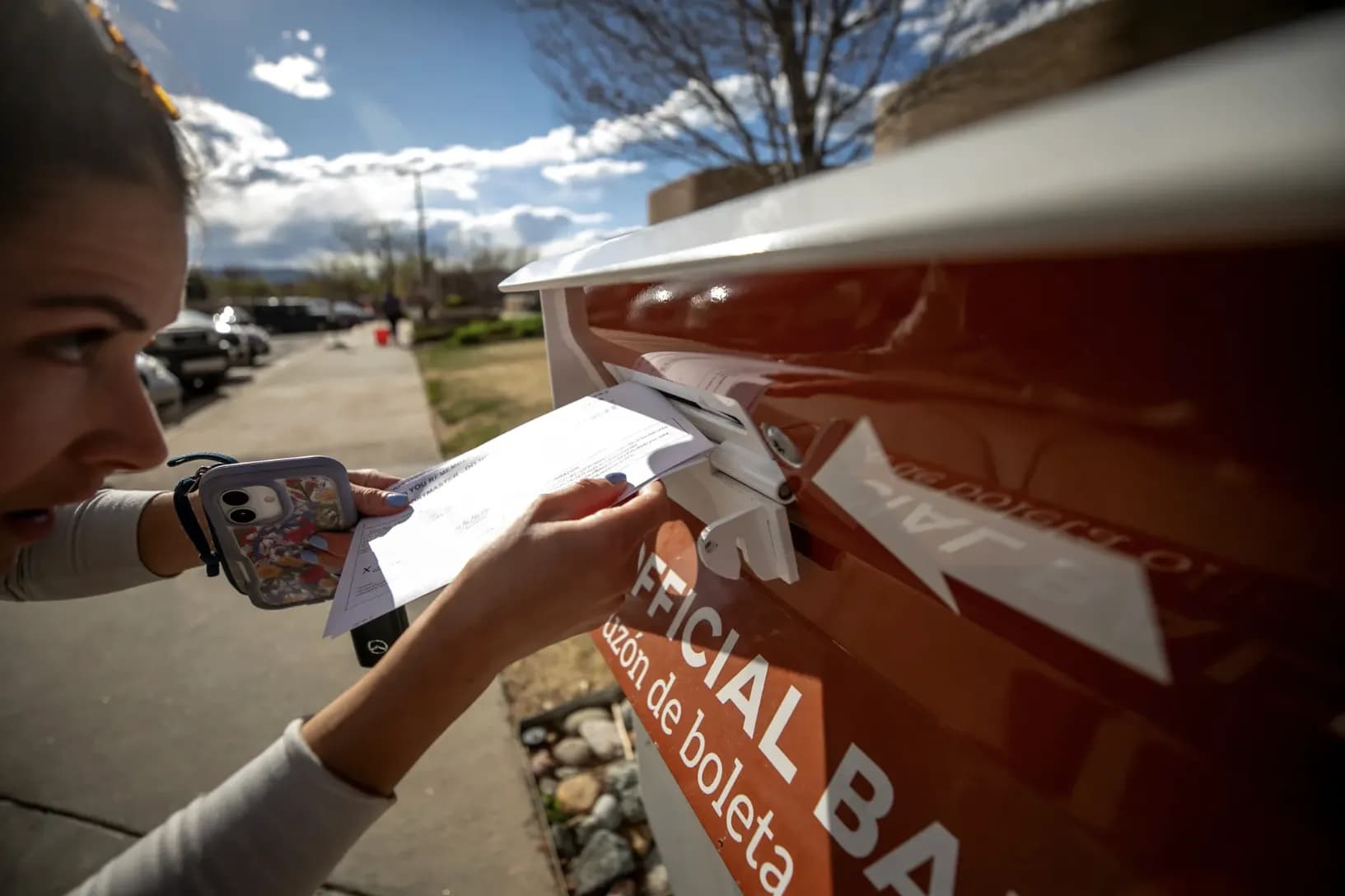
Colorado —Standing in the Grand Junction courthouse, the sound of murmured conversations fills the air as locals discuss the latest ruling — a federal judge has rejected the Colorado GOP's effort to block unaffiliated voters from participating in the party's 2026 primaries. The decision, made by U.S. District Judge Philip A. Brimmer, is a significant blow to the party's attempts to limit voting access. Brimmer's ruling stated that excluding unaffiliated voters at this stage would create too much confusion, especially with the state's ballot certification deadline looming and ballots set to be mailed out soon.
The Colorado GOP had requested an emergency order to prevent state elections officials from mailing Republican primary ballots to unaffiliated voters, citing a previous ruling that found a requirement in Colorado law to be unconstitutional. However, this request was met with opposition from the four Colorado Republicans in Congress, who joined the National Republican Congressional Committee in arguing that blocking unaffiliated voters would cause chaos. The fact that the party's own representatives are split on this issue is worth noting — it highlights the internal divisions within the Colorado GOP.
The issue at hand is not new, since 2018, unaffiliated voters have been able to cast ballots in either the state's Democratic or Republican primaries. This change was brought about by the passage of Proposition 108 in 2016, which opened up the primaries to unaffiliated voters. However, a faction of Republicans has consistently tried to halt unaffiliated participation in GOP primaries, arguing that it dilutes the conservatism of their candidates. Make no mistake, this is a contentious issue that will continue to be debated in the coming months.
County clerks are now required to send ballots for the June 30 primary to military and overseas voters by May 16, and to provide a ballot to any voter who requests one in person at a county clerk's office on the same day. The rest of the electorate will receive their ballots on June 8. The fact that the state is moving forward with the primary as planned is a crucial development; it means that unaffiliated voters will indeed be able to participate in the Republican primary.
In a written statement, Colorado Secretary of State Jena Griswold said Brimmer made the right decision, stating that the ruling ensures the Colorado June primary aligns with Colorado law. The short version is that the law allows unaffiliated voters to participate in primaries, and the judge's ruling upholds that law. However, the fact that the Colorado GOP is still trying to find ways to limit voting access raises concerns about the party's commitment to democratic principles.
The implications of this ruling are substantial. It means that unaffiliated voters, who now make up a majority of the state's active, registered electorate, will continue to have a say in the Republican primary. This could potentially impact the outcome of the election, as unaffiliated voters may choose to support more moderate candidates. The fact that the Colorado GOP is trying to limit the influence of these voters is a telling sign of the party's priorities, suggesting they are more interested in maintaining control over the primary process than in allowing all voters to participate.
As the primary season heats up, it's worth watching how the Colorado GOP responds to this ruling. Will they continue to try to find ways to limit voting access, or will they accept the judge's decision and move forward? The fact that they are still trying to appeal the ruling suggests that they are not willing to give up on this issue; it will be interesting to see how this plays out in the coming weeks. Read that again - the Colorado GOP is still trying to appeal the ruling, which means that this issue is far from over.
The community is likely to be impacted by this decision, as it will affect the way that elections are run in the state. Folks around here are likely to have strong opinions on this issue, and it will be interesting to see how they respond to the judge's ruling. The fact that the ruling upholds the law and allows unaffiliated voters to participate in the primary is a significant development. it means that the democratic process will be able to move forward as planned.
In the end, the judge's ruling is a victory for voting rights in Colorado. It ensures that all voters, regardless of party affiliation, will be able to participate in the primary process. However, the Colorado GOP's ongoing efforts to limit voting access are troubling, and they raise questions about the party's commitment to democratic principles. The community will be watching this issue closely, and it will be interesting to see how it plays out in the coming weeks. The ruling's impact on the Colorado GOP's attempts to limit voting access is clear; it highlights the importance of upholding the law and protecting the democratic process.
Keep up with Colorado
The day's Western Slope news, one email each morning. Free.


Federal Report Sets 200,000 Acre-Foot Water Conservation Target for Upper Basin
Colorado Parks and Wildlife Deploys Precision Drones for Weed Control