Front Range Rail District Seeks $295M Annual Tax Hike
The Front Range Passenger Rail District board approved a 33-cent sales tax increase to fund a $2.7 billion rail line connecting Denver, Fort Collins, and Pueblo.
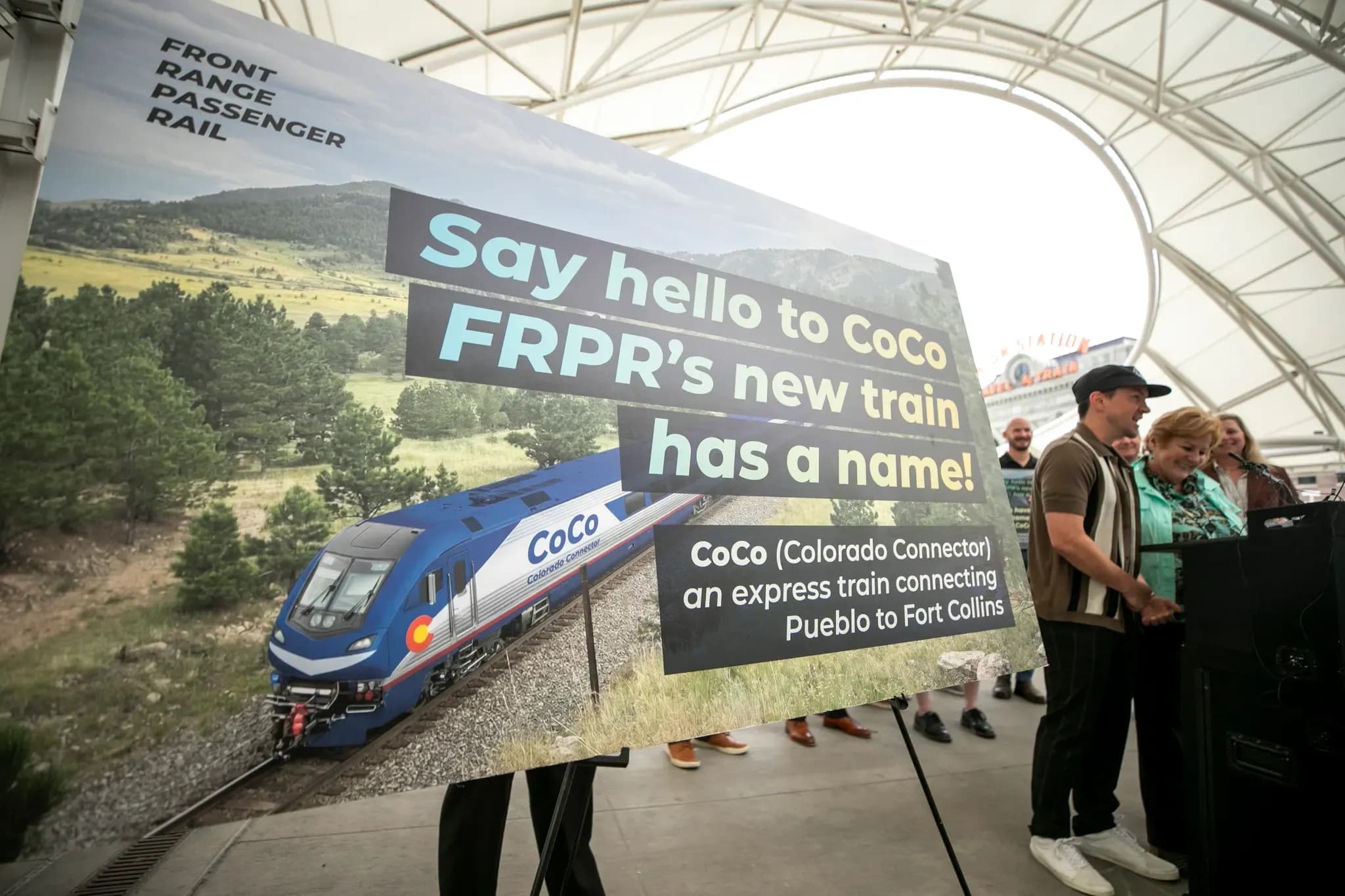
John Putnam, the chair of the Front Range Passenger Rail District, has a simple promise for voters: even if you vote "no" on the new tax in November, trains will still run between Denver and Fort Collins by 2029.
That is the hook. The bait, if you will. But it’s a partial bait. Putnam said limited service — three round-trip trains a day initially — would start in three years using existing funds. The route would head northwest to Boulder and Longmont on the way to Larimer County. That service is funded by a state transportation innovation fund and RTD money set aside for FasTracks rail lines north of Denver that were never built. It costs $332 million to build and another $30 million to $36 million a year to operate. The state and RTD split that operating cost.
But Putnam’s "no" scenario stops at Fort Collins. If you live in Colorado Springs or Pueblo, and you vote "no," there is no train. There is only the $295 million annual tax hike that pays for the rest of the line.
The district’s board voted 14-1 on Friday to ask for a 33-cent sales tax increase on every $100 spent. That is not a small number. For context, Colorado’s statewide sales tax rate is 2.9 cents per dollar. A 33-cent increase on $100 is a 33% jump in the base rate before you factor in local city or transit taxes. To raise $295 million a year, the district needs that specific slice of your spending to go toward track, stations, and Amtrak operations.
The project is called the Colorado Connector, or CoCo. It would extend service from Fort Collins south to Pueblo. The total cost for that expansion is $2.7 billion, with a five-year timeline from the vote to completion. Once fully built out, operating costs would jump to between $85 million and $116 million annually. The bulk of that price tag comes from the stations needed along the route, not just the trains themselves. The district plans to use existing track owned by BNSF under an agreement the state has already signed. Amtrak would operate the service for the district.
Who votes on this? Only people who live in the Front Range Passenger Rail District. The district was created in 2021 and now includes cities where at least 20% of their population is within five miles of a planned station. That list includes Denver, Westminster, Louisville, Boulder, Loveland, Fort Collins, Pueblo, Colorado Springs, and the Sterling Ranch subdivision in Douglas County. State lawmakers scaled the district back this year, trimming out more politically conservative-leaning areas like Castle Rock, Lone Tree, Monument, Greeley, and most unincorporated areas.
This is a Front Range story, not a Western Slope one. We don’t pay this tax. But the logic of the project matters to anyone who cares about how Colorado moves people and money. The backers say this will reduce emissions and free people from wasted hours sitting in traffic on Interstate 25. On paper, that is a compelling trade-off for the I-25 corridor. In practice, it means a $2.7 billion infrastructure project funded by a sales tax that will hit every grocery run, every gas fill-up, and every utility bill for residents in the district.
The board made this decision during a meeting at the Transportation Technology Center, a federal railroad equipment testing facility near Pueblo. The location is symbolic. It’s where the freight trains get tested, not where the passengers will ride.
For locals in the district, the math is straightforward. You either get a train to Pueblo and pay 33 cents more on every $100 you spend, or you keep your current tax rate and stay in traffic. There is no middle ground offered by the district. The initial Denver-Fort Collins segment is a gift from existing funds. Everything south of that is your money, or it’s nothing.
Keep up with the Western Slope
The day's Western Slope news, one email each morning. Free.