Vail Artist Gonzalo Pizarro Gains International Attention
Vail-based artist Gonzalo Pizarro is making waves in the art world with his unique style, gaining international attention and acclaim from critics and fans alike.
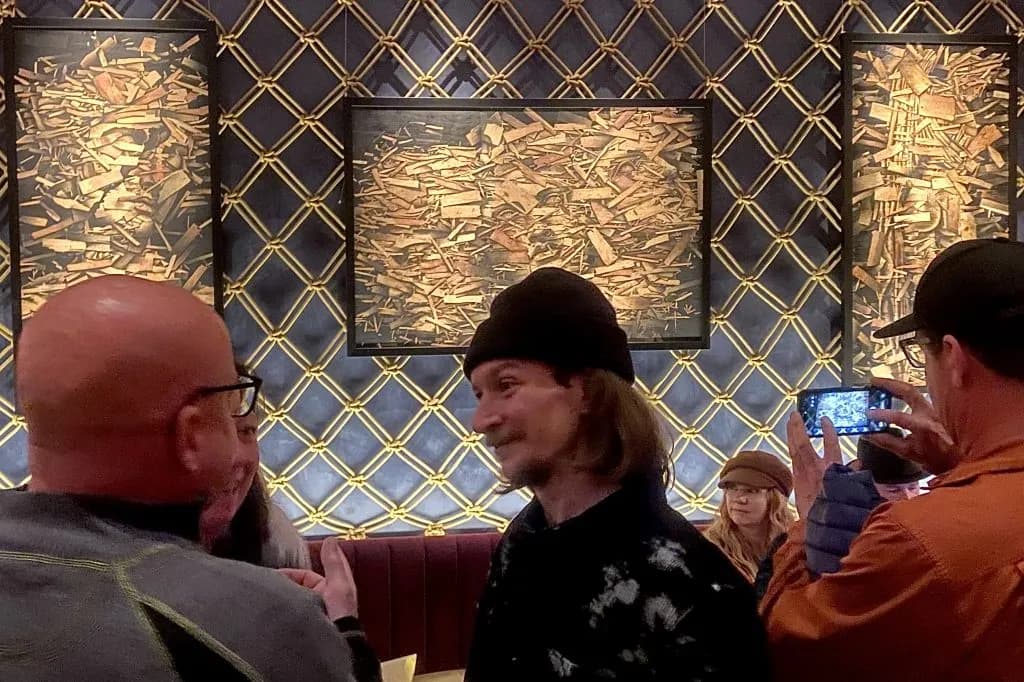
Aspen —It's unlikely that the art world would be revolutionized by an artist working with ink, charcoal, and oriented strandboard, a humble construction material. But that's exactly what's happening with Gonzalo Pizarro, a Vail-based artist who's gaining international attention for his unique style. As local artist Ben Belgrad puts it, "I immediately recognized something special in Pizarro's work," when he first encountered it at a Vail-area art fair a few years ago.
Belgrad, who runs the Minturn business Drinking Vessels, a studio that collaborates with artists from around the world, has spent his career observing the work of other creatives. He wasn't surprised when Pizarro's work went viral in January 2025, with a time-lapse video garnering 17 million views. The numbers back that up - hundreds of thousands of people followed Pizarro, and his posts started seeing so much engagement it was impossible to keep up. Almost all of the feedback was positive, with street art pioneer Justin Bua praising Pizarro's style, saying it "echoes Michelangelo's philosophy of liberating forms trapped within the marble."
The question is whether Pizarro's rise to fame is a fluke or a sign of something more significant. As Matthew Moore, founder and creative director of Artist Replete, a leading contemporary and street art gallery in Chicago, notes, "I had never seen anything like it before... I look at art every day, and as soon as I saw that I said, 'this is rare.'" Moore's gallery eventually inked a deal with Pizarro, and the results have been impressive. After quickly selling Pizarro's existing pieces, the gallery moved into commissions, with people spending $18,000 on commissions right away.
That's a significant amount, especially for an artist with a brand new process. As Moore points out, "for an artist with a brand new process, that is a lot to us." Pizarro's willingness to accept commission suggestions with a loose idea - the form of an animal or a human, for example - has also been notable. However, he's also been turning down a number of people offering "crazy money" for things he didn't want to do, Moore says. "He had people asking for Pokemons," Moore notes, highlighting the challenges of navigating the commercial side of the art world.
The fact that Pizarro's work is resonating with people around the world, and that his gallery is thriving as a result, speaks to the strong connection he's made with his audience. For now, Pizarro's innovative art is making a lasting impact. As Belgrad notes, Pizarro's work is "something special," and it's clear that he's tapped into something significant. The fact that art galleries from across the globe reached out to Pizarro, hoping to contract with him, is a sign of the impact he's having. As Pizarro himself might say, his art is a reflection of the world around him, and his use of oriented strandboard is a commentary on the materials we use and discard every day.
In the context of the local art scene, Pizarro's success has put Vail on the map, and his work is likely to inspire other local artists to experiment with new materials and techniques. The numbers are impressive, but it's the human angle that really matters - Pizarro's passion for his work, and his commitment to creating something truly original.
As Moore puts it, "we feel very lucky" to be working with Pizarro, and the partnership has proven to be a good fit. The fact that Pizarro's work is resonating with people around the world is a sign of the universal language of art, and the power it has to connect us all. In the end, it's Pizarro's outlook on his own work that's most revealing - "I'm just trying to create something new and interesting," he might say. And it's clear that he's succeeding.
Keep up with Aspen
The day's Western Slope news, one email each morning. Free.



Eagle County Judge Receives Legacy Award for Mental Health Court Reforms

Stanford and MD Anderson Studies Target Single Receptor to Reverse Aging