Jane Glover Brings Britten Opera to Aspen's Wheeler
Conductor Jane Glover returns to Aspen’s Wheeler Opera House next week to lead Benjamin Britten’s A Midsummer Night’s Dream, featuring countertenor Anthony Roth Costanzo as Oberon.
Aspen —Daniil Trifonov is coming to Aspen. Emmanuel Ax will follow. Maria Dueñas brings her violin. James Conlon conducts Mozart.
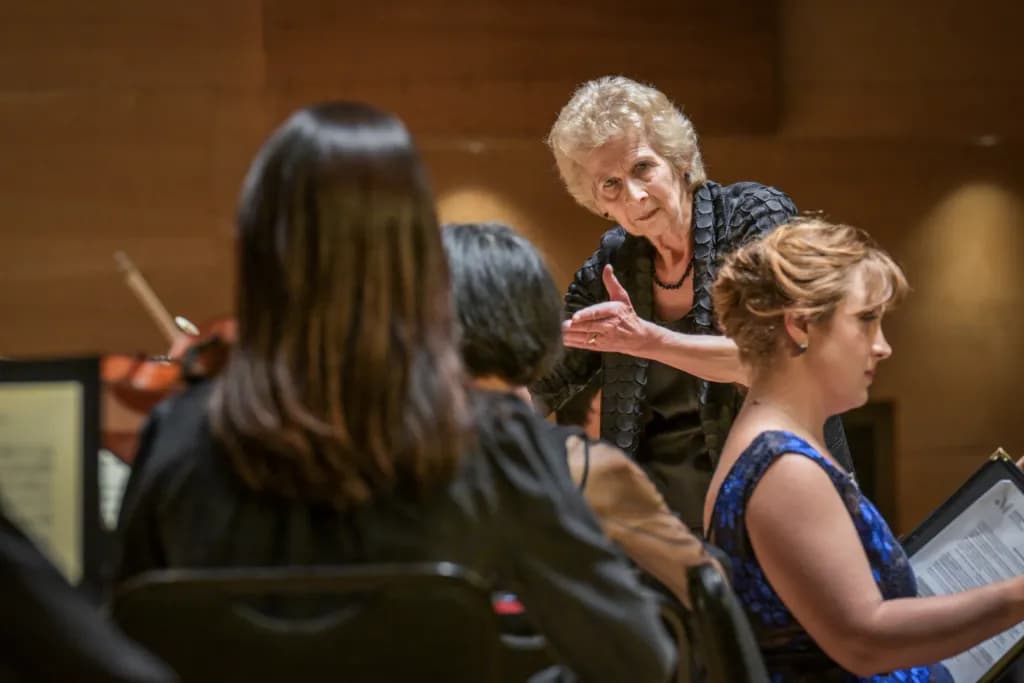
But the real story is Jane Glover.
She’s back in the Wheeler Opera House next week. She’s conducting Benjamin Britten’s “A Midsummer Night’s Dream.” It’s been about a decade since she last led this specific production. She’s not just going through the motions. She’s finding new details in the score every time she opens it.
“I’ve done it a lot, but every time I open the score, I see something new,” Glover told the Aspen Times. “Rather like reading Shakespeare himself.”
That’s not a press release platitude. That’s the reality of a conductor who has worked in this valley for decades. Britten’s opera isn’t just a play with music. It’s three distinct sound worlds colliding.
There’s the lush, romantic sound for the lovers. There’s the ethereal, shimmery sound for the fairies. And there’s the folk-like, fun sound for the rustics trying to put on a play.
The cast is huge. Fifteen roles. Almost every operatic voice type is represented. You’ve got high-pitched children playing fairies. You’ve got a deep bass for the rustics. You’ve got coloratura sopranos, lyric sopranos, mezzo-sopranos, altos, tenors, baritones.
And then there’s the countertenor.
In 1960, having the main role sung by a countertenor was unusual. We mostly heard that voice in cathedrals. Now? It’s having a heyday.
Aspen got Anthony Roth Costanzo. He’s playing Oberon, the king of the fairies. Glover called him “a force of nature.” She said he’s “brilliant” and “singing beautifully.” He already proved it in a colorful recital earlier this week.
The setting matters. The Wheeler is 500 seats. It’s intimate. The original premiere happened in a 226-seat hall in Aldeburgh, England. Britten led that summer festival for decades. The intimacy of the Wheeler should make the details pop. You won’t be watching from a distance. You’ll be inside the forest.
The music tells you who’s in charge. The forest music recurs. It slides in during transitions. It underlies other scenes. It reminds you that the fairies are pulling the strings.
Britten doesn’t let you forget. He’ll insert a staccato note on a trombone. He’ll hit a bit of percussion. It’s a signal. Another sound world is coming.
The lovers feel noble. They’re mismatched until the fairies intervene. The music turns sparkly then. The rustics parody a bel canto opera mad scene as they concoct their play. It’s a joke within a joke.
This is the all-encompassing delight Glover is laser-focused on. She knows Britten’s operas better than anyone. She’s conducted symphonic programs here for years. She’s conducted operas here for years.
Next week, the Wheeler gets the full treatment. Two performances.
The question isn’t whether the music will work. The question is whether you’ll catch every layer. The forest music returns often. The transitions are seamless. The sound worlds blend.
Glover sees something new. The audience might too.
It’s Britten. It’s Shakespeare. It’s Aspen.
The fairies are waiting.
Keep up with Aspen
The day's Western Slope news, one email each morning. Free.