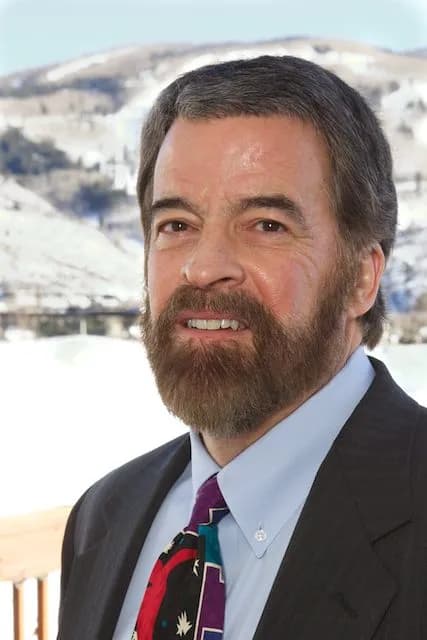
John Phelan Explains Navy Exit as Speed, Not Incompetence
Former Navy Secretary John Phelan tells an Aspen audience he was ousted for moving too fast and breaking the glass, not for incompetence, arguing the military establishment is too risk-averse.
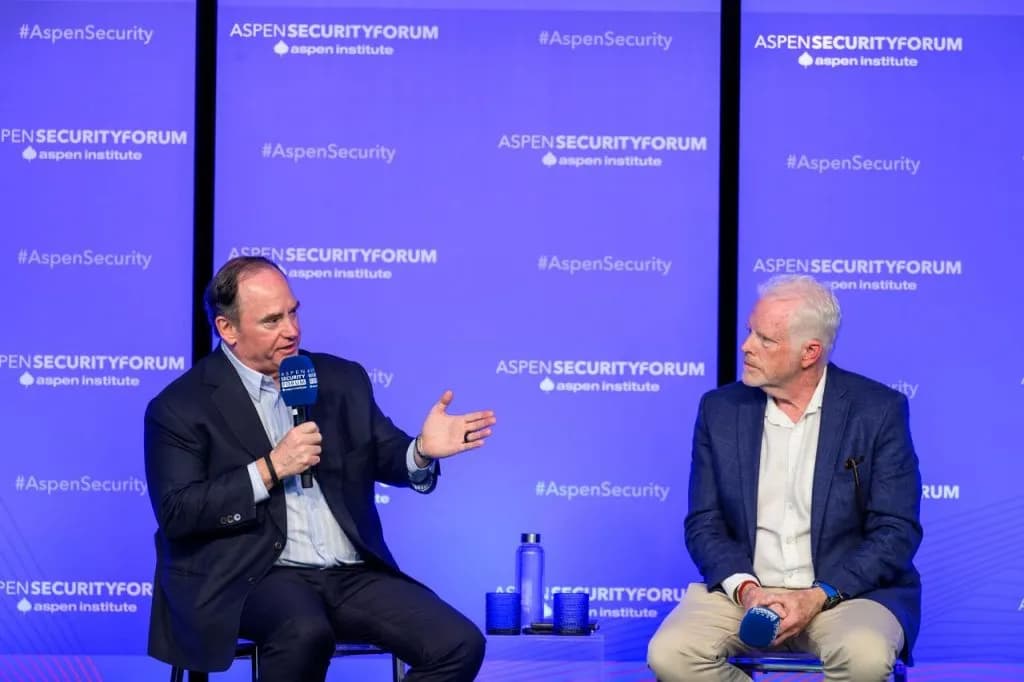
Aspen —The Doerr-Hosier Center hummed with the specific, hushed energy of a place where money and power usually trade hands over Pinot Noir. It was Wednesday afternoon. The air conditioning fought a losing battle against the mountain heat and the weight of expectation. Gordon Lubold, an NBC News reporter who knows how to pull teeth from a national security story, sat across from John Phelan.
You were removed as Navy secretary in April, Lubold said. Jumping right to the primary question. You were minding your own business, doing your own thing, trying to build some ships. What happened there?
Phelan didn’t blink. He lasted 13 months in the job, he told the Aspen audience. That’s as long as Teddy Roosevelt lasted as assistant secretary of the Navy. I feel like I’m in pretty good company, Phelan said.
It’s a charming comparison. Roosevelt was a force of nature. Phelan, a part-time Aspenite and cofounder of MSD Partners — the private investment firm for Michael Dell — was a financier who had never served in the military or worked in the Defense sector before President Donald Trump tapped him. Now he’s back in Palm Beach, managing assets, but for just over a year, he was overseeing nearly one million military and civilian personnel with a $300 billion budget.
The obvious take is that Phelan was an outsider who got chewed up by the bureaucracy. The Associated Press called his exit an “unexpected departure” orchestrated by Defense Secretary Pete Hegseth. His successor, acting secretary Hung Cao, is a 25-year Navy combat veteran. A career sailor replacing a venture capitalist. It’s the kind of narrative that fits neatly into a press release: the amateur gets ousted by the professionals.
But Phelan is standing there, telling a different story. He didn’t get fired because he didn’t know how to run a shipyard. He got fired because he moved too fast.
I was focused on urgency, speed, intensity, adopting technology, moving fast, Phelan said. And when you move fast, you break glass.
Think about that. In a corporate boardroom, breaking glass is a feature. In the Pentagon, it’s a bug. Phelan argued that the military establishment is “highly risk averse.” When you advocate for taking risks in a place that fears them, you rub numerous people the wrong way. You make them nervous. Maybe I pushed too hard, Phelan admitted. But I have no regrets for what I did in the job.
It’s a bold claim for a man whose only prior claim to fame in this arena was hosting a fundraiser for then-candidate Trump and the Republican National Committee in August 2024. He and his wife, Amy, endowed the Aspen Art Museum’s permanent free admission policy. Their Pitkin County home was featured in Architectural Digest in 2015. This is a man who understands value, leverage, and optics.
He wrote an op-ed in The Washington Post on Tuesday to back it up. I wanted the Navy to modernize fast, and maybe that made me enemies, Phelan wrote. He pointed to history. From World War II to Ukraine, fearless experimentation and rapid iteration are critical to success.
The part everyone skips past is the timeline. March 2025 to April 2026. Thirteen months. Not a long tenure, but long enough to install a new operating system in a legacy machine. The question isn’t whether he broke glass. The question is whether the glass was worth breaking.
Lubold pressed him on the specifics. Phelan leaned in. He wasn’t just talking about ships. He was talking about culture. The friction between a financier who sees inefficiency as a failure of capital allocation and a military that sees risk as a failure of survival.
Stand there long enough and you realize this isn’t just about one man’s job. It’s about who gets to define the future of the Navy. The career officer or the outsider with the checkbook? Phelan thinks the outsider is right. He thinks the establishment is too slow. He thinks they’re too scared.
The Aspen crowd listened. They nodded. They’re used to people like Phelan. People who move fast and break things. They just weren’t sure if the Navy could handle the shards.
Outside the center, the sun dipped behind the peaks. The shadows lengthened across the pavement. Phelan walked out, a man who had bet his career on speed and lost the race but kept the trophy. He’s back in Florida now. The Navy is still there, waiting for the next outsider to try and break the glass again.
Keep up with Aspen
The day's Western Slope news, one email each morning. Free.