Senators Graham and McConnell Highlight Aging Leaders' Transparency Debate
Senator Lindsey Graham’s sudden death and Mitch McConnell’s health revelations spark a Western Slope debate on transparency regarding aging political leaders.
Aspen —The morning light on the Western Slope carries a specific weight in late autumn, pressing against the windows of our homes and offices with a quiet insistence. It is that time of year when the air turns crisp, smelling faintly of woodsmoke and distant rain, and we find ourselves pausing to look at the faces of the people around us — the neighbors commuting down Highway 6, the elders sitting on park benches in Grand Junction or Aspen. We notice the gray in their hair, the slight hesitation in their steps, and we wonder what they are hiding behind those polite smiles.
It is hard not to feel that same quiet scrutiny when the news from Washington arrives, particularly after the sudden death of Senator Lindsey Graham. The Vail Daily reported Monday that Graham, a top ally of President Donald Trump and one of the capital’s most recognizable figures, died on Saturday at age 71. He had turned 71 just two days prior, appearing robust and energetic, yet a tear in his aorta brought him down. It was a stark reminder that health does not always announce itself with warning signs, and it has reignited a conversation about transparency among our aging leaders that feels deeply personal to folks here in the valley.
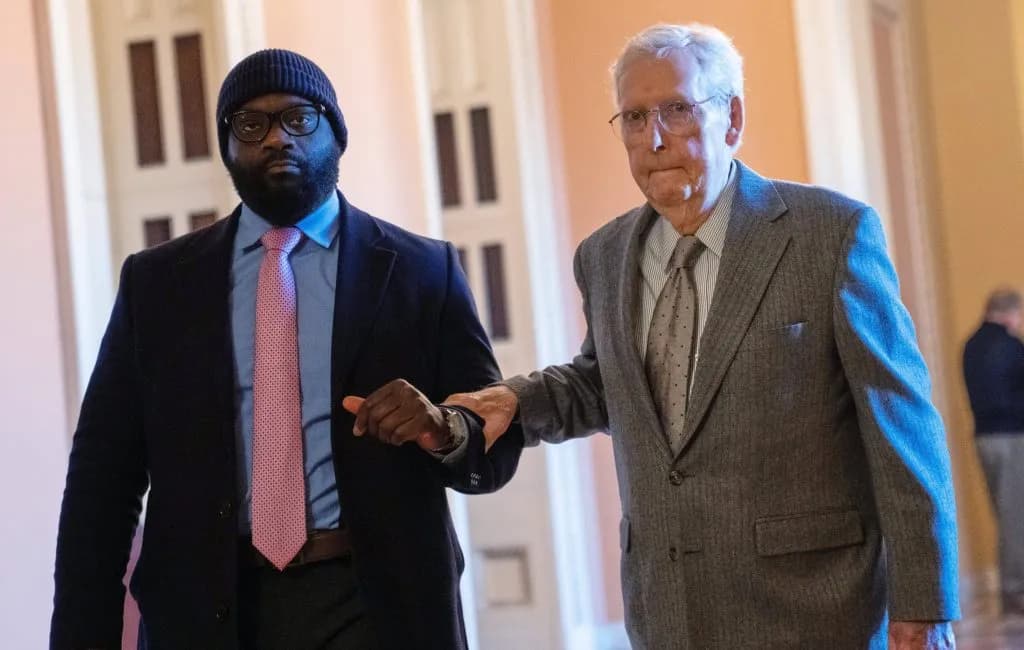
Graham’s passing is not an isolated event but part of a broader reckoning with the age of American politics. In early June, emergency personnel were dispatched to the home of former Senate leader Mitch McConnell for undisclosed reasons. At 84, he is only the third-oldest member of the Senate, and his initial hospitalization was marked by a dearth of information. Aides stated he was "receiving excellent care," but offered few details about his condition, which fueled a wave of speculation. Laura Loomer, a Trump ally and conspiracy theorist, took to social media to claim that a "high level source close to the White House" had told her McConnell was "officially brain dead."
It wasn't until Sunday that McConnell revealed he had fallen and suffered from mild pneumonia, releasing a photo complete with the front page of The Washington Post to prove his vitality. Yet, as the Vail Daily noted, that wasn't enough to put all speculation to rest. Sen. John Cornyn of Texas spoke plainly on Monday, telling the press, "I think we need some transparency. I wish Sen. McConnell and his team would have done that earlier, I think it would have resolved a lot of questions."
There is a warmth to the idea that we, as citizens, have a right to know more about those who hold power over our taxes and our futures. Sen. Rand Paul, also from Kentucky, suggested that the conspiracy theories are "a symptom of our times" and urged people to "give him a break." McConnell himself acknowledged this dynamic, noting that folks of his generation often hesitate to share the vulnerability that comes with growing older. "Even in the public eye, I feel that same instinct – I can’t help it," he said.
This tension between privacy and public duty is something we understand well here on the Western Slope. We respect our neighbors' privacy, but when a leader’s health impacts policy or governance, we expect clarity. Graham’s sudden death and McConnell’s prolonged uncertainty serve as a mirror to our own lives, reminding us that age brings both wisdom and fragility.
As the wind picks up through the canyons, carrying the sound of distant traffic and the rustle of aspen leaves, we are left with a lingering question: how much do we truly know about the people making decisions for us, and are they telling us the truth? The answer lies not just in Washington, but in the quiet spaces between the announcements and the rumors.
Keep up with Aspen
The day's Western Slope news, one email each morning. Free.